Politik identiti dan hipokrasi puak penentang – belajar dari Jepun
Bukan Malaysia tanpa kaum, dan bukan Malaysia satu kaum tetapi Malaysia yang menjadikan setiap kaum sebahagian yang dihargai daripada keluarga yang sama.
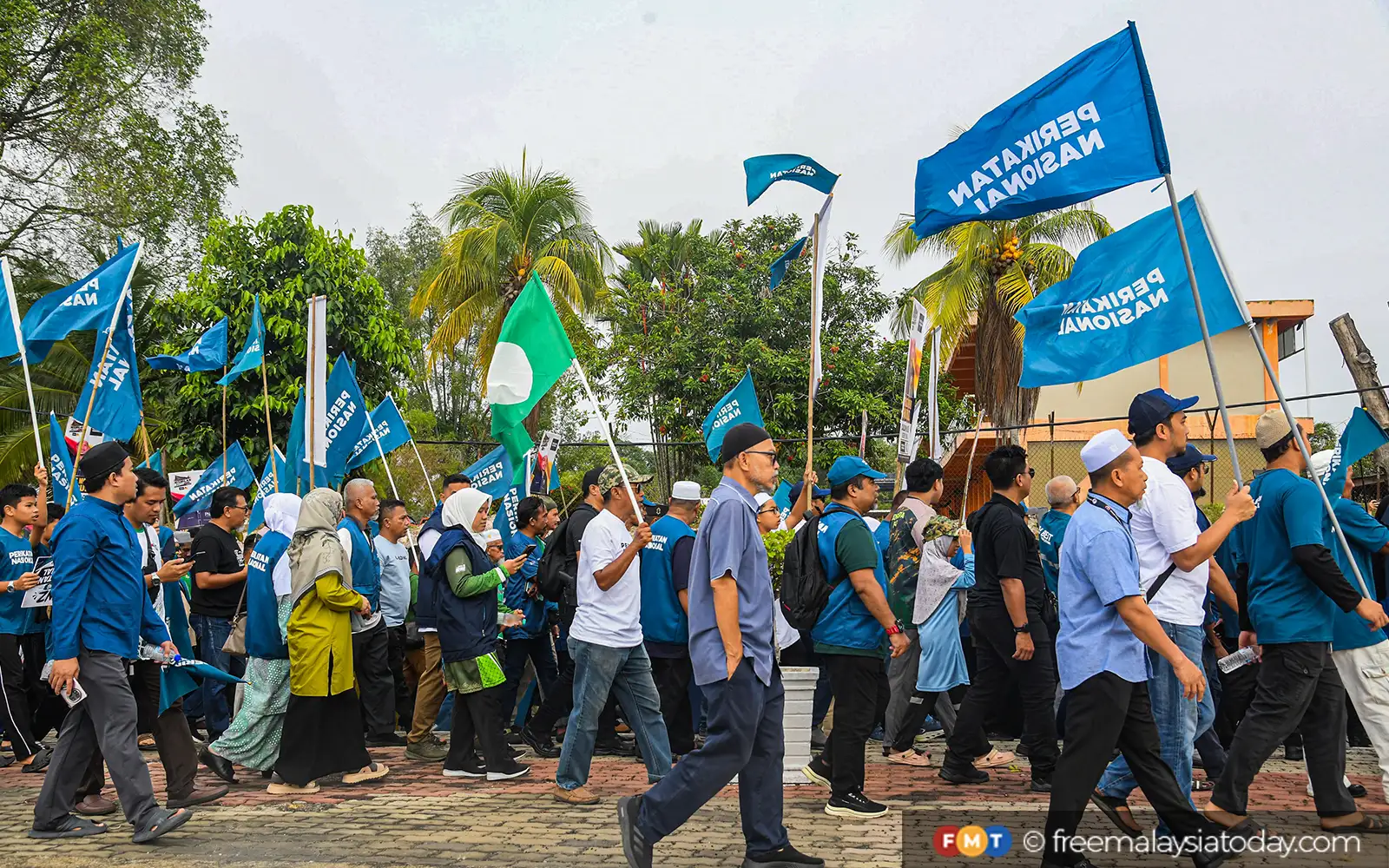
The recurring call for politicians to abandon identity politics, focusing instead on pressing issues like housing costs, corruption, and employment, is widely supported. However, when this plea intersects with identity politics, a hidden hypocrisy emerges. Advocates of this mindset often propose alternative identities such as "national unity," "national interest," or "collective well-being," but these are merely different incarnations of identity politics.
They do not renounce identity; they merely swap one for another, appearing to resolve the issue while in reality, they have merely substituted one identity for another.
In the context of Japanese politics, this hypocrisy is most glaring. Despite Japan's seemingly homogenous society, it is still considered a unified community (homogenous). Underlying logic dictates that such a society should be immune to identity politics. Yet, the opposite is true. Japanese nationalism is remarkably strong, and it encompasses culture, language, customs, daily life, and history, all rooted in the nihonjinron theory of Japan's unique national character.
Today, as living costs soar, this nationalism takes on a more assertive tone. The right-wing Sanseito party emerged with the slogan "Japanese First," reigniting the "silent invasion" narrative against newcomers.
This scenario demonstrates that identity politics can thrive without racial diversity; the identity itself is not the root cause. Rather, it is a byproduct, not the cause. In Malaysia, the absence of identity politics does not diminish the need for political discourse, but in Japan, its absence does not dampen identity politics, only its vehicle.
No one truly stands outside of identity. Consider how "Japanese-ness" functions. It is perceived as a common and eternal position, yet it is, in fact, a rigid identity that marginalizes Ainu, Okinawa, and Zainichi Koreans. This is the irony rarely acknowledged: the most powerful identity often masquerades as non-identity. The majority often fail to realize they are "identifying."
For them, it is simply a fact of life, and others are the ones accused of identity politics. This constitutes a hypocrisy within the opposition to identity politics.
When someone urges us to transcend identity and unite as "Malaysian citizens," they are, in truth, introducing another layer of identity. It merely appears to be a self-evident fact, thus escaping scrutiny. The identity often vilified as "identity politics" is the identity of others. While the identity one embraces is often given a more palatable name like "national unity," this is a case of high-level hypocrisy.
So, what does identity mean for Japan? Unlike bloodlines, Japanese identity is formed through culture, not genetics. The essence of "Japanese-ness" lies in language, customs, lifestyle, and historical heritage passed down through generations. The line between "us" and "them" remains clear, but it is drawn based on cultural ties rather than ancestry.
Second, citizenship and belonging. When Sanseito calls for "Japanese First," they are targeting newcomers - foreigners, not ethnic minorities. The distinction here is between citizens and non-citizens: who belongs to the social contract and who is deemed a freeloader. Third, and most crucially, dignity. Japan's identity is heavily influenced by collective pride - a sense of being a well-structured, functioning society.
When pensions are weak, the economy weakens, and outsiders are perceived as disrespectful towards local customs, it is not just pocket money that suffers, but dignity. This is the core of human rights theorist Amartya Sen's thymos - the human need to be valued. Japan's contemporary identity politics, to a large extent, is a politics of dignity. The determining factor is need, not ethnicity.
This raises the question of what identity means for Japan. Identity in Japan is not absent; it merely does not revolve around ethnicity. When examined closely, the core of identity politics becomes clear. It is based on three factors. First, nationality as culture, not blood. The core of "Japanese-ness" is language, customs, lifestyle, and enduring historical heritage.
The distinction between "we" and "them" is clear, but it is maintained through cultural ties rather than ancestry. Second, citizenship and belonging. When Sanseito calls for "Japanese First," they target newcomers - foreigners, not ethnic minorities. The distinction here is between citizens and non-citizens: who belongs to the social contract and who is deemed a freeloader.
Third, and most importantly, dignity. Japan's identity is heavily influenced by collective pride - a sense of being a well-functioning society. When pensions are weak, the economy weakens, and outsiders are perceived as disrespectful towards local customs, it is not just pocket money that suffers, but dignity. This is the core of human rights theorist Amartya Sen's thymos - the human need to be valued.
Japan's contemporary identity politics, to a large extent, is a politics of dignity. The determining factor is need, not ethnicity.
Essentially, identity politics is not solely about ethnicity, culture, or religion. It is a deeper question: who we are, and who we perceive as deserving respect and recognition within society. This is the question explored by Gary Younge in his book "Who Are We?", which shows that every human being carries multiple identities simultaneously, and that identity is not merely a label inherited from the past, but a question of ownership and recognition.
The struggle for recognition and acknowledgment is what Charles Taylor called "the politics of recognition," and Axel Honneth went further, arguing that almost every social struggle, at its core, is a struggle for recognition, while denial or disregard fuels conflict. However, there is a significant difference between Japan and Malaysia.
In Japan, the identity debate revolves around who is allowed to enter. In Malaysia, the status of each ethnic group is already established in the nation-building history of our country. The shared recognition is the foundation, not a fleeting sentiment or an imported idea, but a historical contract that gave birth to the nation.
Therefore, opposing identity politics is opposing the needs of the Japanese people. If identity politics can thrive in a homogeneous society like Japan, it is not a flaw of a multi-ethnic society nor a sin of any particular group. It is a inherent trait.
Written by urgent.news from Free Malaysia Today's reporting — not their text. Machine-written — may contain errors; check the original before relying on it.