Parabrachial oxytocin receptor-expressing neurons link social observation of distress to defensive behavior
The ability to detect and respond to threat signals in the environment, including those conveyed by the distress of a familiar social partner, is fundamental to survival and disrupted in a range of neuropsychiatric conditions. This study identifies oxytocin receptor (Oxtr)-expressing neurons within the lateral parabrachial nucleus (lPBN) of mice as a key node in the neural circuitry underlying…
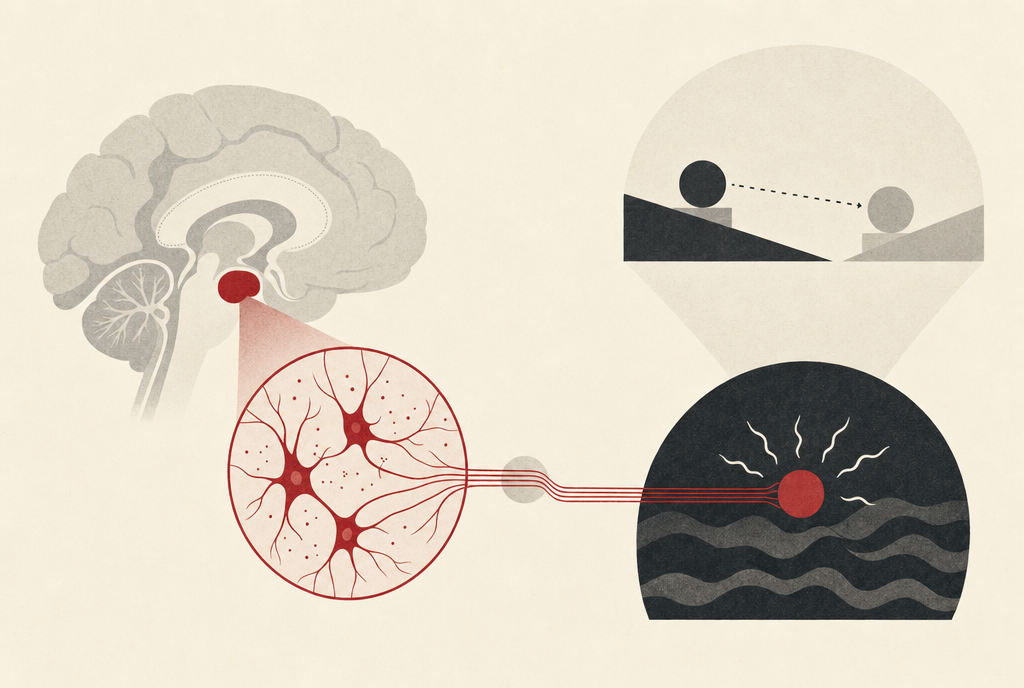
A recent study has uncovered a crucial neural pathway in mice that links the observation of social distress to defensive behavior. Researchers have pinpointed oxytocin receptor (Oxtr)-expressing neurons within the lateral parabrachial nucleus (lPBN) as a key component of this circuitry. These neurons respond to both direct aversive stimuli and to witnessing a familiar mouse undergoing stressful conditions, such as foot shock or inflammatory pain.
The study reveals that chemically inhibiting these specific neurons alters the social behavior of the observers, influencing their proximity to conspecifics and their ability to experience pain contagion. Importantly, this inhibition does not impact general anxiety-like behavior. Furthermore, the researchers found that suppressing the activity of lPBNOxtr neurons can transiently reduce non-social central sensitization.
Conversely, directly activating these neurons using a selective Oxtr agonist leads to heightened anxiety and increased tactile sensitivity. The findings suggest that lPBNOxtr neurons play a pivotal role in integrating information about environmental threats, whether experienced directly or observed in a fellow mouse, enabling the organism to coordinate appropriate defensive responses. This neural circuitry thus appears to be an essential mechanism for survival in the face of threats, whether physical or social.
Written by urgent.news from bioRxiv's reporting — not their text. Machine-written — may contain errors; check the original before relying on it.