New study suggests anxiety symptoms drive the physical stress markers linked to depression
Physical feelings of anxiety tend to predict chronic stress markers better than depression symptoms, suggesting that past research linking depression to body strain may have picked up on hidden anxiety instead.
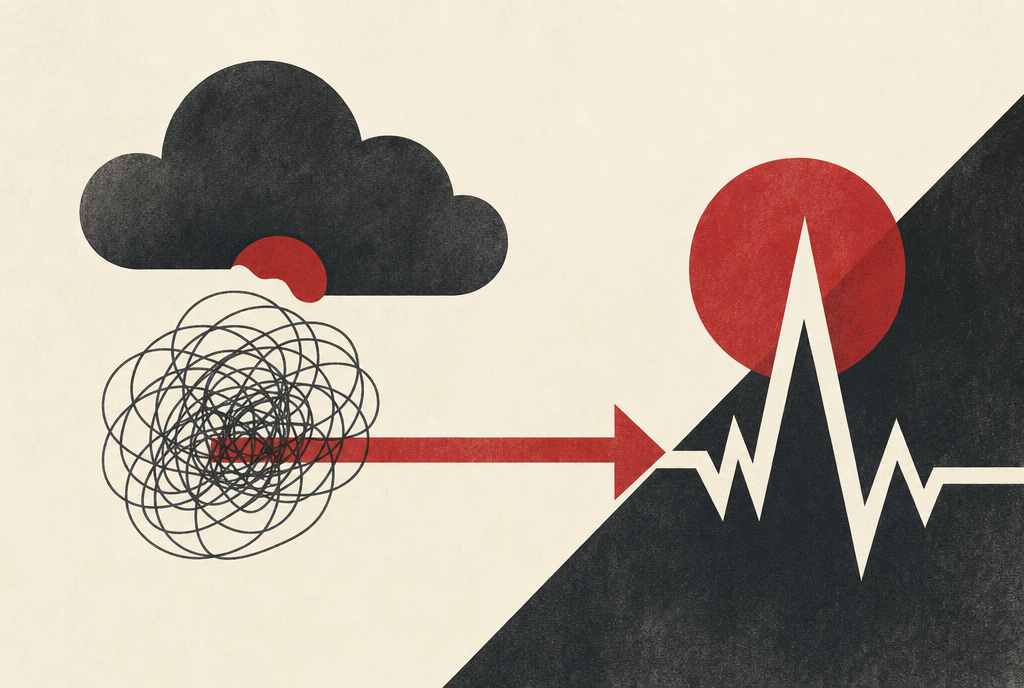
A recent study in the journal Psychoneuroendocrinology indicates that physical stress markers, typically linked to depression, may be more closely associated with anxiety symptoms. Researchers found that biomarkers such as inflammation and altered stress hormone rhythms tend to correlate more strongly with feelings of anxiousness than with general sadness or loss of pleasure.
Anxiety and depression often co-occur, making it challenging for mental health professionals to determine which condition is responsible for physical health issues. Study author Peter B. Fitzgerald explained that previous research has been hampered by diagnostic categories and measures that fail to distinguish between symptom dimensions.
To address this, Fitzgerald and his team employed the MASQ, a measure designed to separate general distress from disorder-specific symptoms, to analyze data from two large groups of American adults. They discovered that anxious arousal, rather than anhedonic depression, was the strongest predictor of physiological stress. Anxious arousal, characterized by physical signs of alarm like rapid heartbeat, shortness of breath, trembling, or dizziness, was linked to a flatter cortisol slope, elevated inflammation, and reduced heart rate variability.
This finding contradicts previous expectations that anhedonic depression would be the dominant factor. The researchers concluded that older studies may have been measuring the effects of hidden anxiety symptoms rather than the impact of depression itself.
Written by urgent.news from PsyPost's reporting — not their text. Machine-written — may contain errors; check the original before relying on it.