'Never seen anything like this': Britain's parks and pastures turn brown
London's parks turn brown and British farmers battle to salvage what is left of their produce as a drought grips multiple parts of the country.
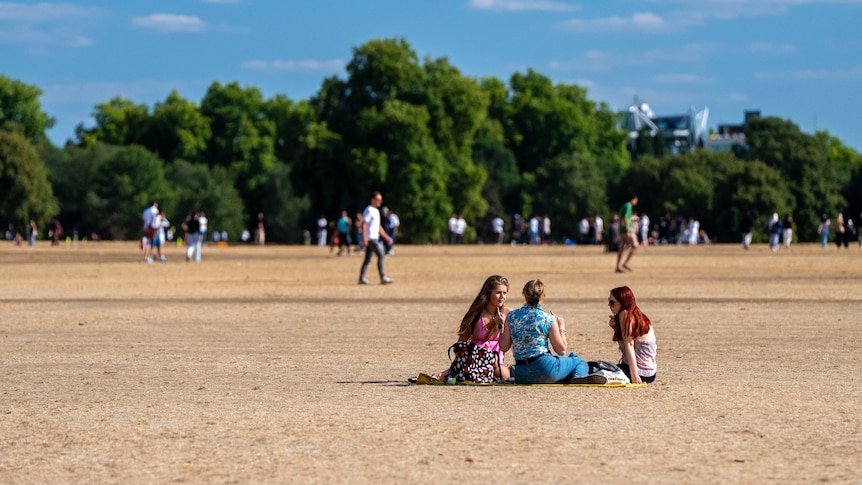
Britain's picturesque parks and pastures are under siege as a severe drought engulfs more than half of the country. London's once verdant green spaces have transformed into desolate brown and yellow wastelands, while rivers are dwindling and over 2,700 heat-related excess deaths have been reported in May and June, according to the United Kingdom's official weather service.
Over 10 million residents have been forced to limit their water usage, and a hosepipe ban has been implemented, prohibiting the use of hoses for gardening, car washing, pool filling, and window cleaning.
Farmer Richard Barr, a 30-year veteran of his farm in Warwickshire, West Midlands, has never witnessed such a scorching summer. His potato crops, vital for chip shops across the nation, are significantly smaller and shrivelled, rendering them unsuitable for frying. "You pick up the potatoes, and they are less than half the size they should be," Mr Barr lamented. "You want big, long potatoes to make chips, but you can't make chips out of these, they're just too small."
The UK government has declared half of England and all of Wales officially in drought, with parts of London experiencing no rain last month. July was recorded as the driest on record in multiple regions of the country. Many farmers are facing their worst harvests, with Mr Barr's yields expected to be less than half of what they should be.
As record-breaking heatwaves sweep across the UK, European neighbors Spain, France, and Portugal are grappling with wildfires exacerbated by dry pastures and scorching temperatures, sparking an ecological and humanitarian crisis. Even some parts of Britain have turned into infernos, prompting the Environment Agency to warn of an "exceptionally serious situation."
The UK's Climate Change Crisis has been exacerbated by the three droughts experienced in the past five years, with climate scientists attributing the current situation to climate change. Dr. Chloe Brimicombe from the University of Oxford warns that this summer's extreme weather events could lead to flash flooding in autumn, adding to the compounding hazards.
The psychological toll of the relentless heat has also taken its toll on people, with research indicating a growing sense of hopelessness regarding heatwaves. Authorities assure that the unusually wet winter does not threaten drinking water reserves, but forecasters warn that much-needed rainfall may not arrive until October, potentially worsening the drought conditions before any improvement.
Written by urgent.news from ABC News AU's reporting — not their text. Machine-written — may contain errors; check the original before relying on it.