Malaysia’s monarchy charts a new course amid political flux
When Malaysian artist Darwisy Mustafani received a commission to paint the country’s king and queen, he did not reach for an ordinary canvas. Instead, the 25-year-old from the northeastern city of Kota Bharu transformed songket – the lustrous handwoven fabric once reserved for Malay courts and ceremonial dress – into a portrait of the sultan and his wife before a golden-domed palace. The…
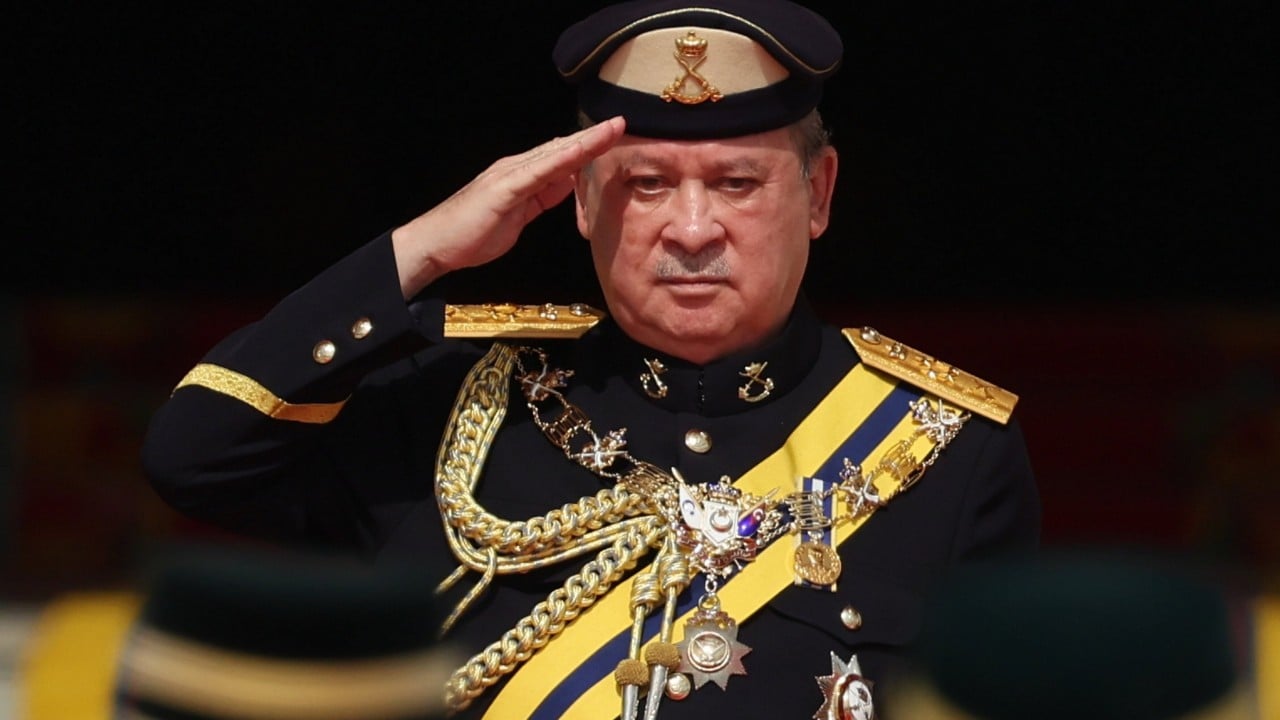
Malaysian artist Darwisy Mustafani has found his work closely associated with royalty after being commissioned to create a portrait of Malaysia's king and queen on traditional Songket fabric. This commission, given by the police force in 2024, marked the beginning of a series of royal requests for artwork, including pieces for other Malaysian palaces and Brunei's royal household. Darwisy emphasizes that his focus is not solely on painting royal figures, but on sharing Malaysian culture with a wider audience.
TikTok has provided a platform for viewers to witness Darwisy's creative process, where he layers paint over woven gold thread to reveal the royal faces against patterns that carry centuries of courtly history. Many young Malaysians are discovering the monarchy through his work, becoming curious about the cultural significance of the materials used.
Since Malaysia's first transfer of federal power in 2018, the country has experienced political turbulence, with collapsing alliances, three prime ministers in less than three years, and a hung federal parliament. In such an environment, the monarchy has become more visible, playing a role in government formation as decisions about the formation of the government were increasingly placed before the king.
According to constitutional experts, the monarchy is operating under new political conditions rather than supplanting parliamentary democracy.
Malaysia's constitutional arrangement is unique, with nine of its 13 states headed by hereditary Malay rulers who elect a king for a five-year term. The monarch has limited discretionary authority, such as appointing the prime minister based on the majority in parliament and withholding consent to dissolve parliament. However, these powers have attracted less public attention in the past due to the normal functioning of the governing coalition.
The monarchy's role has become more conspicuous in recent years, particularly after the 2020 resignation of Mahathir Mohamad, which led to a sequence of royal consultations to determine who commanded a sufficient parliamentary majority. In 2022, the king played a role in selecting the prime minister following the inconclusive general election. Constitutional lawyer Lim Wei Jiet noted that weakened parties and unstable coalitions have created greater room for royal institutions to influence government formation.
Written by urgent.news from South China Morning Post's reporting — not their text. Machine-written — may contain errors; check the original before relying on it.