How can landscape recover after devastating fires?
Conservationists are working to restore wildlife after recent wildfires devastated habitats.
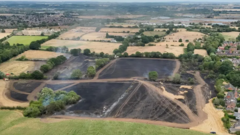
A grassfire can obliterate a thriving habitat in hours, but recovery is a much slower process. Recent fires have ravaged nature reserves, beauty spots, farmland, and open countryside, leaving conservationists and land managers to tackle the daunting task of restoring habitats and preventing further damage. Dan Brown, deputy chief executive of Birmingham & Black Country Wildlife Trust, emphasized the loss of habitat as a significant problem.
The loss of grasses, wildflowers, and trees results in the elimination of food sources for invertebrates, impacting butterflies, bees, birds, and mammals. Over 600 outdoor fires were reported in Staffordshire in July, double the number from the same period last year. Three such fires occurred at Cannock Chase, a protected area where animals like adders and toads were killed.
Conservation work can take decades to restore land after a fire, even with dedicated intervention. Many parts of the West Midlands have also been affected, with nature reserves, farmers' fields, and crops destroyed by fires. In Suffolk, Dunwich Heath suffered a fire that burned 371 acres of lowland heath, devastating wildlife and the landscape.
In Scotland, a fire in the Cairngorms National Park ravaged 10 square miles of moorland, affecting thousands of species. Dr Kate Ashbrook, a conservation ecologist, stressed the importance of protecting unburnt habitats, as these areas would contain surviving animals and life. Wild Ken Hill, a nature restoration project in Norfolk hit by a fire in 2022, demonstrates resilience, with vegetation regenerating quickly and wildlife gradually returning.
However, the loss of mature woodland could take decades to recover. Experts urge people to adopt fire-safe practices, such as avoiding disposable barbecues or campfires and taking litter home, as human behavior plays the most significant role in reducing wildfire risk. While burnt landscapes may appear damaged initially, with time and changes in how we protect our countryside, recovery is possible, experts assert.
Written by urgent.news from BBC Science's reporting — not their text. Machine-written — may contain errors; check the original before relying on it.