Don't miss the crescent moon shine close to the red light of Mars before dawn on Aug. 9
Early risers will catch a spectacular sight in the predawn hours of Aug. 9, as the slender crescent moon shines close to the red light of Mars among the stars of the constellation Taurus.
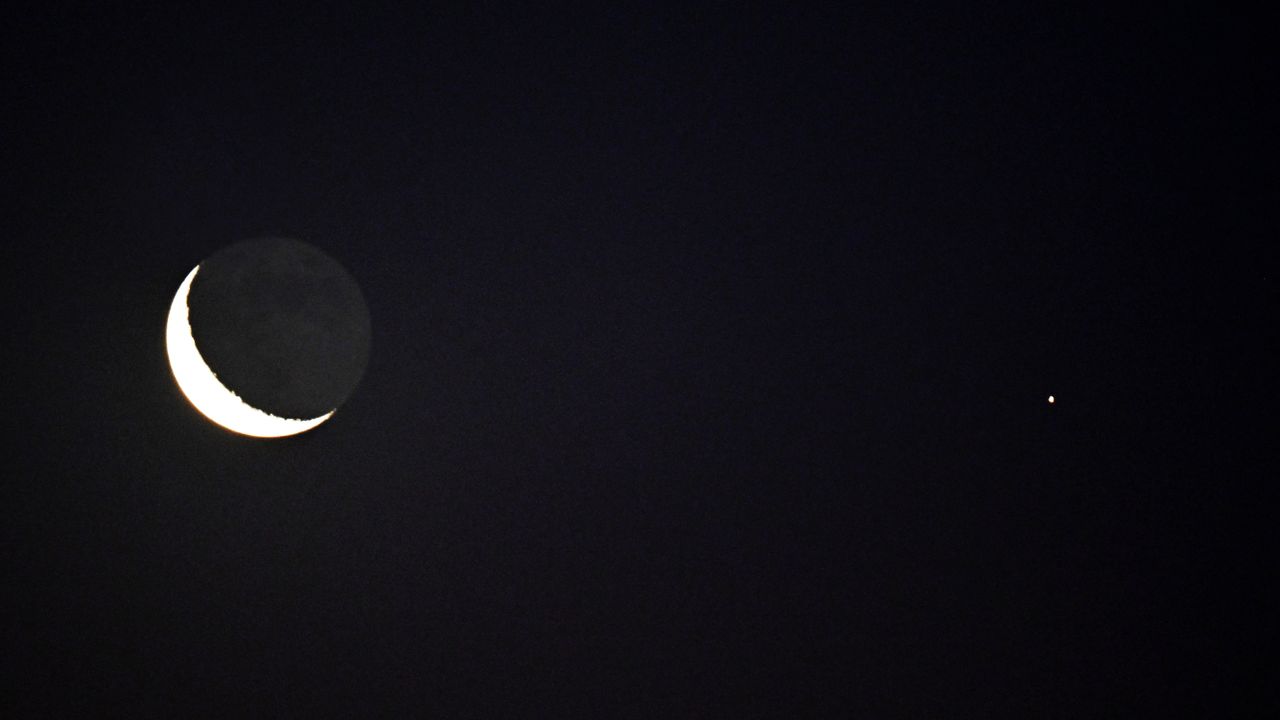
As dawn approaches on August 9, a captivating celestial event will unfold for early risers. The nearly 17% illuminated crescent moon, positioned precisely opposite the sun, will rise around 2 a.m. for New York observers. Simultaneously, the Red Planet Mars will present as a steady crimson glow, situated a mere 5 degrees to the lower right of the moon, making it possible to observe both celestial bodies in tandem through a pair of 10x50 binoculars.
As the sky transitions from night to day, both Mars and the moon will appear to glide past each other, with Mars ultimately edging ahead in their celestial race. The constellation Orion will grace the sky to the right of the duo, while Taurus, the Bull, watches from above and Gemini from below, offering a tantalizing glimpse of the starscape that will dominate the winter night skies in a few months' time.
For those eager to delve deeper into the lunar landscape, investing in a pair of Celestron UpClose G2 10x50 binoculars, priced around $50, will provide a more detailed view of the moon's craters and seas. Additionally, the moon will display a faint glow of earthshine, a result of sunlight scattered off our planet and reflected onto the lunar surface, providing a ghostly outline of its dark seas.
This will be one of the final opportunities to observe the moon before its new moon phase on August 12, which will precede a spectacular total solar eclipse. The eclipse, visible from Greenland, Iceland, and Spain, will be accompanied by reports from skywatching experts Daisy Dobrijevic in Greenland and Anthony Wood in Spain, ensuring a comprehensive coverage of this awe-inspiring astronomical phenomenon.
Written by urgent.news from Space.com's reporting — not their text. Machine-written — may contain errors; check the original before relying on it.