Can Crypto Finally Work Like Regular Money?
Can crypto finally work like regular money? This article looks at stablecoins, crypto cards, overseas payments and the problems still holding everyday use back.
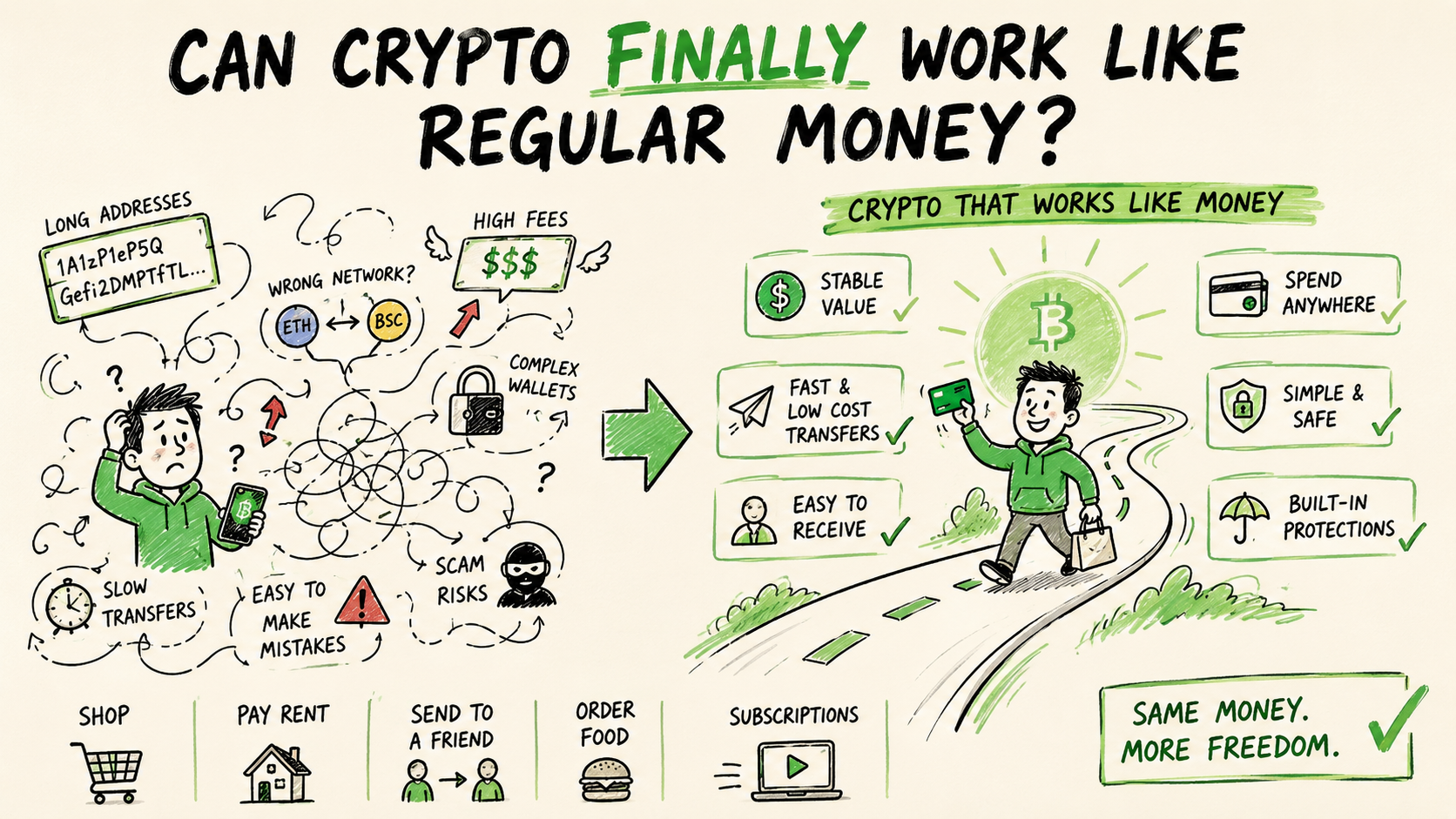
For years, crypto has been viewed as the future of money. While it has been used for investment, trading, and global fund transfers, it has often felt disconnected from regular bank accounts. Traditional money is straightforward: you get paid, check your balance, and use a card for purchases or transfers. Crypto, however, typically requires more effort—choosing a wallet, copying addresses, selecting the network, and calculating fees. A small error can be hard to rectify, making crypto more of a specialized tool than everyday money.
To function like regular money, crypto needs to become easier to receive, safer to store, and simpler to spend. Its value also needs to remain relatively stable. The issue of price volatility has long been a major drawback. Cryptocurrencies like Bitcoin can fluctuate sharply in short periods, making it less ideal for budgeting essential expenses like groceries or rent.
Businesses face similar issues; they prefer stable pricing to avoid losses before receiving funds or to avoid buying an asset that might rise in value later.
Currently, most crypto users hold it as an investment rather than a means of payment. According to a 2025 Federal Reserve survey, nearly one in ten US adults bought or held crypto as an investment, while only 2% used it for purchases or payments. Stablecoins have made crypto more practical by maintaining a value close to traditional currencies.
Most stablecoins are pegged to the US dollar, meaning one coin is generally equivalent to one dollar. This stability enables easier use for payments, savings, and money transfers. Visa estimates that over $10.2 trillion worth of stablecoins changed hands in the past year, up 63% from the previous year. Stablecoins are particularly beneficial for cross-border transactions.
Freelancers, small businesses, and families can send money abroad more quickly and at lower costs compared to traditional transfers. Although there are risks associated with stablecoins—relying on the issuing company's integrity and potential losses in value—this innovation has brought crypto much closer to everyday use. Crypto payment cards, which operate similarly to regular bank cards, are another significant development.
Users can make purchases by converting crypto into regular money, allowing them to spend crypto at places that accept card payments. However, these cards may charge fees and have limited availability in different countries. Sending money internationally remains one of the strongest applications for crypto, as cross-border transfers through traditional banks can be slow and expensive.
Crypto transfers are faster, often arriving within minutes, making them useful for freelancers, small businesses, and individuals without easy access to banks. The final step involves converting received crypto into local currency, which may still require an exchange or payment app.
Written by urgent.news from HackerNoon's reporting — not their text. Machine-written — may contain errors; check the original before relying on it.