Bilbies released into Qld national park where they were once extinct
With the population booming inside a predator-proof fence, conservationists have set the bilbies free. But can they survive on the outside?
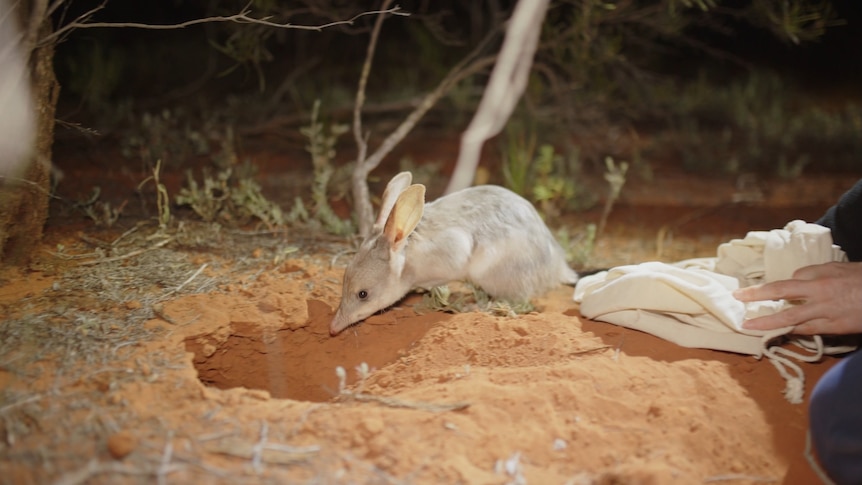
In the dead of night in western Queensland, Kev Bradley, CEO of Save the Bilby Fund, tensed and thrilled as he opened a hessian bag to let a bilby hop out. A lump of emotion rose in his throat. The bush was challenging, but it left him breathless. Wild bilbies were last spotted in Currawinya National Park in the 1970s before disappearing locally.
After a decade of preparation, conservationists released 150 bilbies into the park over the past six nights, marking the first time in Queensland they were reintroduced into the wild in a region where they were once locally extinct.
Kev Bradley expressed his delight, stating, "It's fantastic to see." A 25-kilometre predator-proof fence was erected in the park in 2003 but was compromised in 2010 when feral cats infiltrated the barrier. Inside the fence, the bilby population thrived, estimated to be around 1,000, according to last year's figures. With the current conditions, Mr. Bradley remarked, "It's sort of perfect timing for us to get bilbies back into the true wild."
He emphasized their aspiration to prevent native species from existing only within closed fences. Since 2021, a few released bilbies have escaped the fence and established a life outside. Mr. Bradley clarified that the fence was not designed to confine bilbies but to keep predators out. This escapee population is also flourishing, he added.
However, reintroducing bilbies is a stressful endeavor. Bilbies are boom-bust animals, he explained. They face heightened situations during high-rainfall periods, but a dry season is anticipated. Steve Peck, a conservation officer at Queensland Parks and Wildlife Service Threatened Species Operations, said researchers will monitor the new population using cameras, tracking devices, and burrow counts. Mr. Peck expressed hope that this marks the beginning of a new booming population.
The ultimate goal is for visitors to be able to witness a bilby bouncing around in Currawinya National Park, he said. He envisioned a future where a sign reads, "Beware of Bilby Crossing."
Written by urgent.news from ABC News AU's reporting — not their text. Machine-written — may contain errors; check the original before relying on it.