What to know about air fryers if you're concerned about PFAS or microplastics
Here's what three experts have to say about choosing and using an air fryer.
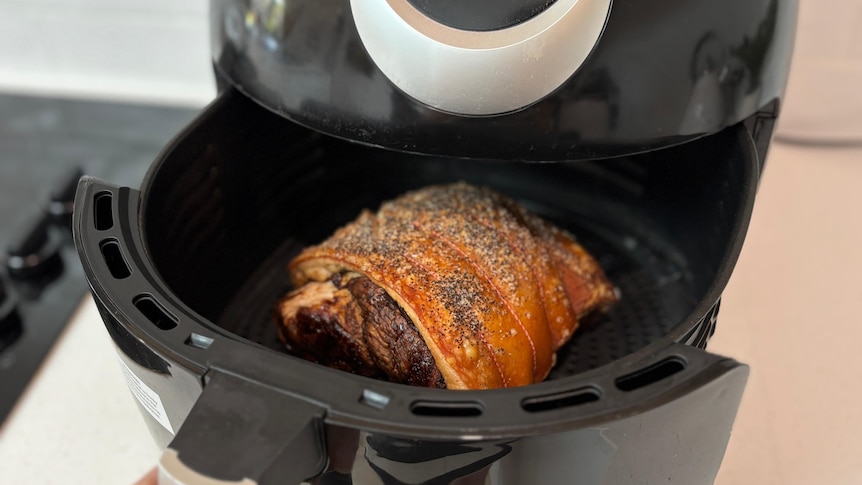
Air fryers have gained popularity as household essentials, yet they often contain plastic and non-stick coatings, raising concerns about safety, particularly regarding per- and poly-fluoroalkyl substances (PFAS) and microplastics. Three experts offer insights into selecting and using air fryers safely.
The most prevalent air fryer models are "drawer types," according to Fiona Mair, test coordinator for consumer group Choice. These appliances frequently feature lightweight aluminum removable drawers and baskets with non-stick coatings. However, there's a diverse range of air fryers available, from glass, stainless steel, and ceramic options to ceramic-coated models, ranging in price from $50 to $700. Mair notes that members are increasingly requesting testing on glass and ceramic products over non-stick alternatives.
Professor Oliver Jones of RMIT explains that non-stick coatings are typically polytetrafluoroethylene (PTFE), known as Teflon. While PTFE is technically a PFAS, it's a large molecule that doesn't interact with body systems, posing no risk. He uses an air fryer regularly without concern. However, he points out that people often conflate all PFAS, treating the risk as equivalent.
Elvis Okoffo, a researcher at the University of Queensland, emphasizes that the primary risk arises when the non-stick coating is damaged. PTFE coating can wear down from repeated use, scratching, chipping, or peeling, potentially contaminating food. Although evidence on this exposure from air fryers is limited, visible damage to the coating signals the need for replacement.
Current research indicates air fryers don't usually release microplastics under normal conditions, as they operate below temperatures where non-stick coatings degrade.
Experts advise using air fryers as intended, following manufacturer guidelines, avoiding metal utensils to prevent scratches, and inspecting for damage or peeling. Dr Okoffo recommends using wooden or silicone utensils and handwashing the basket or drawer with mild detergent. Regular inspection and timely replacement of damaged parts minimize potential exposure.
Ms Mair echoes these suggestions, advising against using a dishwasher, as it speeds up coating deterioration and affects non-stick performance. Glass or ceramic air fryers, though hotter and heavier, offer advantages like inspecting cooking without losing heat and dishwasher compatibility. Stainless-steel options are also viable but require careful cleaning.
Written by urgent.news from ABC News AU's reporting — not their text. Machine-written — may contain errors; check the original before relying on it.