Uncertainty reveals Indonesia’s consumer strength
Consumption in Indonesia does not merely endure macro volatility; it frequently accelerates through it.
Indonesia's consumer market defies conventional wisdom, thriving amid economic uncertainty. When Singapore's urban center observes changes in Jakarta during political shifts, it naturally adopts risk assessment strategies. This pattern – policy changes, fiscal uncertainty, and disrupted global supply chains – typically prompts caution.
Traditional economic models suggest that increased ambiguity leads to consumer hesitancy. Households would hoard cash, delay non-essential purchases, and wait for stability before making decisions. However, data from Indonesia's consumer-facing businesses contradicts this narrative. Consumption in this Southeast Asian economic powerhouse does not simply survive macro volatility; it often accelerates through it.
This apparent contradiction reveals a deeper understanding of emerging market demand. The discrepancy arises from an underlying premise in Western forecasting models: the assumption that markets are driven by rational, individual consumer choices. These models presume that consumers evaluate options independently, using complete and linear data.
When the macro environment becomes unpredictable, these models predict a decrease in demand because they assume isolated individuals will postpone purchases until certainty returns. In reality, Southeast Asian markets operate differently. Herbert Simon's concept of bounded rationality explains this phenomenon. When institutional frameworks continuously evolve and information is asymmetric, humans do not freeze.
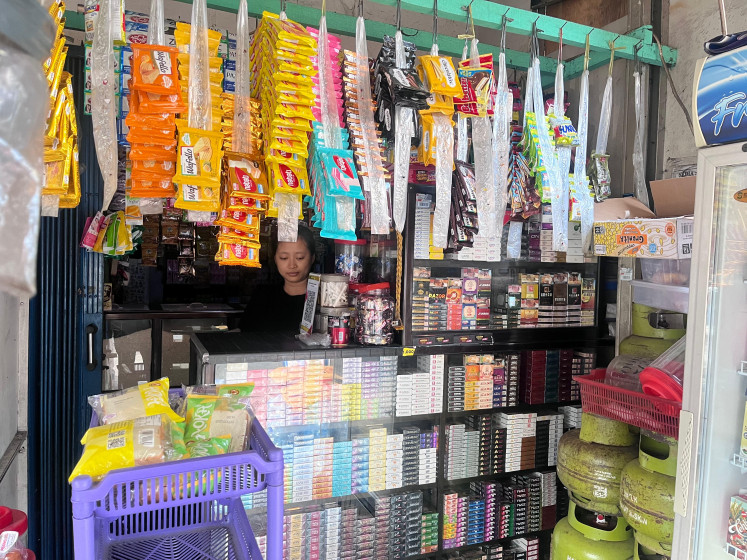
Instead, they simplify their decision-making processes. Indonesian consumers do not meticulously analyze inflation differentials or scrutinize policy speeches. Instead, they use cultural heuristics, such as relying on community trust, personal relationships with shopkeepers, and familiar brand equity to navigate uncertainty. Decision-making is not purely individualistic; it is deeply relational.
Written by urgent.news from The Jakarta Post Academia's reporting — not their text. Machine-written — may contain errors; check the original before relying on it.