Tree cover is not the same as ecological recovery
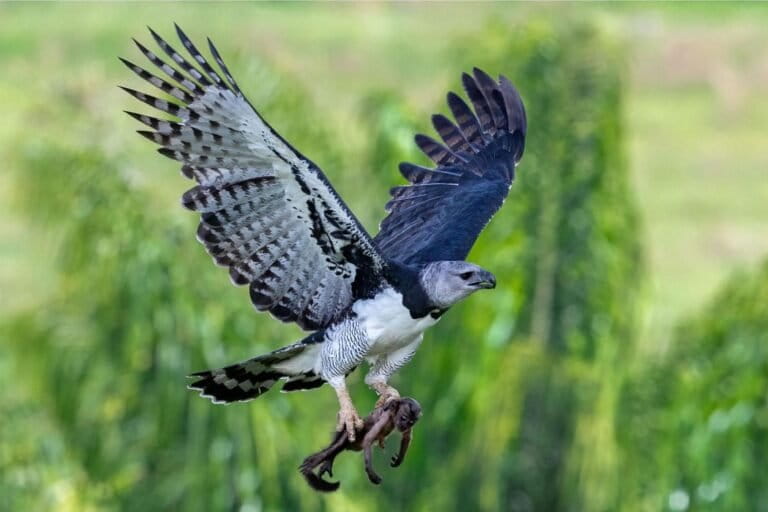
Founder’s Briefs: An occasional series where Mongabay founder Rhett Ayers Butler shares analysis, perspectives and story summaries. A harpy eagle needs large trees for nesting and enough surrounding forest for its young to learn to fly. The Amazon also depends on the eagle. By controlling populations of monkeys, sloths, and other animals, the predator helps […]
The health of an ecosystem cannot be fully gauged by simply counting the species it harbors, according to a recent paper in the journal Frontiers in Science. While such species counts are useful indicators of biodiversity, they fail to reveal whether the ecosystem is functioning properly. Conservation efforts should therefore also take into account various ecological processes, such as predation, migration, pollination, and the circulation of water and nutrients, suggests the study's authors.
To guide these efforts, the researchers propose the Three Global Conditions Framework, introduced in 2019. This framework categorizes landscapes based on the extent of human influence. Large, relatively untouched areas must be protected from further development. Places where agriculture and settlements coexist with nature need management to maintain ecological functions. Areas heavily altered by human activity require restoration.
Implementing this approach could help countries meet the goals outlined in the Kunming-Montreal Global Biodiversity Framework. This agreement, which is not legally binding, aims to halt and reverse the loss of nature by 2030. However, progress towards this goal varies significantly among nations. The term "nature positive" is used to describe a situation where at the end of the decade, ecosystems are in better condition than they were at the start.
The paper underscores that preserving and restoring nature is a complex task that requires a comprehensive, multi-faceted strategy.
Written by urgent.news from Mongabay's reporting — not their text. Machine-written — may contain errors; check the original before relying on it.