The Lost Pearls of New York City
Alan Michelson's public art installation “The Oyster” on Governors Island conjures up the overlooked history of Indigenous shell middens.
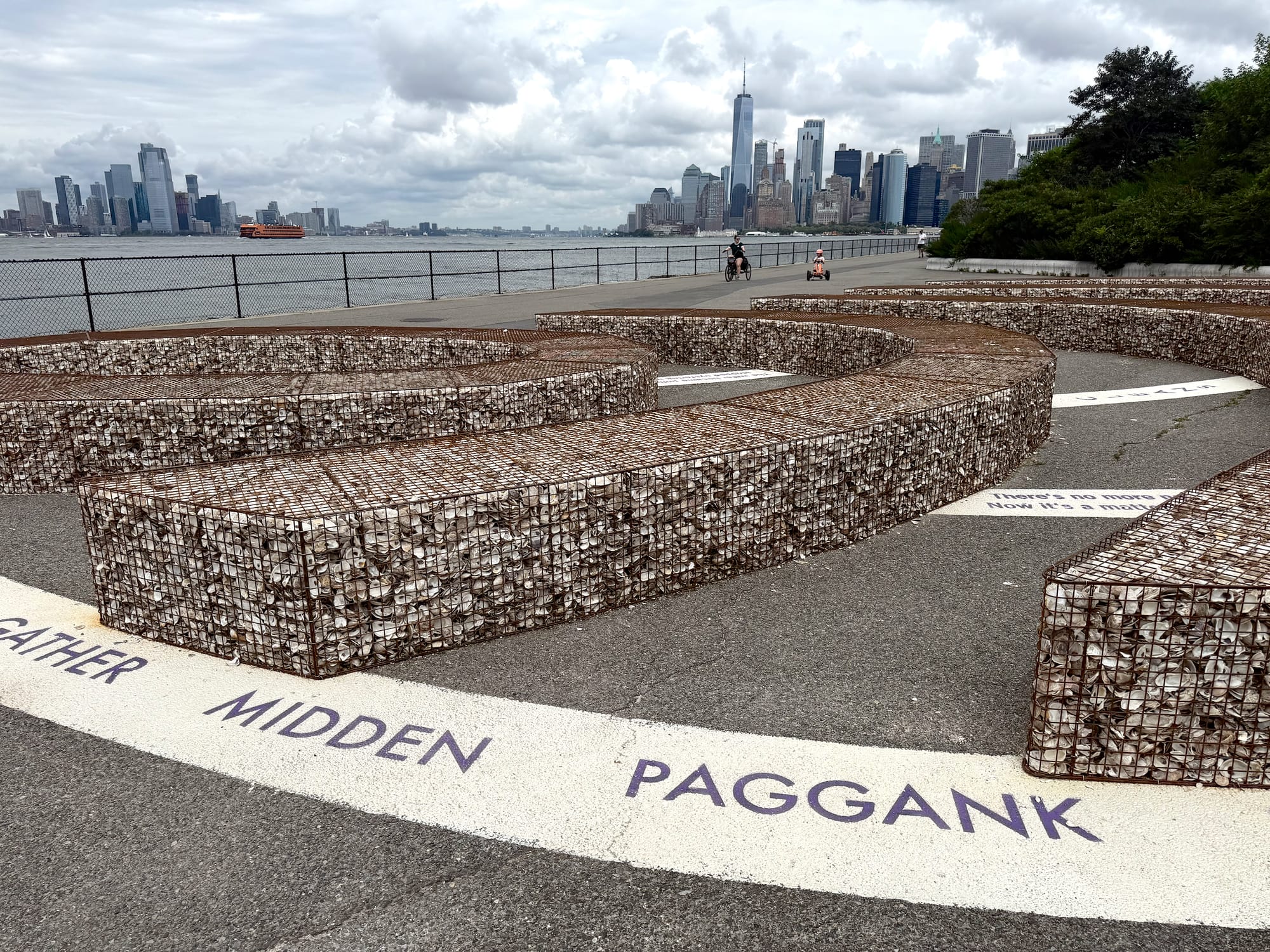
In the heart of Manhattan's Chinatown, the name Pearl Street is emblematic of a long-forgotten aspect of New York City's past. This street traces its origins to a 17th-century shoreline of the East River, a spot that was once home to a Lenape shell midden, a testament to the indigenous community's presence. Adjacent to this midden was likely a canoe landing, integral to the Lenape way of life.
Mark Kurlansky, in his book "The Big Oyster: History on the Half Shell" (2006), elaborates on the significance of these middens. They were not merely heaps of oyster shells but a common marker of pre-European settlement in the Hudson River region. These mounds, sometimes reaching up to four feet in depth, were instrumental in the daily lives of the indigenous people. They were sometimes buried in the ground, other times piled high, a testament to the abundance of this natural resource.
The Dutch colonists were the first to take notice of these shell piles in the early 17th century, and many of these sites remained visible well into the 19th century. As Brooklyn writer Daniel Tredwell noted in his diary of 1839, he and his father would often explore these heaps along the creek with curiosity. The shells, bleached white, resembled snow at a distance, sparking questions about their origin.
However, the answers remained elusive, and the family's inquiries were left unanswered, suggesting a collective amnesia about the indigenous origins of these landmarks.
This erasure of Indigenous settlement in 19th-century New York was so thorough that it never occurred to the Tredwell family that the landmarks they visited were created by those they displaced. This historical amnesia is at the heart of Alan Michelson's "The Oyster" project. Currently open on Governors Island, this public artwork will continue until late fall, serving as a poignant reminder of the enduring legacy of the Lenape people.
It underscores the fact that the mark of the oyster, and by extension, the Lenape, continues to be felt in our daily lives, despite the efforts to erase their history.
Written by urgent.news from Hyperallergic's reporting — not their text. Machine-written — may contain errors; check the original before relying on it.