The Last House ending, explained. Because what?
Netflix's "The Last House" is about a family trapped inside by rain. Why? How? What? Let's dig into that WTF ending.
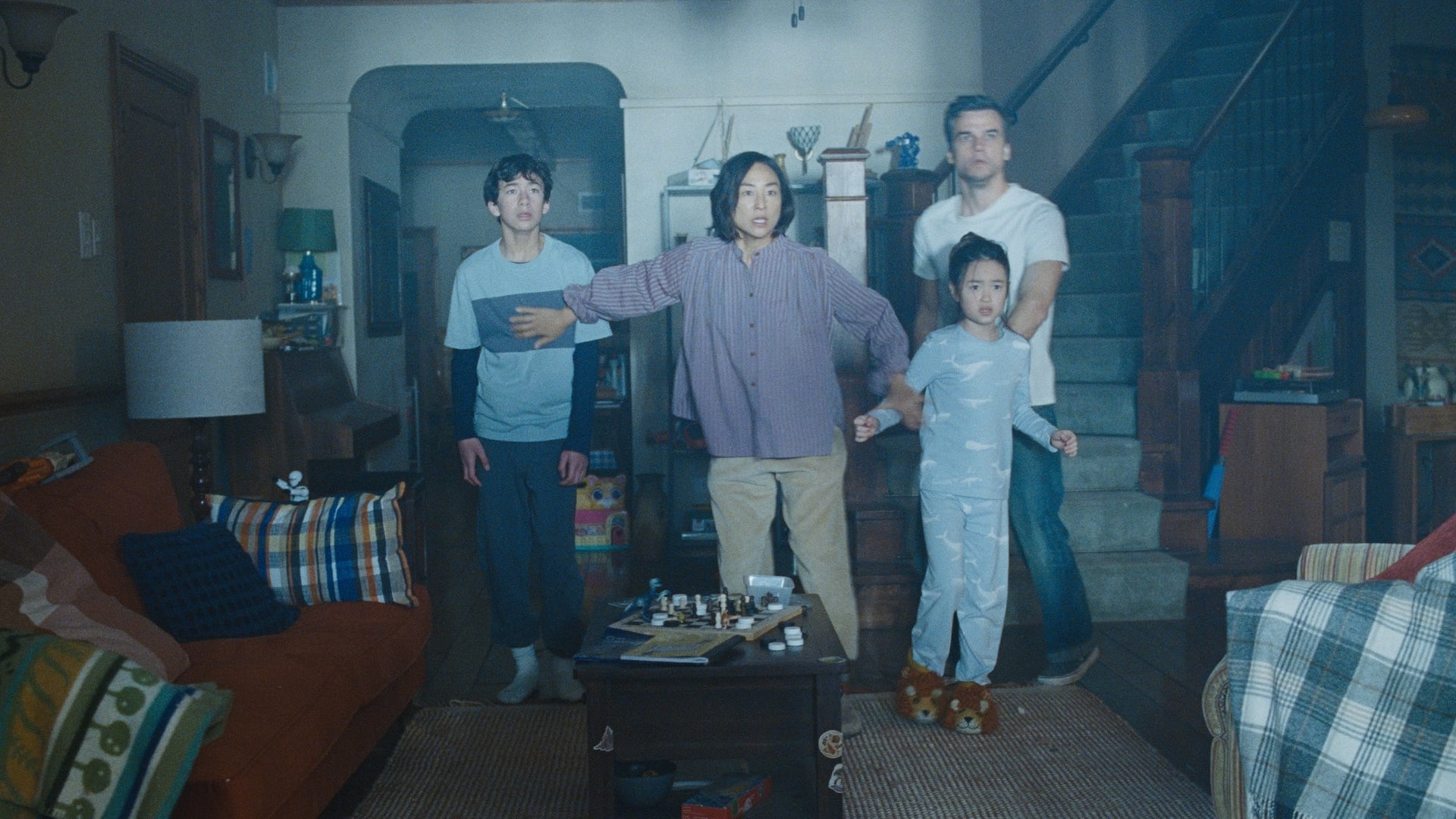
Netflix's The Last House is a perplexing film that blends elements of horror, sci-fi, and drama, directed by Louis Leterrier. The story follows the Seagrave family, Ann (Greta Lee), Jason (Wagner Moura), their children Ruth (Riley Chung), and Graham (Noah Alexander Sosnowski), who find themselves trapped inside their home during an intense rainstorm. The locks are sealed by tendrils of water, and not only is their home sealed, but the entire neighborhood is as well.
Throughout their ordeal, the family faces starvation, shoots their dog Cassidy, and even hunts down neighborhood wildlife for sustenance. Ann and Jason resort to extreme measures like "chimney fishing" to survive. As weeks turn into months, and then five years, the family remains trapped in their home, with the creatures responsible for the lockdown remaining a mystery.
The creatures responsible for the lockdown turn out to be deep-sea beings like Leviathan or the Kraken, not aliens as initially speculated. Ruth, the family's narrator, insists on this theory, believing the creatures are not from outer space but rather an undiscovered aspect of the ocean. The family's plight is exacerbated by the fact that the creatures have been wiping out the human population by the coast, possibly to reclaim the planet and its environment.
In a final act of mercy, the family manages to trap one of the creatures and demand its release, leading to a reciprocal gesture from the creature and its companions. As the family's home crumbles, the sun emerges, and the Seagraves escape by boat, leaving the town behind. The movie concludes with the family sailing away into the horizon, leaving the fate of the creatures unknown. In the end, it is suggested that the creatures may still be out there, reclaiming their home in the depths of the ocean.
Written by urgent.news from Mashable's reporting — not their text. Machine-written — may contain errors; check the original before relying on it.