Suriname moves to evict Mennonites and illegal Amazon settlers
The government in Suriname has started toughening up on land developers who illegally clear the Amazon Rainforest for agriculture and cattle ranching, according to Suriname President Jennifer Geerlings-Simons, speaking at an Aug. 4 press briefing. In recent months, officials have started investigating illegal settlements and revising zoning for hundreds of thousands of hectares of mostly […]
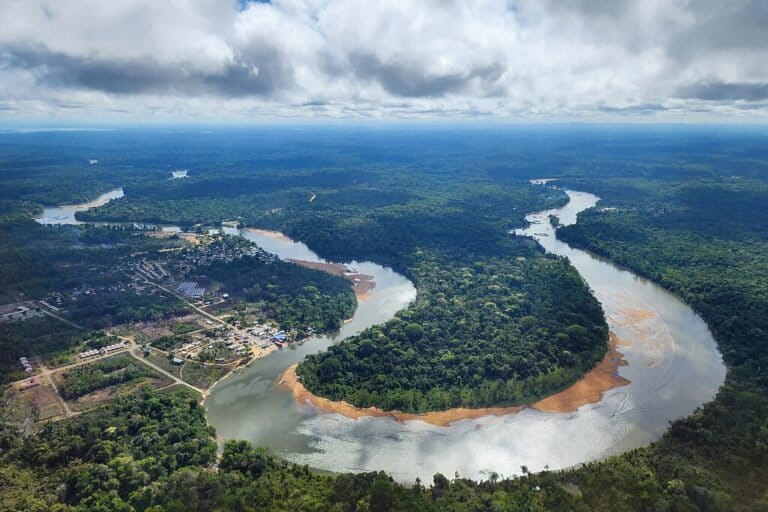
The government of Suriname is taking a firm stance against illegal land clearance in the Amazon Rainforest, with President Jennifer Geerlings-Simons announcing stricter measures during a press briefing on August 4th. Officials have been investigating illegal settlements and re-zoning hundreds of thousands of hectares of predominantly primary forest, which were initially designated for agribusiness ventures.
It has been revealed that many of these developments are linked to the Mennonite community, a conservative Christian group that migrated to Suriname seeking to establish religious farming colonies.
Geerlings-Simons stated during the briefing that "The people who are active there in the interior and have cleared land to live there, are there illegally. And that means that we’re going to take measures against them." In 2023, Mongabay exposed how private agribusiness investors were collaborating with the government to facilitate a Mennonite pilot program, which would relocate approximately 1,000 families from Bolivia and potentially other regions onto up to 30,000 hectares (74,000 acres) of land in Suriname's interior regions.
Furthermore, reports from Mongabay in 2023 and 2024 disclosed the government's plan to transfer roughly 467,000 hectares (1,153,982 acres) of largely untouched rainforest from the Ministry of Land Policy and Forest Management to the Ministry of Agriculture, Livestock and Fisheries for potential agribusiness projects. The backlash against these initiatives has centered around Suriname's extensive 93% forest cover.
Written by urgent.news from Mongabay's reporting — not their text. Machine-written — may contain errors; check the original before relying on it.