Summer jobs report is a double whammy for workers
Data: Bureau of Labor Statistics ; Chart: Courtenay Brown/Axios America's labor market appeared to be gaining momentum this spring. The latest data makes that rebound look much less convincing. Why it matters: The report isn't as bad as the headline suggests, but the broader picture is still one of a labor market that is less robust than it seemed. If the trend continues, U.S. workers might find…
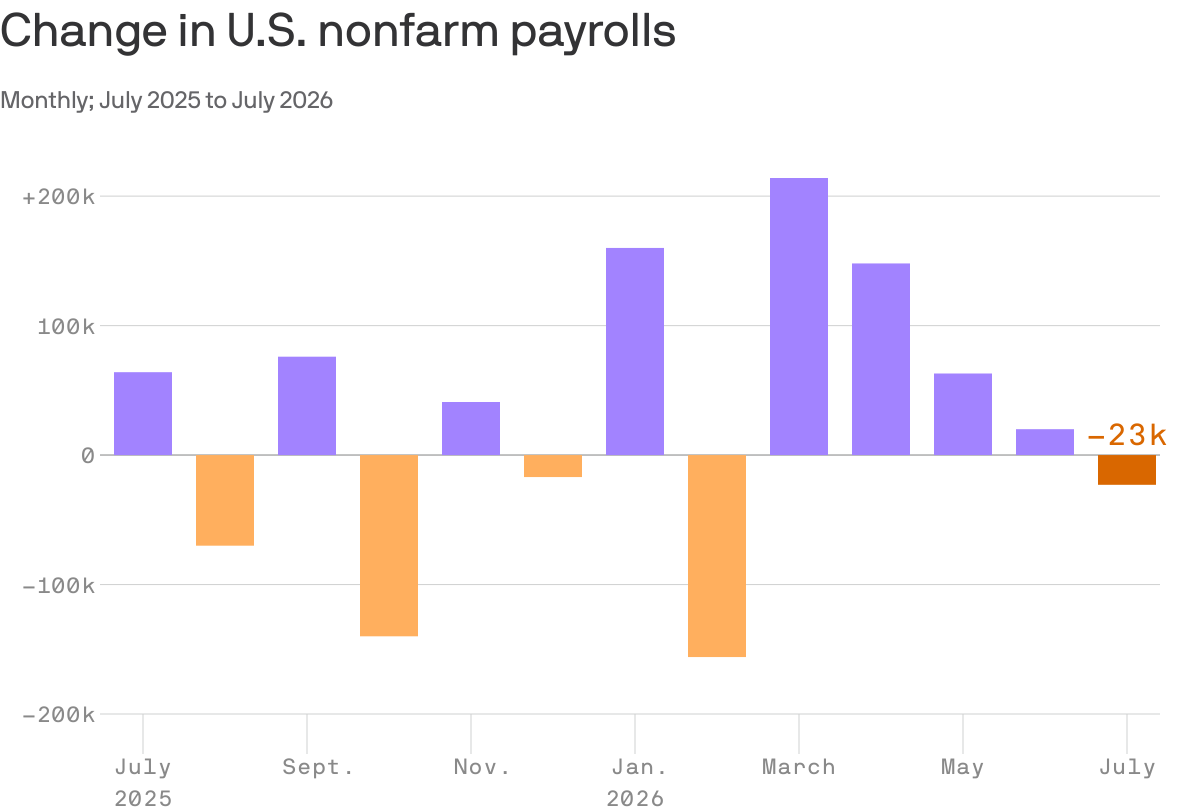
The latest summer jobs report paints a mixed picture of the U.S. labor market, revealing both positive and negative trends. While the unemployment rate dropped to 4.1% in July, marking the lowest level in a year, the broader employment landscape tells a different story. The economy lost 23,000 jobs in July, the first negative month since February, as recent gains in spring and summer proved to be less robust than initially believed.
The report's headline decline was largely due to a 50,000 job drop in local government education, a sector known for seasonal volatility. Even if we account for that seasonal fluctuation, the jobs market still showed signs of weakness. Leisure and hospitality reported a 40,000 job loss, with the financial sector shedding 14,000 jobs, bringing its total decline to 121,000 since its peak last year. Health care, meanwhile, added only 22,000 jobs, significantly below its average monthly gain of 36,000 over the past year.
Despite these setbacks, the unemployment rate fell to 4.1%, primarily because people left the labor force rather than finding employment. This trend of labor force shrinkage was evident, with the number of unemployed people dropping by 178,000, but the labor force shrinking by 264,000. The prime-age American workforce, typically the most robust segment, saw a slight uptick in employment rates, but the overall picture remains concerning.
The Federal Reserve faces an uncomfortable dilemma, as weakening job growth and persistent inflation could both influence their rate-hike decisions. A slower labor market would likely push back rate hikes, while high inflation demands action. Following the report, the market-based odds of a September rate hike decreased from 55% to 44%, suggesting that the labor market's solidity has lost some of its weight in the Fed's decision-making.
While the headline might suggest a strong job market, the nuanced data paints a more complicated picture. Policymakers will need to weigh these factors carefully before their next policy meeting in mid-September, as the inflation data will likely be the deciding factor in their rate-setting decisions.
Written by urgent.news from Axios's reporting — not their text. Machine-written — may contain errors; check the original before relying on it.