South Africa: Maré and the Cape Flats - Where Violence Becomes a Public Health Crisis
[allAfrica] "Stay together."
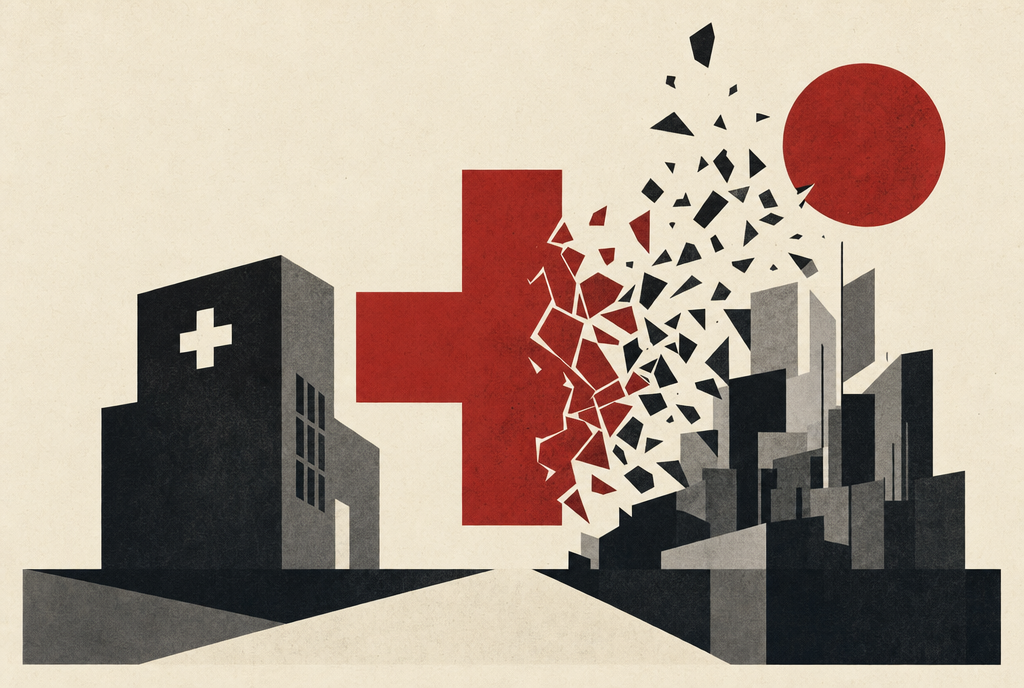
In the Maré favela of Rio de Janeiro, a vibrant yet troubled neighborhood, the complex interplay of poverty, violence, and inadequate services has created a public health crisis that extends beyond mere statistics. Nestled amidst bustling streets and lively shops, the community is a microcosm of broader societal challenges, shaped by decades of systemic issues and deeply entrenched social inequalities.
As journalists visiting during the 26th International AIDS Conference, our immersion in Maré underscored the profound reality that health is inextricably linked to the lived experiences of its residents, encompassing elements such as poverty, violence, housing, education, and access to essential services. This understanding forms the cornerstone of Redes da Maré, a civil society organization founded in 1997 by residents and former residents of Maré.
Their mission has evolved from a pre-university program to a multifaceted organization addressing health, education, public safety, culture, environmental justice, legal advocacy, and women's rights.
Carolina Dias, the Coordinator of the Right to Health Axis at Redes da Maré, emphasized the complexity of defining a favela beyond its informal settlement classification. She highlighted the presence of multiple armed groups, each vying for control over the territory, and the stark division marked by invisible boundaries.
The community is home to around 140,000 people, yet educational opportunities diminish significantly for older students, with only three high schools serving the entire population. This stark educational disparity, coupled with limited access to higher education, highlights the profound barriers to upward mobility faced by Maré's youth.
The organization's work is deeply rooted in addressing these inequalities as fundamental human rights. For Dias, the right to public safety, education, and housing are paramount in improving the lives of the residents. Health, in her view, is inseparable from these broader social determinants. Redes da Maré recognizes that without safety, education, and housing, people cannot fully enjoy good health.
Their approach is holistic, encompassing support for young people preparing for university, women facing violence, individuals experiencing homelessness, and those accessing harm reduction services.
The impact of violence in Maré extends far beyond the immediate loss of life. Police operations, often initiated under the cover of darkness, disrupt daily life, leading to the cancellation of school days, clinic appointments, and childhood vaccinations. The disruption of education, with nearly 20,000 learners affected, robs children of critical learning time and disrupts their access to essential meals.
The trauma inflicted by police raids also impedes children's ability to concentrate on their studies, further exacerbating their educational challenges.
Community members vividly illustrate the psychological toll of violence, recounting how teachers attempt to shield students from gunfire during raids, only for a child to break the silence, highlighting their acute awareness of the ongoing danger. The intergenerational trauma of violence is palpable, with children growing up in an environment where the sound of gunfire is an unfortunate routine, shaping their perceptions of safety and security.
Redes da Maré's documentation of the effects of police operations reveals the extent of the crisis. Between 2016 and 2025, over 231 police operations resulted in at least 163 days of lost education, along with similar disruptions to healthcare services. The consequences of these operations reverberate long after they conclude, with lasting impacts on public health and social well-being.
For Redes da Maré., addressing these systemic issues is not just a matter of social justice but a crucial step towards achieving comprehensive public health in the favela.
Written by urgent.news from AllAfrica Health's reporting — not their text. Machine-written — may contain errors; check the original before relying on it.