Scientists extend instrument life on Voyager 2 probe
Voyager 2, launched in 1977, has traveled into interstellar space.
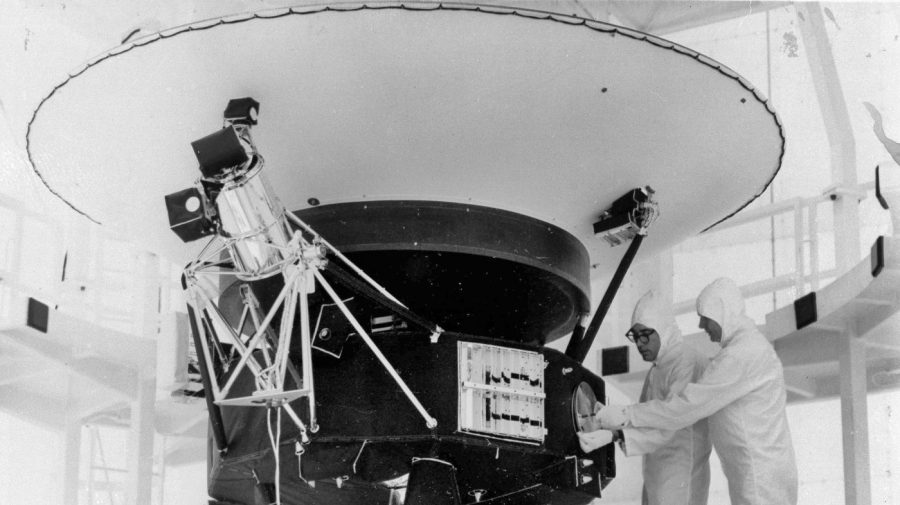
NASA scientists are set to extend the life of their most distant spacecraft, Voyager 2, through a daring "Big Bang" maneuver, potentially granting the probe another year of power. This clever power-saving technique involves selectively shutting off high-power instruments on the Voyager probes while switching on lower-power alternatives, all while ensuring the spacecraft remains warm enough to function in the frigid depths of interstellar space.
According to a statement released by NASA on August 4, the Big Bang procedure was successfully tested on Voyager 2 in May and June, resulting in a successful power transfer that should keep the probe's three science instruments operational for at least an additional year.
Though both Voyager 1 and Voyager 2 are equipped with nuclear power, the latter is in slightly better condition than its twin. NASA plans to carry out a similar "Big Bang" on Voyager 1 within a few months to keep science operations running as long as possible. Voyager 1 is currently about 171 astronomical units (AU) away from Earth, while Voyager 2 is approximately 143 AU distant.
These probes are vital for uncovering clues about the interstellar region beyond the heliopause, the boundary of our solar system where the sun's influence wanes.
Both spacecraft have been pivotal in exploring our solar system, with Voyager 2 conducting flybys of all four giant planets and finishing its Neptune encounter in 1989. Voyager 1, on the other hand, was tasked with traversing the ecliptic plane of our solar system after its closest approach to Saturn in 1981. As the two spacecraft age, more instruments need to be shut off to prolong their missions.
Plutonium, which powers the spacecraft, naturally decays over time, causing a yearly power loss of roughly 4 watts. To ensure both Voyager probes continue to function for as long as possible, NASA has taken steps to extend their lifespans through the Big Bang maneuver and other power-saving techniques.
Written by urgent.news from Live Science's reporting — not their text. Machine-written — may contain errors; check the original before relying on it.
This story
This is one outlet's version. Read the fullest account.
- NASA Figured Out How To Keep Its 48-Year-Old Voyager 2 Probe Running For Yet Another Year science.slashdot.org
- NASA grants Voyager 2 probe another year of power with risky 'Big Bang' maneuver. Now, will it work for Voyager 1? livescience.com
- NASA’s Voyager 2 survives daring ‘big bang’ maneuver scientificamerican.com
- NASA to keep its 48-year-old Voyager 2 probe running for yet another year space.com
- NASA grants Voyager 2 probe another year of power with risky 'Big Bang' maneuver. Now, will it work for Voyager 1? r.smartbrief.com