Pension: Austrian model? What a compromise on the "pension at 63" could look like
More and more voices in the coalition are speaking out against a core element of the planned pension reform. There are four options for a possible compromise.
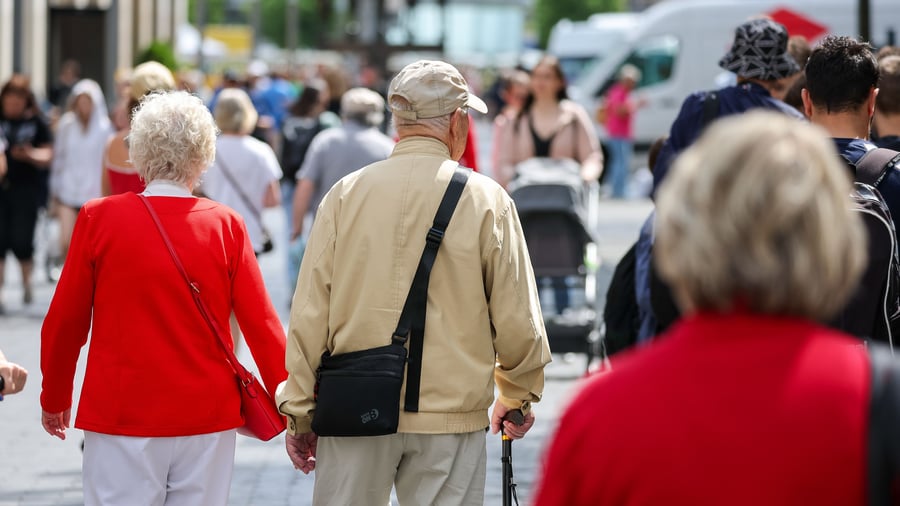
At least seven heads of state are questioning the "total work of art" pension reform because they do not want to abolish the "pension at 63". Criticism of this comes from both parties. CDU parliamentary group leader Thorsten Frei recently tried to end the debate with the statement that there is "no room for negotiation". However, the discussions are likely to continue with the state elections in East Germany and at the latest with the first draft of the pension reform law in the fall.
This is because the abolition of the "pension at 63" is financially one of the most important parts of the reform, and it could save between six and 16 billion euros per year of retirement, depending on how many people actually work longer.
The core issue is two different political wishes, both of which were associated with the introduction of the "pension at 63". On the one hand, it is about the appreciation of a "life's work", i.e., a long working time and correspondingly many years of contributions to the pension insurance. On the other hand, this form of pension should explicitly benefit people who work in physically and mentally demanding jobs and may not be able to perform their jobs until the regular retirement age.
The former SPD Minister of Labor, Andrea Nahles, under whom the "pension at 63" was introduced in 2014, said at the time in the Bundestag: "These people have fulfilled their obligation." A compromise seems politically possible that abolishes the "pension at 63" for part of the currently eligible people - with exceptions for those who already earn little or perform particularly hard work.
Experts see several options: Option 1: "Heavy work pension" based on the Austrian model
SPD parliamentary manager Dirk Wiese has introduced a model from Austria into the debate. Those who can prove certain stressful activities are eligible for the "heavy work pension" introduced in 2007 in the neighboring country. This includes heavy physical work, irregular night shifts, regular work under extreme temperatures, or exposure to chemicals. Since the beginning of 2026, nursing professions have also fallen under the heavy work category.
The condition for receiving the Austrian heavy work pension is 45 years of insurance. However, those pensioners must accept deductions of 0.15 percent per month before the regular retirement age. This is half as much as in Germany for the "pension for long-term insured" from 35 years of contributions: here, the deduction is 0.3 percent per month.
In 2025, 12.5 percent of male new pensioners used the model, with the largest group being farmers. For women, it was only 2.8 percent. However, this is because women in Austria could retire regularly at 60 until 2024. Alone in 2024, around 8,000 people retired through this regulation, said WIFO expert Christine Mayrhuber.
Applied to Germany, this would result in a high five-digit number of recipients. German economist Martin Werding, also a member of the pension commission, thinks little of a heavy work rule. The list of eligible professions is "driven more by good organization and strong lobbying than by occupational health insights," he told the Handelsblatt.
Option 2: Expand disability pension
The pension commission had suggested in its recommendations to facilitate access to the disability pension, which was recently regulated. This has now been significantly increased and is "around 60 percent higher than ten years ago". It would be possible to further expand this.
Currently, those who can work less than three hours a day receive the full disability pension. For three to six hours a day, there is half the amount. The individual pension depends on previous pension contributions and age. On average, disabled people received 1,041 euros per month according to the most recent data from 2024.
The commission further writes on the disability pension that the goal must be a case-by-case examination - for example, as part of a regular doctor's visit at 45 or 63 years, at which point it could be determined for whom rehabilitation and for whom retirement is indicated. If necessary, people can then be retired without deductions two years before the regular retirement age after an individual health examination.
So far, however, the model projects have shown a "prevention dilemma": according to it, men are much harder to reach for rehabilitation measures than women.
Translated by urgent.news. Machine-written — may contain errors; check the original before relying on it.