New autism therapy shows surprising benefits even in adult mice
Blocking the glycine transporter SLC6A20 restored important brain signaling and improved social, communication, and repetitive behaviors in autism-related mouse models. The treatment also worked in human brain organoids and showed lasting effects in adult mice, suggesting the brain may remain more treatable later in life than previously thought.
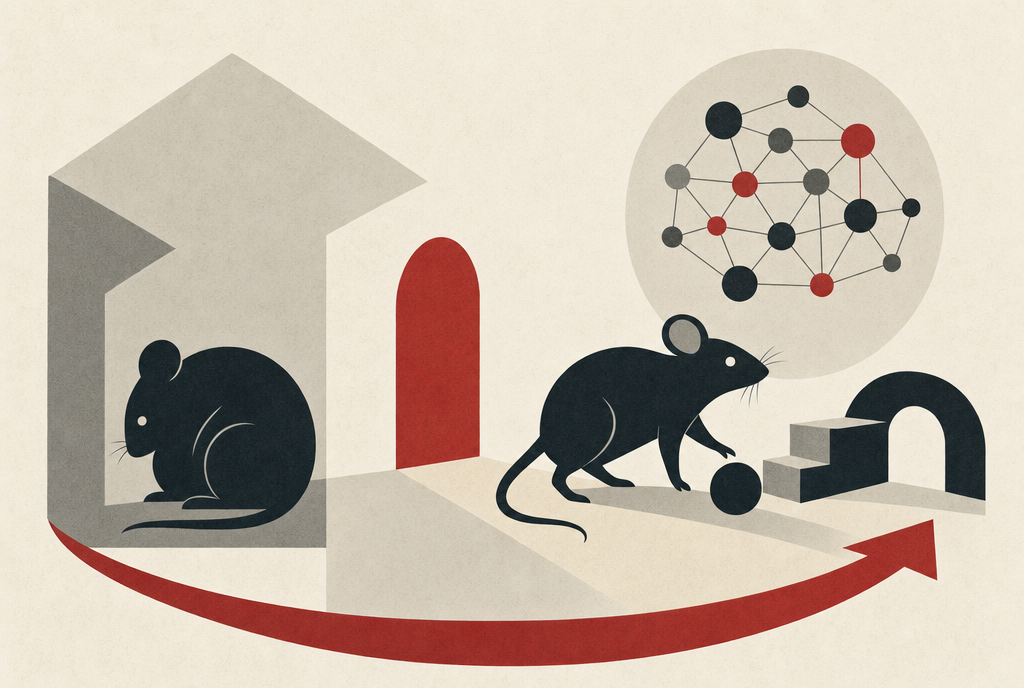
Scientists have discovered a potential new method of treating autism spectrum disorder (ASD) by restoring the function of a critical brain receptor. The research, conducted by Director Eunjoon Kim of the IBS Center for Synaptic Brain Dysfunctions, centered on a glycine transporter called Slc6a20a/SLC6A20. Inhibiting this transporter was discovered to help restore NMDA receptor (NMDAR) function, which is essential for learning, memory, and other cognitive processes.
Reduced NMDAR activity has been associated with various neurological and psychiatric conditions, including ASD. Earlier attempts to enhance NMDAR function using treatments that raise glycine levels have been inconsistent, leading to increased interest in more precise treatments. To achieve this, the researchers targeted Slc6a20a, a transporter located mainly in brain regions responsible for cognition, like the cortex and hippocampus.
The ASO treatment led to the restoration of NMDAR activity and improvements in social interaction, communication, and repetitive behaviors in mouse models with autism-related mutations. The effects were observed in adult mice, suggesting the possibility of treating NMDAR dysfunction even after the brain's major developmental stages are complete.
Further examinations revealed that the therapy primarily corrected abnormal phosphorylation patterns in proteins regulating synaptic signaling and NMDARs, rather than increasing or decreasing the overall protein amounts. Initial tests in human brain models indicated that the approach could also be applicable to people, restoring NMDAR function close to normal levels.
This research suggests that SLC6A20 inhibition might represent a more practical therapeutic route for treating neurodevelopmental disorders with NMDAR hypofunction, including ASD, schizophrenia, and intellectual disability.
Written by urgent.news from ScienceDaily Health's reporting — not their text. Machine-written — may contain errors; check the original before relying on it.
This story
This is one outlet's version. Read the fullest account.
- New autism therapy shows surprising benefits even in adult mice sciencedaily.com