Neutrinos From Deep Inside Earth Provide a New Picture of the Mantle
A global constellation of neutrino detectors is creating a never-before-seen view of the radioactive elements that power Earth’s tectonic heat engine. The post Neutrinos From Deep Inside Earth Provide a New Picture of the Mantle first appeared on Quanta Magazine
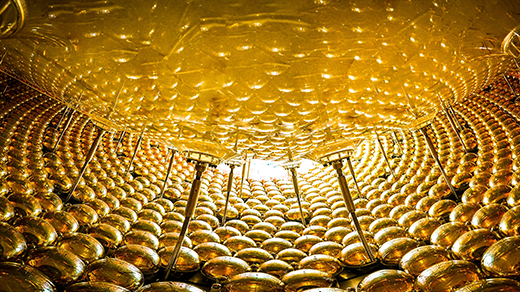
Deep within the Earth, beneath a laboratory 2 kilometers underground, a team of physicists and technicians reside. These scientists work to detect elusive particles called neutrinos, which pass through our bodies every second, yet have only been captured a few hundred thousand times. Among these neutrinos, geoneutrinos, produced in the Earth's interior, are even more elusive.
Geoneutrinos originate from two main sources: heat leftover from the planet's formation and heat generated by the decay of radioactive elements such as uranium, thorium, and potassium in the rocks of the mantle and crust. By measuring geoneutrinos, physicists can directly determine the heat-producing elements in the Earth.
The SNO+ experiment, located in Sudbury, Canada, is one such detector designed to catch these rare particles. The experiment consists of an acrylic sphere filled with 780 tons of oily liquid scintillator, which flashes when lit up by energetic particles. The surrounding water and rock shield the detector from cosmic radiation, allowing the faint signals of geoneutrinos to be observed. To maintain complete darkness, the team descends into the mine, donning electric blue jumpsuits and hairnets to minimize contamination.
Despite the challenges, SNO+ has seen success. In November 2025, the experiment reported its first detection of geoneutrinos, contributing about 50 to the total observed count. However, the measurements from different locations show major uncertainties. Researchers believe that these variations may hint at an uneven distribution of radioactive elements within the Earth's mantle.
Certain regions, such as large low-shear-velocity provinces (LLSVPs) under Africa and the Pacific Ocean, seem to produce more geoneutrinos than others, suggesting that deep Earth structures might concentrate specific elements.
While the findings offer tantalizing clues about the Earth's interior, many questions remain. Researchers are still unsure whether the differences in geoneutrino measurements reflect variations in the mantle's composition or if they stem from the distinct counting methods employed by each experiment. Until these uncertainties are resolved, the geoneutrino detections continue to provide a unique window into the Earth's deep structures and the processes that drive its dynamic systems.
Written by urgent.news from Quanta Magazine's reporting — not their text. Machine-written — may contain errors; check the original before relying on it.