Urgent.News

the world's headlines, one feed

Editions

Tech

I tested one of the coolest-looking drip coffee makers in the world — and it's not just a pretty face

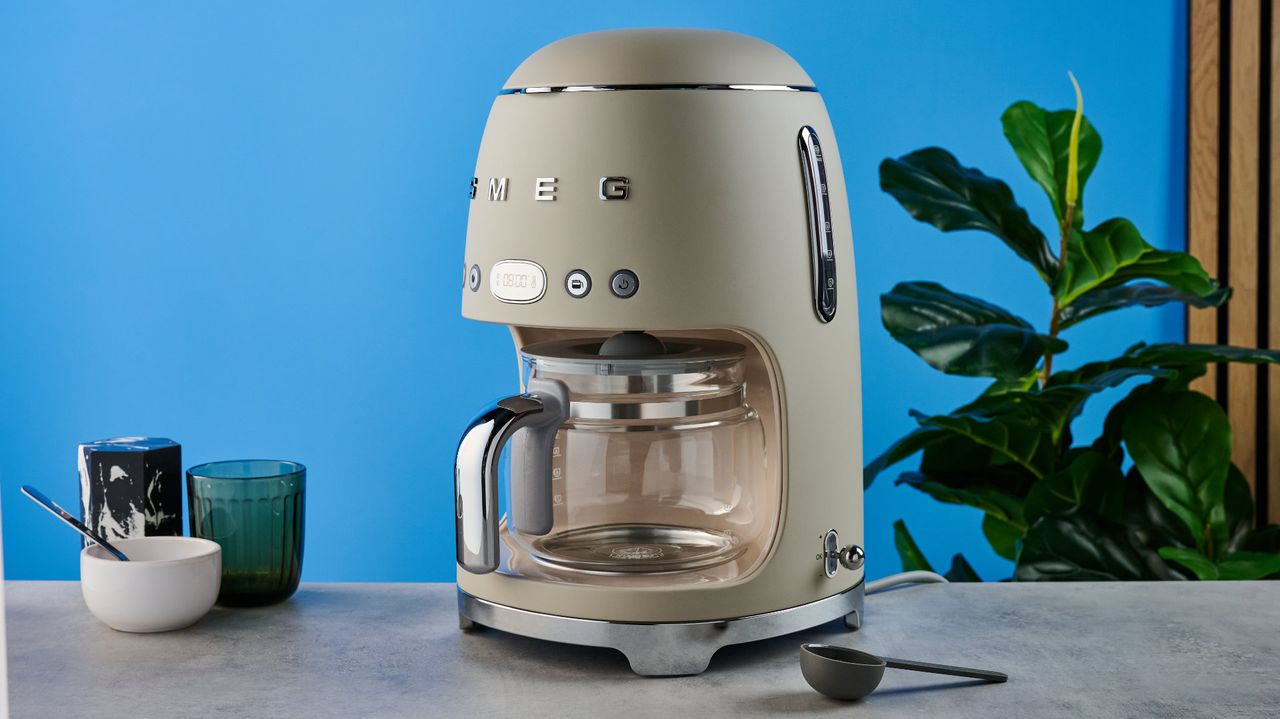
The Smeg Retro Coffee Maker brews clean, delicious coffee with a single press of a button, and looks delightfully cool while doing so, too.
I tested one of the coolest-looking drip coffee makers in the world — and it's not just a pretty face

The Smeg Retro Coffee Maker is a visually stunning appliance that certainly stands out in any kitchen. Despite its premium appearance, this Italian brand's latest offering proves that style and substance can go hand in hand. In my hands-on testing, the Retro Coffee Maker demonstrated its ability to brew clean-tasting, balanced coffee with minimal sediment and no bitterness, thanks to its easy-to-use one-button interface.

Priced at $259 in the United States and £199-£219 in the United Kingdom, the Smeg Retro Coffee Maker falls in the higher price range compared to other single-serve options, such as the Moccamaster KGBV Select ($369) and the SCA-accredited Breville Luxe Brewer ($329). However, for the price-conscious coffee enthusiast, the Moonlight colorway is the only exception to the higher price range, as it costs £20 more than the standard colors.

The Retro Coffee Maker's strong points lie in its sleek and sophisticated design, which can easily blend into both home and diner-style kitchens. Measuring 14 inches tall, 10 inches wide, and 10 inches deep, this coffee maker is slightly larger than the Moccamaster KGBV Select and the Breville Luxe Brewer, but shares the same height as the Ninja 12-Cup Drip Brewer.

The only accessory included is a permanent mesh filter and a scoop, which allows for the use of single-use #4 conical filters as well. The water tank is not removable, which may pose a challenge for left-handed users.

Brewing with the Smeg Retro Coffee Maker is a simple process, requiring just a few steps: adding coffee to the filter, filling the water tank, choosing the desired intensity level, and pressing the power button. The brewing time varies, taking between seven to eight minutes for a full batch and around three minutes for a half batch. While the water tank's positioning may require a little getting used to, the overall experience is user-friendly and results in a delicious cup of coffee.

Written by urgent.news from Tom's Guide's reporting — not their text. Machine-written — it may contain errors, so check the original before relying on it.

Read the original at tomsguide.com →

More in Tech

What I Learned Building a Production LMS with Node.js, MongoDB & AWS in 2026

Building an LMS looks simple at the beginning. You need users, classes, payments, attendance, recordings, homework, notifications, and reports. Then you move into production.

  • Building a production LMS with Node.js, MongoDB, and AWS proved more complex than anticipated.
  • Proper system design matters more than technology choice.
  • Avoid treating schema design in MongoDB as optional; use dedicated collections for data growth.

How ReactJS Can Improve User Experience and Boost Your Bottom Line?

Most content about ReactJS and business value follows the same template: virtual DOM makes it fast, components make it reusable, fast and reusable means good for business.

  • ReactJS improves user experience with virtual DOM updating only changed components.
  • Component reusability speeds development, reduces bugs, and enhances codebase stability.
  • React Native enables cross-platform app development, lowering maintenance costs.

Three checks in our codebase that could not fail

Last night I found three checks in our own codebase that could not fail. Not checks that were failing to catch things. Checks that were structurally incapable of ever going red, while reporting green…

  • Three code checks in the system are structurally incapable of failing
  • First check uses verifier with line-for-line copy of the rule it enforces
  • Second check asserts its own arithmetic, reporting PASS with mismatched assertions

Head-of-Line Blocking in HTTP

An asynchronous HTTP/1.1 server can handle many connections concurrently while still serializing work within each connection.

  • Head-of-line blocking delays fast HTTP requests in slow connections
  • HTTP/2 solves this at application layer with independent streams
  • HTTP/3 uses QUIC transport-level streams to avoid blocking

ATProto for Distributed Systems Engineers: How Bluesky's Protocol Reimagines Social Infrastructure

Bluesky's AT Protocol is often dismissed as "just another Twitter alternative." But if you read the new technical deep dive aimed at distributed systems engineers, you'll find something much more…

  • ATProto reimagines social platforms from the ground up, challenging conventional web architecture.
  • Uses a federated model with user-controlled data stores and cryptographically signed repositories.
  • Separates app view from personal data store, allowing multiple app types to run on the same data.