How humanitarian organizations are using AI to reach people faster
Minutes after catastrophic earthquakes struck Venezuela in June, GiveDirectly got an AI -generated snapshot of the disaster from an internal tool. Then it used other AI tools that analyze satellite imagery to pinpoint the hardest-hit neighborhoods, paired that with poverty data, and posted flyers in person inviting families to apply for aid. Three weeks later, it started sending cash directly to…
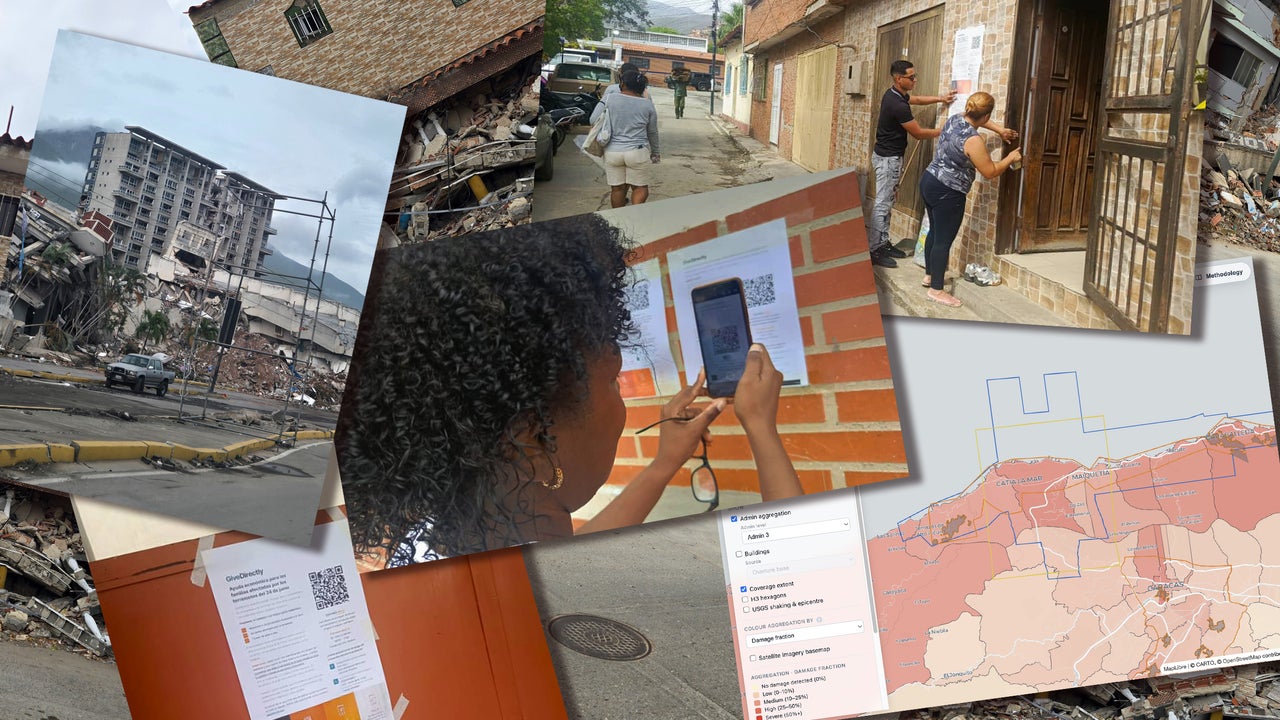
In the aftermath of devastating earthquakes in Venezuela, the nonprofit GiveDirectly swiftly employed AI-generated snapshots from internal tools to identify the most affected neighborhoods. By integrating AI with poverty data, the organization was able to target aid distribution effectively. Within three weeks, GiveDirectly began sending cash directly to the phones of those in need, demonstrating the potential of AI to expedite humanitarian responses.
While AI tools are enhancing efficiency, they are not meant to replace human expertise. Mercy Corps utilizes agentic AI to expedite report preparation after disasters. By automating repetitive research tasks, the technology allows analysts to focus on decision-making. Mercy Corps has also employed AI to pull security, displacement, and news data from various sources, significantly cutting report preparation time.
The International Rescue Committee (IRC) leverages AI in multiple ways to assist refugees and displaced individuals. Satellite data helps identify displaced populations, and dynamic routing ensures aid reaches remote areas even when roads are inaccessible. AI tools are also being developed to detect diseases like mpox, which is rapidly spreading across Africa.
An app can analyze skin lesions using a database of thousands of images, enabling healthcare workers to identify the disease early and make informed decisions about quarantine and vaccination.
In refugee camps, the IRC uses AI-powered educational tools to provide content in diverse languages, accommodating over 40 countries and hundreds of languages. These tools, when used in conjunction with human facilitators, help students catch up on education. Additionally, IRC has developed a chatbot for mental health support, which has been particularly beneficial in countries like Jordan and Mexico, where stigma often prevents individuals from seeking help.
The chatbot, piloted in these regions, has proven to be a valuable resource, reaching more people in a fraction of the time it would take with human-only support.
Written by urgent.news from Fast Company's reporting — not their text. Machine-written — may contain errors; check the original before relying on it.