Hong Kong’s US dollar peg faces fresh calls for review – but is change feasible?
The Hong Kong dollar’s four-decade-old peg to the US dollar is facing fresh calls for review, after a local financial industry body urged greater use of the yuan and floated the idea of shifting to a basket of major currencies and gold – though financial analysts argue the current system is likely to remain in place. The proposal to revisit the pegged exchange rate system was submitted this week…
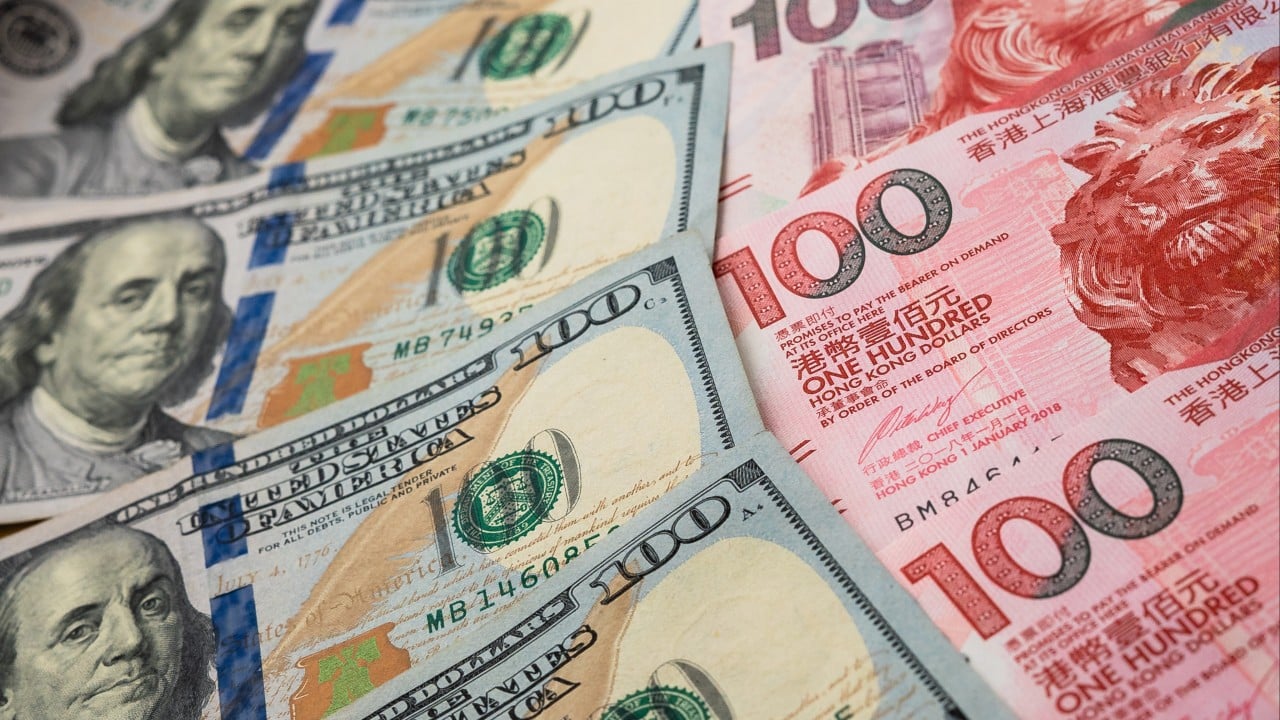
The Hong Kong dollar's four-decade-long peg to the US dollar is currently under scrutiny, with a local financial industry body proposing alternative solutions. The Hong Kong Securities and Futures Professionals Association (HKSFPA) recommended greater use of the yuan and a shift to a basket of major currencies or gold in a recent proposal. However, financial analysts argue that the current system is likely to persist.
The proposal came as the government seeks public feedback for its first-ever five-year financial plan. Founded in 2002, the HKSFPA advocated for forming an independent expert committee to explore potential currency reforms, with co-leadership from the Hong Kong Monetary Authority (HKMA) and the Financial Services and the Treasury Bureau.
The association argued that the US dollar peg relinquishes control over local monetary policy to the US Federal Reserve, leaving the Hong Kong dollar vulnerable to major dollar volatility or credit crises. They suggested that the peg could severely impact financial markets, property prices, and citizens' retirement savings.
However, market observers pointed out that the association's recommendations would face significant challenges in reaching the government's legislative agenda. Most local financial professionals and economists maintain that the peg is essential for maintaining market stability and ensuring prosperity.
Experts argue that switching to a yuan peg would be rare and highly complex, as linking a freely convertible currency to a non-freely convertible one presents numerous challenges. Kenny Tang Sing-hing, chairman of the Hong Kong Institute of Financial Analysts and Professional Commentators, emphasized that exchange-rate stability is crucial for Hong Kong's financial markets.
Allen Ding, chief economist at China Citic Bank International, cautioned that sudden monetary shifts could trigger market instability. He stressed that expanding the renminbi's global adoption should be the primary focus.
Tommy Wu, a senior economist for Greater China and North Asia at Standard Chartered Bank, described the existing peg as a "simple, transparent anchor" that international investors understand well. He highlighted that currency stability is more important for Hong Kong's economy.
Tommy Ong, managing director of T.O. & Associates Consultancy, noted that maintaining a separate anchor has reinforced Hong Kong's strategic value to Beijing. He argued that there is no evidence supporting the superiority of a basket of currencies over the US dollar and suggested that Hong Kong could act as a bridge by expanding its array of offshore yuan products.
Written by urgent.news from South China Morning Post's reporting — not their text. Machine-written — may contain errors; check the original before relying on it.
This story
This is one outlet's version. Read the fullest account.