Daring rescue in Antarctica: Patient evacuated in extreme cold and darkness
An American patient was evacuated from Antarctica in a daring medical rescue, flying in near-total darkness and minus 43°C (−45.4°F) conditions before being safely transferred to a hospital in New Zealand
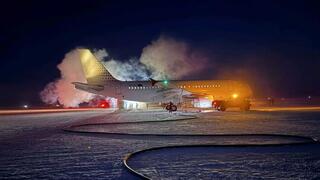
An American citizen was rescued in a daring medical evacuation from Antarctica last week, as the continent faced near-complete darkness and temperatures plummeting to around minus 40 degrees Celsius (−40°F), CNN reported on Friday. The urgent request for assistance came from the U.S. research station McMurdo on July 28, and the Australian aviation team Skytraders, specializing in flights to the frozen continent, received the call for help.
The team's departure was initially delayed due to extreme weather conditions, but they finally arrived at the research station after a five-hour flight. Upon landing, they faced challenging circumstances under almost complete darkness and temperatures of minus 43 degrees Celsius (−45.4°F). The aircraft made its departure before the conditions worsened, and the patient was swiftly flown to Christchurch, New Zealand for medical treatment.
Skytraders declined to disclose the patient's identity or medical condition, but confirmed that the individual was recovering well.
Capt. Al Wallach, the flight pilot, emphasized the precision required for every Antarctic mission, particularly during winter operations. He noted that the conditions they encountered were on the edge of their specialized aircraft's capabilities. Co-pilot Louise Robertson highlighted the need for groomers to prepare the runways for sufficient friction and smooth, clear surfaces for safe landings.
The crew had prepared for various worst-case scenarios, including a power outage on the runway that would have forced them to land with zero visibility. The flight also carried extra fuel in case they had to turn back to Australia. Robertson described the mission as requiring immense concentration, workload, and mental calculations, such as adjusting for altitude during the approach and communication among the flight crew.
Written by urgent.news from Ynetnews's reporting — not their text. Machine-written — may contain errors; check the original before relying on it.