China plans to increase mine output in world’s largest rare earth deposit by 50%
China plans to expand production capacity of a mine in Bayan Obo in its Inner Mongolia region with an investment of over half a billion yuan (US$74 million). The expansion will raise the mine’s annual output by 50 per cent from 10 million to 15 million tonnes at the world’s largest rare earth deposit. Bayan Obo is a complex polymetallic deposit containing iron, rare earths, fluorite, niobium,…
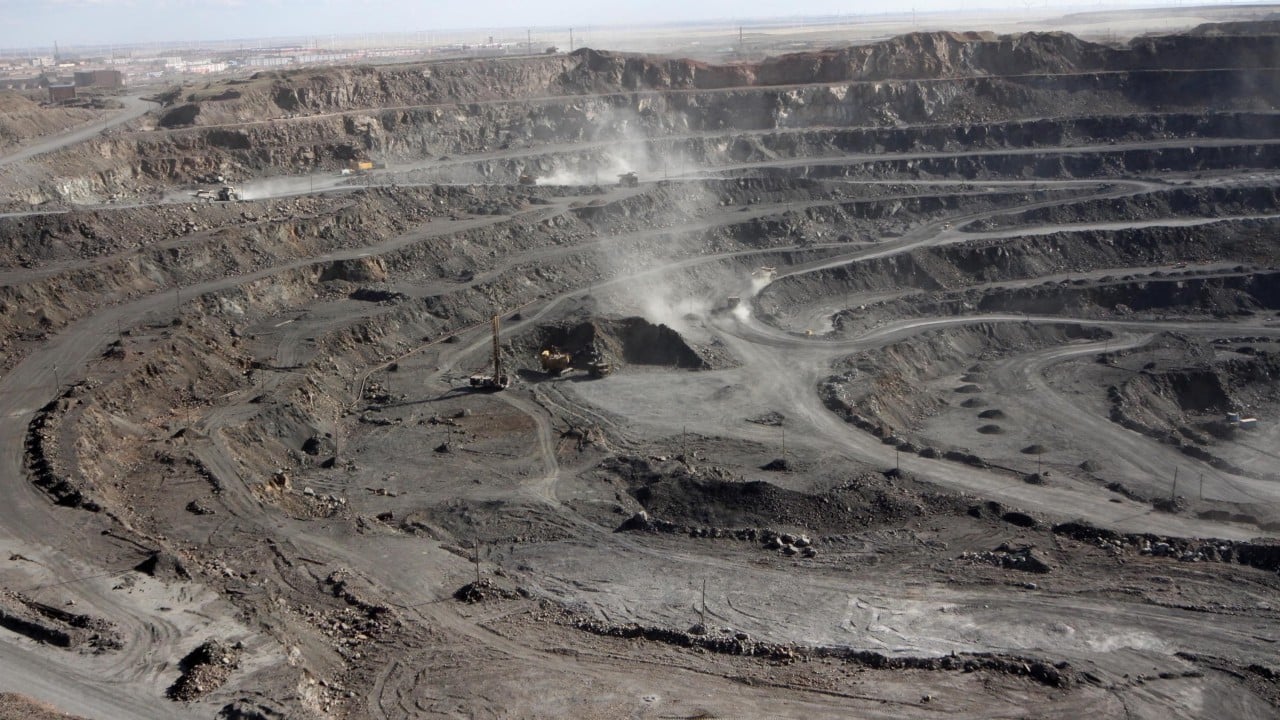
China intends to augment the production capacity of its Bayan Obo mine in Inner Mongolia, a world's leading rare earth deposit, by 50 per cent, according to Baogang Group, the project's operator. The expansion aims to increase annual output from 10 million to 15 million tonnes, with a primary focus on iron ore enhancement, as rare earths are merely a secondary by-product.
The bay, renowned for containing iron, rare earths, fluorite, niobium, scandium, and thorium, is projected to have a capacity of 15 million tonnes after the project's completion. Li Yang, a prominent geologist at Peking University, noted that the primary objective of the expansion is to mine iron, with fluorite being recovered concurrently, emphasizing that rare earth production is regulated and subject to quotas, thus requiring no additional ore mining.
The Bayan Obo mining area alone houses around 600 million tonnes of iron ore, each boasting an average total iron grade of 35 per cent. Despite having lower grade iron compared to Australia's major deposits, which typically have a grade of approximately 60 per cent, Bayan Obo remains a vital strategic mineral resource for China.
The Baogang Group, operating the Bayan Obo mine, plans to augment the existing open-pit operation, raising pit capacity from 10 million to 13.5 million tonnes annually while constructing a new eastern pit to add another 1.5 million tonnes, thereby substantially boosting the total annual capacity to 15 million tonnes. The project, approved in April, is currently in the feasibility study stage, necessitating further environmental evaluations and construction.
While Bayan Obo's underground rare earth resources could potentially be several times larger than the current estimate of 100 million tonnes of reserves, the actual production capacity is still restrained by mining costs, technical challenges, and China's quota-based management system.
Written by urgent.news from Reuters Business via SCMP's reporting — not their text. Machine-written — may contain errors; check the original before relying on it.