Building a Bimanual Manipulation Scene With ALOHA in MuJoCo
Most everyday tasks need two hands. Packing a lunchbox, opening a jar, folding a shirt. That's why a lot of household robotics starts with two arms. Most household robots need two arms to handle everyday tasks. A single arm can pick something up, but packing a lunchbox or steadying an object while working on it takes two limbs cooperating. This walkthrough builds a bimanual manipulation scene…
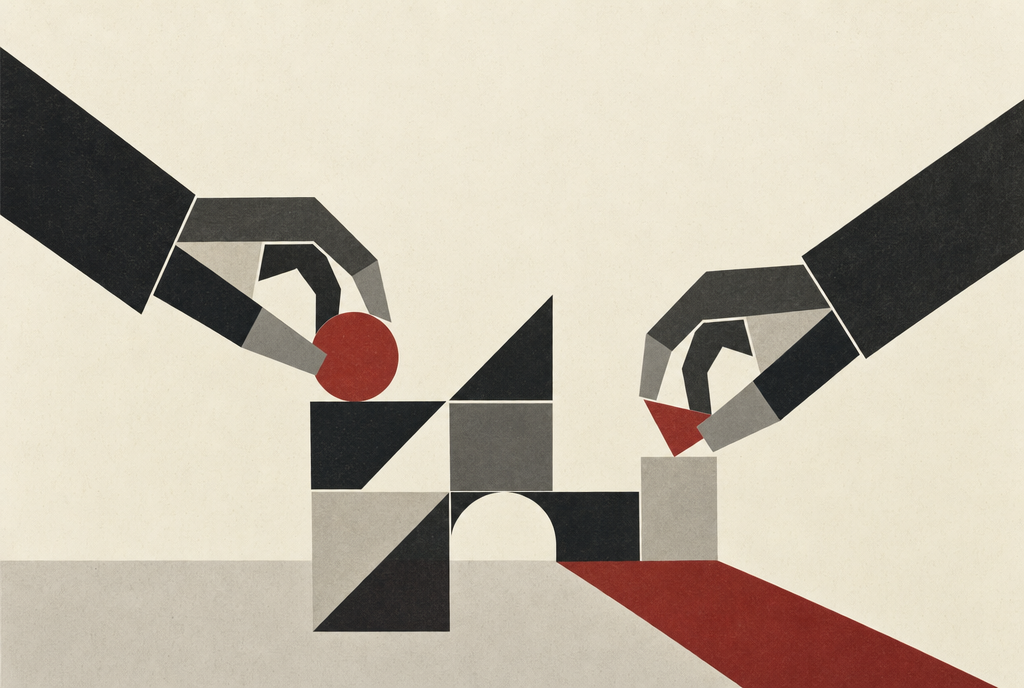
Everyday tasks often require the use of two hands, such as packing a lunchbox or opening a jar. This type of manipulation, called bimanual manipulation, requires both arms to work in coordination without colliding or interfering with each other. A single arm is insufficient for these tasks because it cannot both hold and manipulate simultaneously.
This walkthrough demonstrates how to build a bimanual manipulation scene with the ALOHA robot in MuJoCo, an open-source two-armed robot platform from Stanford. The ALOHA robot, which pairs two arms over a shared workspace, is designed to make bimanual manipulation research accessible. The walkthrough begins with a single prompt in Drift, a natural language scene generation tool.
The prompt describes a workbench with an open lunchbox and food items, along with the ALOHA robot ready for bimanual manipulation. Drift then generates the simulation files and assembles them into a ready-to-run MuJoCo scene. This eliminates the need for manual scene creation and allows users to directly focus on the manipulation task.
The ALOHA robot's dual-arm design makes it ideal for simulating bimanual manipulation, as it allows researchers to study the coordination and timing required to perform tasks that need both hands. The scene generated by Drift includes the workbench, lunchbox, food items, and the ALOHA robot, all positioned to work together on the bimanual task.
Once the scene is set up, users can move on to the more challenging aspect of bimanual manipulation: teaching both arms to work together to accomplish the task. This coordination, which involves stabilizing an object with one arm while the other performs the manipulation, is significantly more complex than single-arm pick-and-place tasks.
The use of platforms like ALOHA in simulation allows researchers to train their models on these complex tasks, ultimately leading to advancements in household and workshop robotics.
Written by urgent.news from Dev.to's reporting — not their text. Machine-written — may contain errors; check the original before relying on it.