A new cover for Jew-hatred: Why the word 'antisemitism' is under attack - opinion
What made the word unwearable was not an argument. It was Auschwitz. The cost attached to “antisemite” is not a natural property of language; it is a postwar settlement, purchased at a high price.
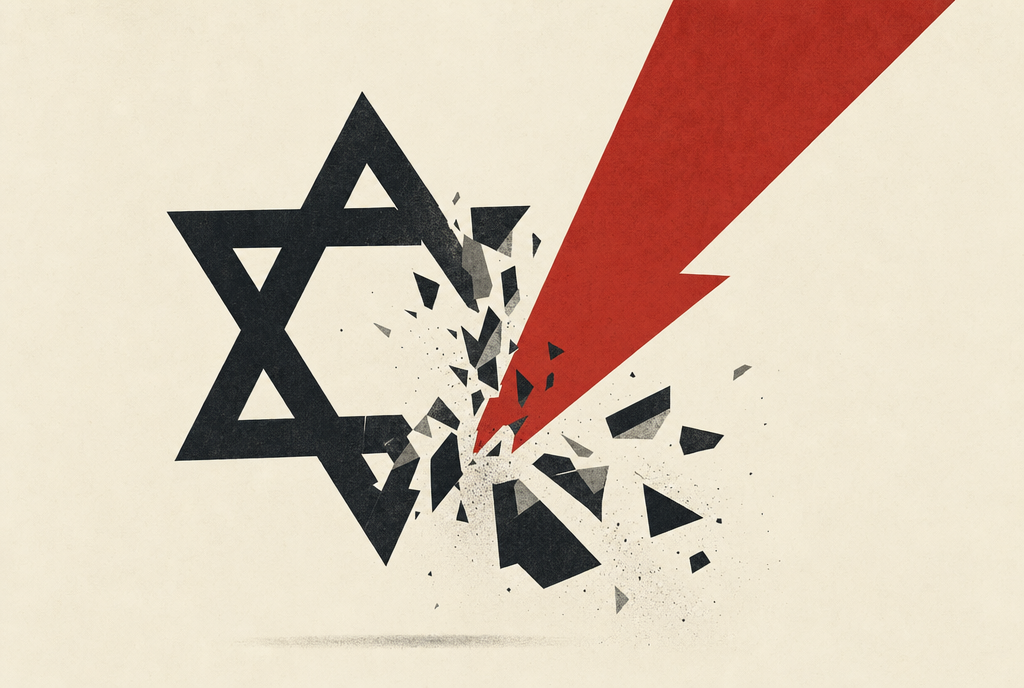
The term "antisemitism" has undergone a significant transformation, transitioning from a label of hatred to an accusation of bad faith. This change is not an accidental consequence of polarized discourse, but a strategic, well-funded project with tangible benefits. The institutions charged with combating antisemitism should view this development as adversary infrastructure rather than noise surrounding their efforts.
The precedent for this approach has already been established; in 1978, the word "Orientalist" once described scholarly professionals, but after Edward Said's publication of "Orientalism," it quickly became a derogatory term. Today, no scholar will accept the label, as the term carries its own verdict and becomes professionally hazardous.
The word "antisemitism" has its own history, and understanding this biography clarifies the current situation. The word was first used politically in 1879 by Wilhelm Marr, who founded the League of Antisemites and sought a scientific-sounding term for his movement. For two generations, parties campaigned under this label, with figures like Karl Lueger winning significant political victory.
However, the word became unwearable with the atrocities of Auschwitz. The cost of being labeled a "antisemite" is not inherent to the language, but a postwar settlement, purchased at a significant price. The current campaign aims to reopen this settlement and return the word to its original purpose for Marr's generation - a position that could be held in public without consequence.
The actors involved in this campaign are ideologically incompatible, ranging from white nationalists, Islamist propagandists, engagement-driven media personalities, and parts of the activist Left. They do not coordinate, but they converge due to a shared problem: Jew-hatred loses in the open, as does Holocaust denial and the Protocols.
By recasting antisemitism as a smear, an industry, and a career-ending weapon deployed by the powerful against the honest, the campaign aims to shift the narrative. When the House introduced a bipartisan resolution condemning antisemitic content in 2024, a far-left and far-right personality both responded by criticizing the resolution itself, effectively indicting the naming of the hatred.
The mechanism of this campaign is evident in the handling of Tucker Carlson's interview with Nick Fuentes, a Holocaust denier and Hitler admirer. Despite the criticisms, the president of the Heritage Foundation defended Carlson and labeled the critics as a "venomous coalition" of globalists. This response highlights the campaign's impact within flagship institutions.
The degradation of "antisemitism" pays off in two ways: directly, through the monetization of hate, and indirectly, by undermining the credibility of the term itself. Hate streamers can earn six figures a month, and the removal of content by major platforms often generates new content about persecution. This approach also has a theoretical foundation, drawing from Michel Foucault's and Antonio Gramsci's concepts of power and hegemony.
The European New Right adopted this strategy, naming it metapolitics and describing themselves as Gramscian. The historical context is crucial in understanding this campaign, as it operates on a larger scale, with revisionism reaching audiences larger than at any point since 1945. The method is to discredit the archivists and make those who keep records suspect by category, all based on the theory that naming is a form of power, and breaking the name is a form of resistance.
Written by urgent.news from Jerusalem Post's reporting — not their text. Machine-written — may contain errors; check the original before relying on it.