This Colorado school district is using Biblically infused reading curriculum made for Texas students
Officials in Montezuma-Cortez, a small school district in southwestern Colorado, could have chosen a new elementary reading curriculum from more than 20 state-approved options. Instead, with little public discussion this summer, they…
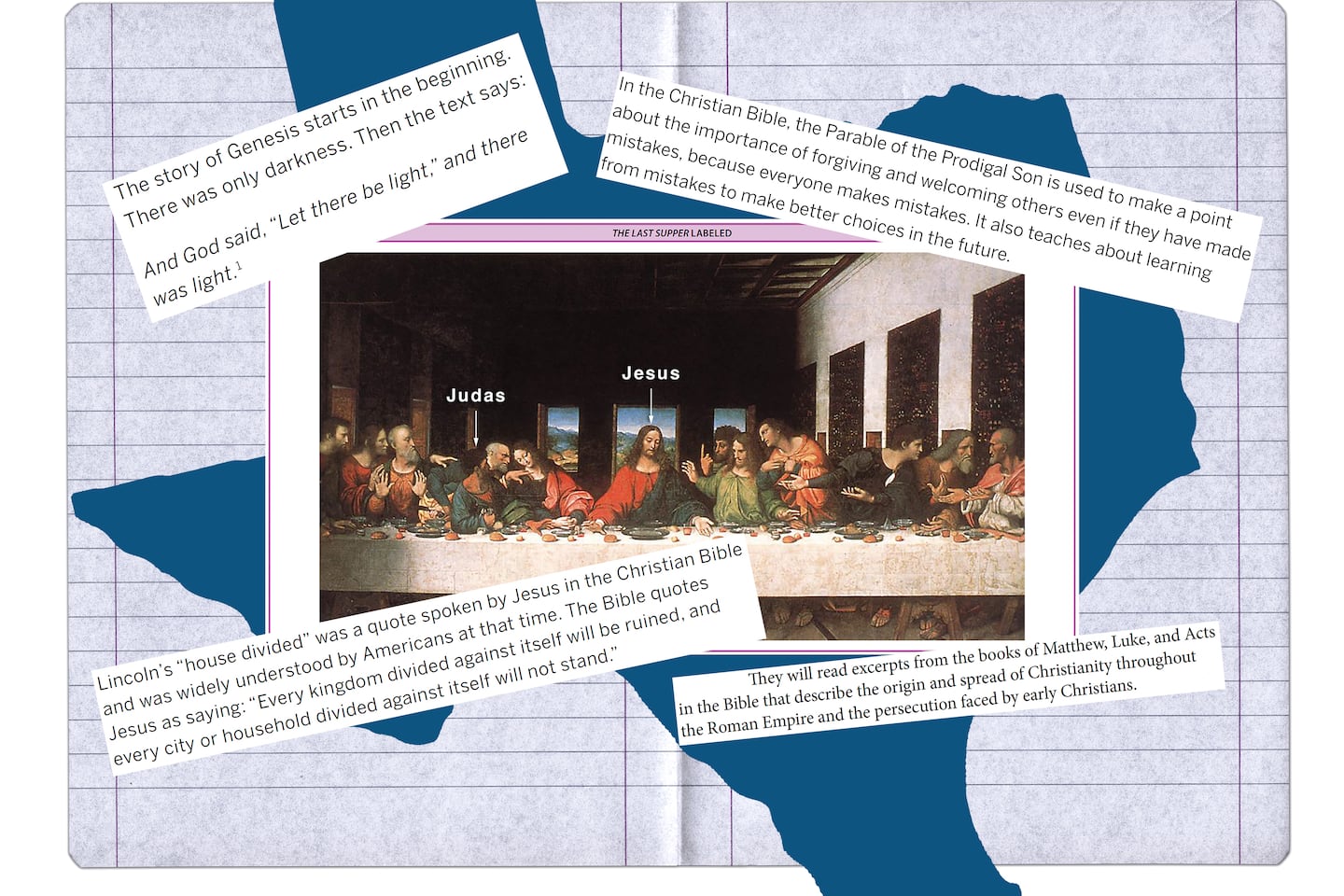
In Montezuma-Cortez, a small school district in southwestern Colorado, officials recently opted for a reading curriculum called Bluebonnet. Described as being "built for Texas students," this Biblically infused curriculum has sparked heated debate due to its religious content. Kindergartners learn about the days of Creation in the Book of Genesis, while first graders explore the Parable of the Prodigal Son and fifth graders examine Biblical allegories in "The Lion, the Witch, and the Wardrobe" by C.S. Lewis.
Montezuma-Cortez's decision to adopt Bluebonnet came without much public discussion or scrutiny. The district, which recently adopted a school reform model from Houston, Texas, deemed Bluebonnet aligned with their goals of improving student outcomes. Houston Superintendent Mike Miles, a former Colorado charter school founder, created the "New Education System," which emphasizes explicit teacher-led instruction and teacher/principal training.
Colorado allows school districts to use state-approved reading programs, but Montezuma-Cortez chose not to, citing the reforms from Houston. While the Colorado Department of Education requires evidence-based programs that meet state academic standards for adoption, Montezuma-Cortez's executive director of academic success, Justin Schmitt, did not provide further clarification on the curriculum's alignment with Colorado standards or its evidence-based status.
The controversy surrounding Bluebonnet highlights an ongoing debate about religious content in American public schools and raises questions about the vetting process for controversial materials. Mark Chancey, a religious studies professor at Southern Methodist University, criticized Bluebonnet for its inadequate treatment of religion, including mischaracterizations of Bible stories and insufficient attention to non-Christian traditions.
Strawn, a religion and law professor at Duke University, noted that while knowledge of Bible stories can enhance cultural literacy, the curriculum's intent may be to instill Christian values, which raises legal concerns under the establishment clause of the Constitution.
Despite the district's apparent commitment to improving educational outcomes, details regarding the curriculum's alignment with Colorado standards and the degree of Bible content remain unclear. The lack of transparency and public discussion surrounding this decision has left many questioning the rationale behind Montezuma-Cortez's choice and the potential implications for students' religious education.
Written by urgent.news from Chalkbeat's reporting — not their text. Machine-written — may contain errors; check the original before relying on it.