These nearly 125-year-old photographs are made of glass. They still survived 960 miles in Antarctica
Imagine not only walking 960 miles / 1540 km in Antarctica – but doing it carrying a camera and glass plate photos
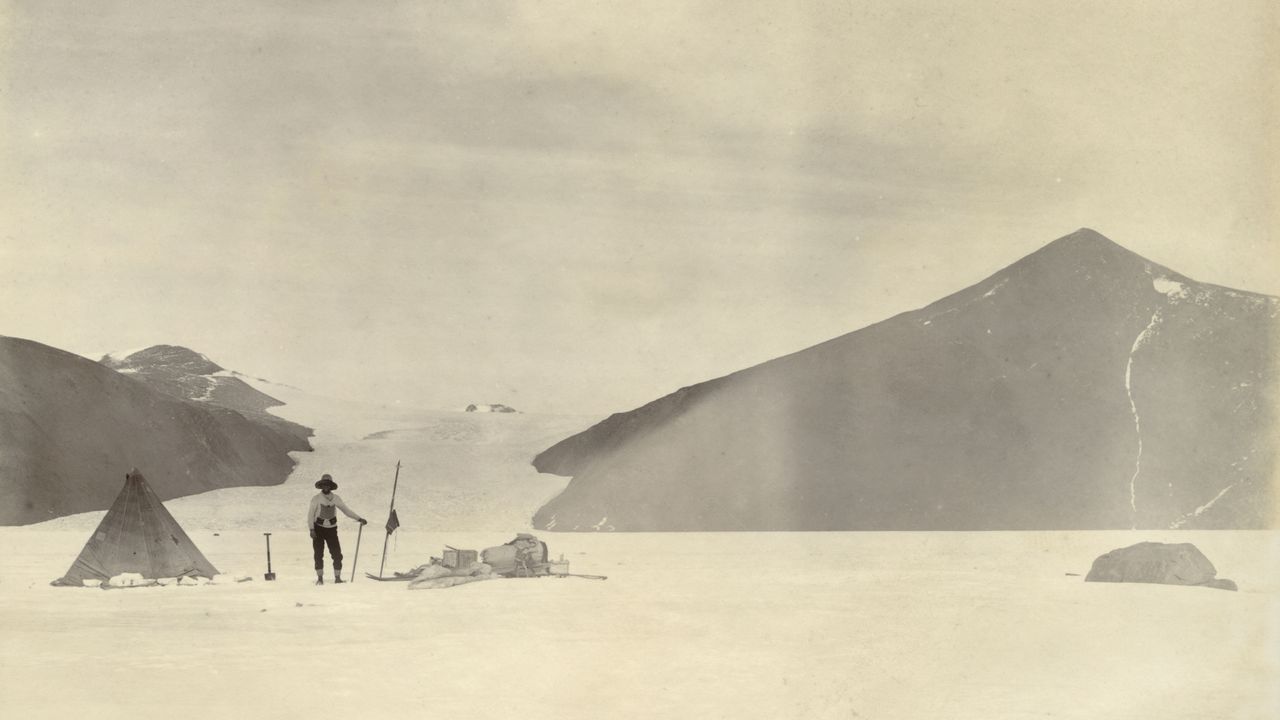
On August 06, 1902, the Discovery Expedition, led by Robert Falcon Scott, Ernest Shackleton, and Edward Wilson, embarked on a historic journey to Antarctica, traveling 960 miles (1540 km) in the early 1900s. The expedition, which lasted from 1902 to 1904, was the most extensively photographed of its time, resulting in over 1,000 early photographs of the southernmost continent.
Chief engineer Reginald Skelton, the team's official photographer, used specialized field cameras that recorded images using glass plates. These cameras, large folding bellows types, allowed him to capture the expedition's events with remarkable detail.
One of Skelton's most notable photographs is a self-portrait of himself, Ernest Shackleton, Captain Scott, and Dr. Wilson, taken during the farthest trek of the expedition, spanning 960 miles (1540 km). The photographs offer a glimpse into the isolation and challenges faced by the explorers as they traversed the vast, frozen landscape largely on foot and by skis.
The expedition also made history by capturing the first aerial photographs of Antarctica when the crew utilized a tethered balloon to send a person up to 800 feet. However, not all of the glass plates survived the expedition. Dr. Reginald Koettlitz attempted to experiment with color photography by taking three separate photos using red, green, and blue filters, then overlaying them to create a single image. Unfortunately, these color photographs are believed to be lost to history.
Written by urgent.news from Digital Camera World's reporting — not their text. Machine-written — may contain errors; check the original before relying on it.