Strike range of 4,000km range: India successfully test-fires N-capable Agni-4
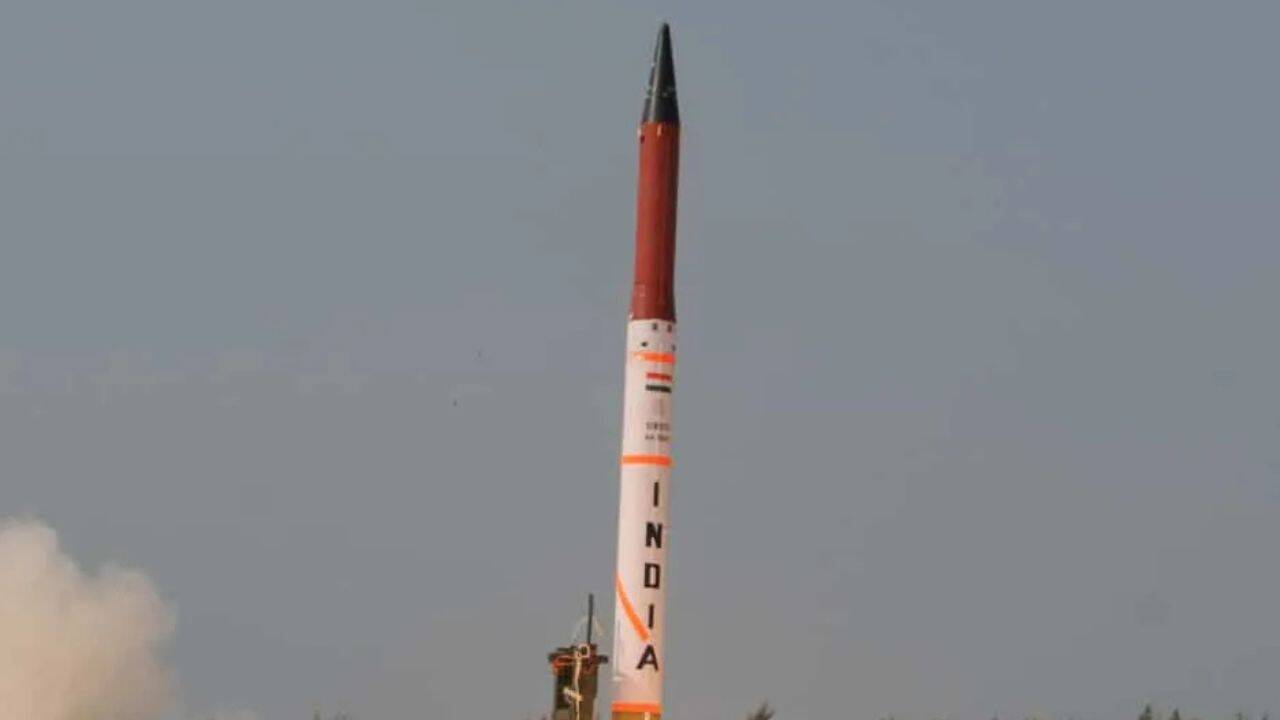
NEW DELHI: India successfully test-fired the nuclear-capable Agni-4 missile, with a strike range of 4,000 kilometers, from the Integrated Test Range at Chandipur on the Odisha coast. The launch, conducted under the supervision of the Strategic Forces Command (SFC), validated all operational and technical parameters. Defence Minister Rajnath Singh congratulated defence scientists and experts, praising the successful mission that bolstered India's commitment to national defense with cutting-edge technology.
The SFC, part of India's Nuclear Command Authority (NCA), is responsible for managing and administering the country's nuclear weapons stockpile. The Agni-4 missile, developed by the Defence Research and Development Organisation (DRDO), is a two-stage solid-propellant system capable of carrying nuclear and conventional payloads. With a one-thousand kg payload capacity, it is launched from a mobile tandem launcher, enabling rapid deployment and high survivability against preemptive strikes.
Agni-4 can reach major strategic centers across mainland China and parts of Southeast, West, and Central Asia. It is the eighth flight test since its initial test in 2010, a derivative of the Agni-II MRBM with an extended range. The missile's advanced re-entry heat shield can withstand temperatures exceeding 3,000°C, while maintaining internal electronic systems and avionics below 50°C. It boasts exceptional accuracy, less than 100 meters circular error probable (CEP) at a 4,000 km range.
The missile system features modern and compact avionics with redundancy, ensuring high reliability.
Written by urgent.news from Times of India's reporting — not their text. Machine-written — may contain errors; check the original before relying on it.
This story
This is one outlet's version. Read the fullest account.
- India successfully test-fires Agni-4 ballistic missile - why it matters timesofindia.indiatimes.com
- India successfully test-fires nuclear-capable Agni-4 ballistic missile off Odisha coast livemint.com
- Agni-4 medium-range ballistic missile test-fired from Odisha thehindu.com