‘Spectral lines’ and a giant plume: what science saw when the SpaceX rocket hit the moon
Sodium and lithium gas was detected in a plume thought to span tens of kilometres, created when part of a SpaceX rocket crashed into the lunar surface A telescope in Chile has captured evidence of the impact caused by part of a SpaceX rocket slamming into the moon while travelling at 8,690km/h (5,400mph). The European Southern Observatory’s (ESO) Very Large Telescope observed “spectral lines” – a…
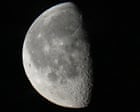
A SpaceX rocket struck the lunar surface on Wednesday, creating a plume of gas and dust that scientists observed with telescopes. The European Southern Observatory's Very Large Telescope captured evidence of the impact, revealing spectral lines indicating the presence of sodium and lithium gas. The plume, spanning tens of kilometers, was visible for five to 10 minutes after the crash, which occurred near the moon's terminator line where the shadow transitions to sunlight.
The rocket's upper stage, weighing four tonnes, was traveling at 8,690km/h (5,400mph) when it collided with the moon. Scientists believe the impact gouged out a large crater, likely 20 meters in diameter and five meters deep. While the collision provided valuable data for future seismic experiments and assessing space debris hazards, it was challenging to observe due to the numerous satellites orbiting the moon and the difficulty in capturing clear imagery of the impact.
Written by urgent.news from Guardian Science's reporting — not their text. Machine-written — may contain errors; check the original before relying on it.