SK Hynix and SanDisk reveal first specs for High Bandwidth Flash — but don't get too excited, you probably won't be able to buy it anytime soon
The first High Bandwidth Flash spec is here: 512GB stacks at up to 3TB/s. What isn't here is a ship date, and perhaps more importantly, Nvidia isn't on the participant list.
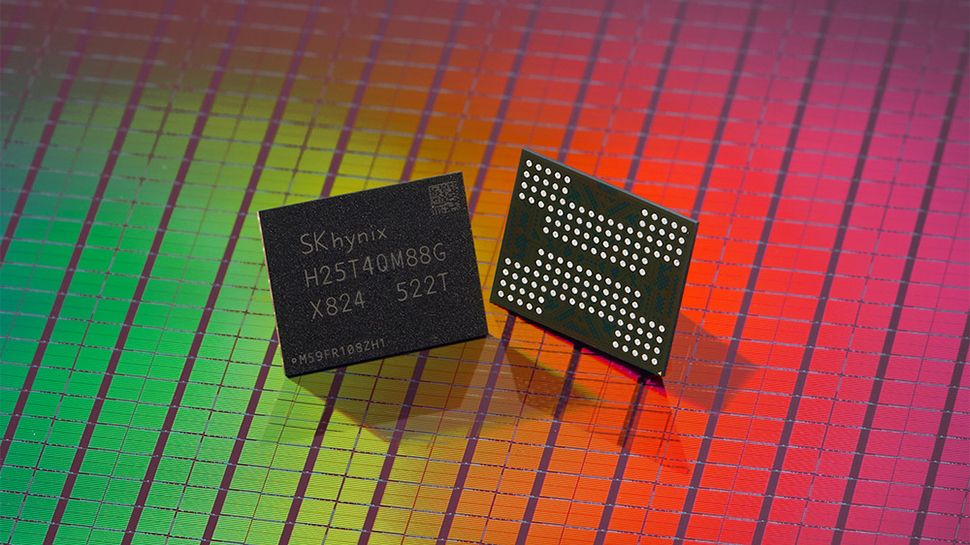
SK Hynix and SanDisk have unveiled the first technical specifications for High Bandwidth Flash (HBF), a new flash storage technology aimed at high capacity and performance. The specification, released through the Open Compute Project, defines stacks of up to 512GB using 8-high or 16-high NAND dies, with bandwidth grades ranging from approximately 0.4TB/s to 3.0TB/s.
This is a significant milestone, as the technology is expected to be demonstrated in early 2027, with commercialization anticipated between late 2027 and 2028. Two notable participants in the consortium are Google and Tenstorrent, while Nvidia is notably absent. The technology prioritizes capacity over raw speed, with a 512GB HBF stack offering roughly ten times the capacity of an HBM4 stack.
HBF employs UCIe as the interconnect standard, enabling compatibility with GPUs and CPUs from various vendors. Although SanDisk has a public roadmap, the exact timeline for actual commercialization remains uncertain. Industry expectations suggest that HBF may take longer to reach consumers, as AI hyperscalers must be satisfied and a retail-compatible interface must be developed.
The absence of major players like Nvidia, Samsung, Micron, and Kioxia also adds uncertainty to the technology's potential impact on the consumer market.
Written by urgent.news from TechRadar's reporting — not their text. Machine-written — may contain errors; check the original before relying on it.