Russia's refinery crisis costs budget $15 billion since April
For a fourth consecutive month, Russia's government has paid out hundreds of billions of rubles in subsidies to oil companies as their refineries are repeatedly struck by drones and forced offline, according to data published by Russia's Finance Ministry on Aug. 5.
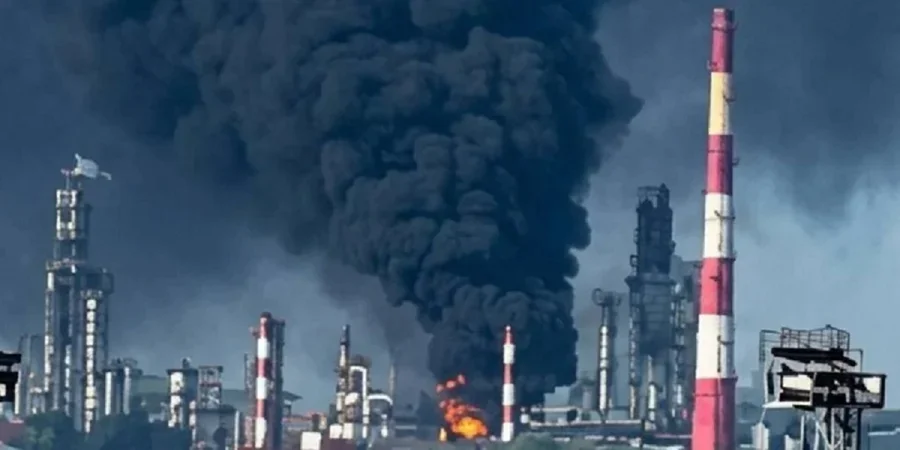
Russia's oil refining sector has been hit repeatedly by drone strikes since April, forcing refineries offline and prompting the government to pay out substantial subsidies to the industry. In July alone, the federal treasury transferred 192.8 billion rubles ($2.4 billion) to oil companies via the fuel damper mechanism and a reverse excise tax scheme.
The cumulative cost of these subsidies from April through July amounted to 1.221 trillion rubles ($15 billion), comparable to the entire annual budget of Russia's Moscow Oblast. At least 18 major refineries were targeted by drones during this period, with eight forced to halt production, including Russia's largest refinery, Omsk, as well as Ryazan and Nizhegorodnefteorgsintez.
As a result, Russia's oil refining volumes have plummeted to their lowest level since 2002, sitting at 3.6 million barrels per day. The budget deficit in the first half of the year reached 5.7 trillion rubles ($70 billion), double the planned amount, and could reach 7 trillion rubles ($85.9 billion) by the end of the year. The disruptions have also led to strained fuel supplies, with over 300 gas stations closing across Russia.
Written by urgent.news from New Voice of Ukraine's reporting — not their text. Machine-written — may contain errors; check the original before relying on it.