Renewed Importance of CEX in Monoclonal-Antibody Purification
Advanced chromatography resins and data-driven strategies are redefining monoclonal-antibody purification in modern biopharmaceutical manufacturing. The post Renewed Importance of CEX in Monoclonal-Antibody Purification appeared first on GEN - Genetic Engineering and Biotechnology News .
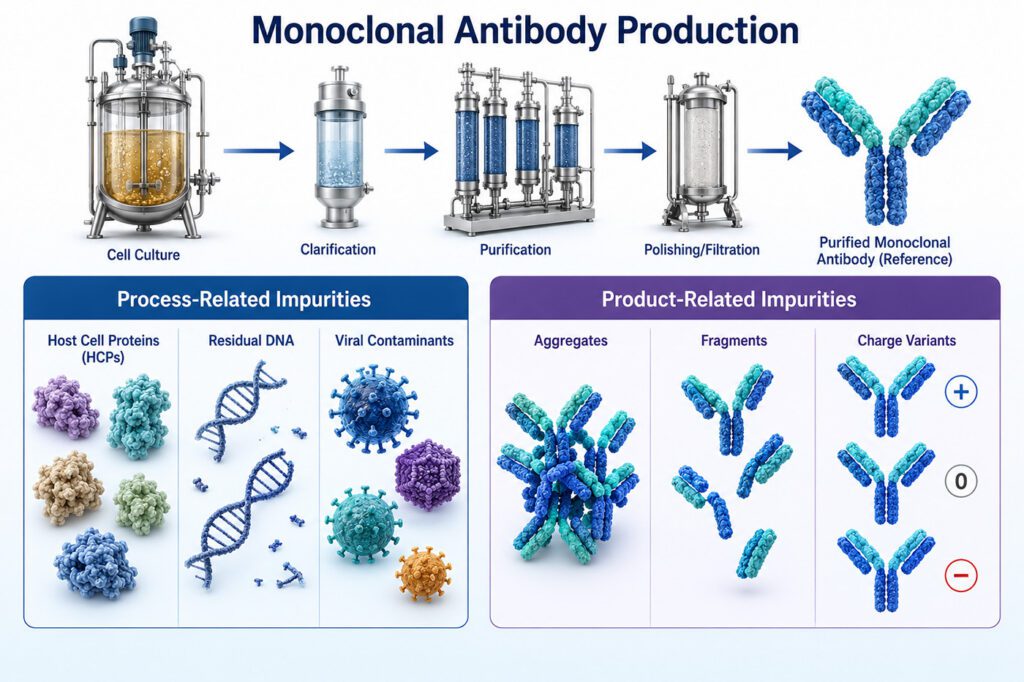
In the biopharmaceutical industry, success hinges on the ability to produce and purify therapeutic antibodies effectively. As upstream systems generate higher antibody titers, downstream purification must keep pace. Cation exchange (CEX) chromatography has emerged as a pivotal polishing technique, selected not by convention but by its ability to separate nearly identical molecules.
Monoclonal antibodies (mAbs) are crucial in treating various diseases, but their production is only part of the challenge. The real challenge lies in purifying these powerful biologics.
Over the past decade, upstream bioprocessing has advanced, leading to high antibody yields from mammalian cell cultures. However, this progress has shifted the burden downstream, as product streams become denser and more complex, containing impurities that must be removed to meet regulatory and safety standards. Alejandro Becerra, PhD, a principal applications scientist at Thermo Fisher Scientific, emphasizes that CEX is crucial because antibodies have relatively high isoelectric points (pIs), while many impurities have lower pIs.
Impurities in monoclonal antibody production fall into two categories: process-related impurities, such as host cell proteins, residual DNA, and viral contaminants, and product-related impurities, including aggregates, fragments, and charge variants. As antibody modalities evolve, incorporating bispecific formats, antibody-drug conjugates, and engineered scaffolds, the heterogeneity of impurities increases.
Traditional purification strategies often struggle with more complex molecules, leading to final products with purity levels below 80%.
CEX chromatography relies on charge-based interactions, with mAbs carrying a net positive charge under mildly acidic conditions, binding to negatively charged chromatography media. Impurities interact differently based on their charge distribution, resin chemistry, and mobile phase composition. By selecting the appropriate CEX resin and optimizing operating conditions, challenging impurities, particularly high molecular weight aggregates, can be selectively removed.
Aggregates are significant because they can trigger immune responses and compromise therapeutic efficacy.
While there are no regulatory requirements for aggregates, each drug sponsor determines acceptable levels based on safety, efficacy, and stability. CEX chromatography also addresses other challenging impurities, such as charge variants and residual contaminants. Its versatility and precision make it indispensable in antibody purification workflows, offering flexibility in development environments through simple adjustments.
Written by urgent.news from GEN Biotechnology's reporting — not their text. Machine-written — may contain errors; check the original before relying on it.