On-chain vs Off-chain Boundaries for RWA Compliance
Learn what belongs on-chain and off-chain when building compliant RWA tokens without exposing PII or weakening transfer enforcement.
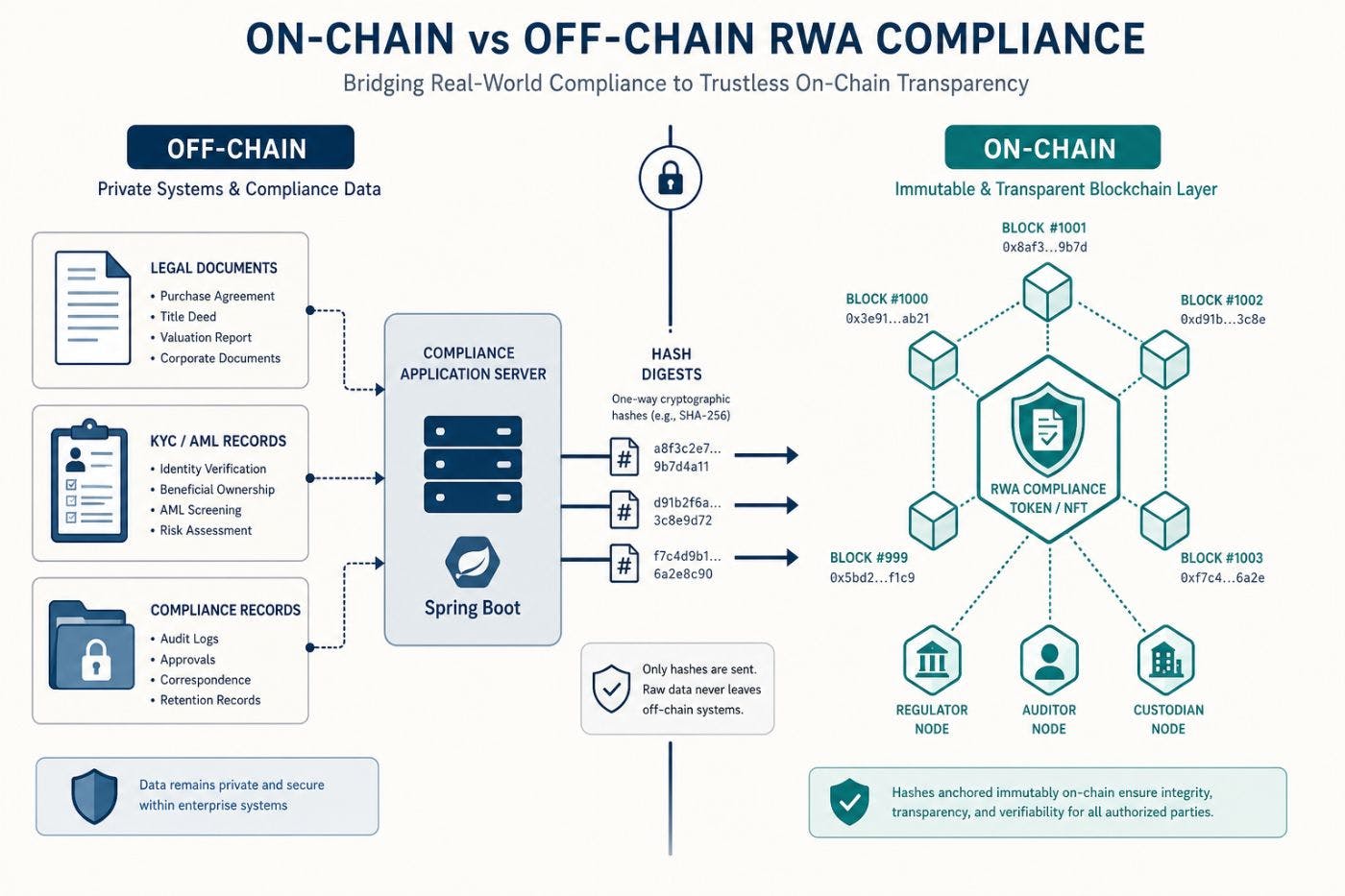
When designing regulated tokenized real-world assets (RWA) programs, the most critical decision lies in establishing a clear boundary between what must operate on-chain and what can remain off-chain. This boundary decision determines whether the RWA is genuinely compliant or merely a trusted database with a wallet interface.
If everything is placed on-chain, consequences include violating data protection regulations like GDPR by making personal information publicly accessible, irreversible disclosures that cannot be undone, and a flawed trust model where the ledger becomes an ineffective CRM. Conversely, if everything is kept off-chain, the token lacks cryptographic enforcement, auditability, and fails to provide enforceable compliance.
The proper approach is to identify a precise boundary that separates on-chain and off-chain responsibilities. On-chain elements include verifying and revoking wallet eligibility, defining transfer constraints such as pause mechanisms and jurisdiction limits, maintaining token economics like balances and settlement semantics, specifying agent roles for regulatory compliance, and recording immutable operational events.
Off-chain responsibilities encompass managing KYC/AML documents and raw personal data, handling customer interactions, conducting analyst reviews, binding wallets to user applications, and providing comprehensive product UX states. Only after these off-chain processes complete, privileged compliance pathways are triggered to register or revoke identities on-chain.
By adhering to this on-chain vs off-chain boundary, regulated RWA programs can ensure cryptographic enforcement, maintain audit trails, enforce regulatory compliance, and prevent technical bypasses while still allowing human oversight and workflow integration. This architecture advances compliance standards in the rapidly evolving field of tokenized real-world assets.
Written by urgent.news from HackerNoon's reporting — not their text. Machine-written — may contain errors; check the original before relying on it.