Jute loses ground to plastic despite Bangladesh’s packaging law
Bangladesh is the world’s second largest producer of the environmentally friendly fiber jute. However, the country has, for decades, grappled with the move to combat the escalating use of the cheaper and more popular, but harmful, plastic-based packaging and synthetic fibers. As a safeguard measure, the government, 16 years ago, enacted a law for the […]
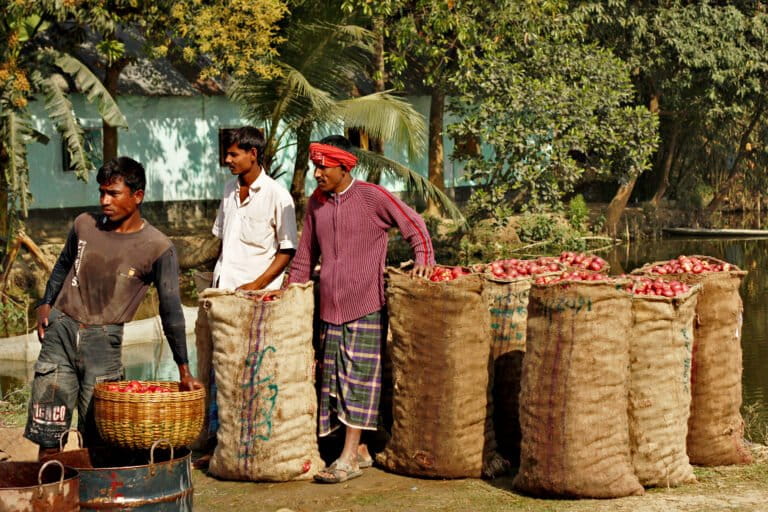
Bangladesh, a leading producer of the sustainable fiber jute, has struggled to curb the widespread adoption of plastic-based packaging and synthetic materials. The government implemented a legislation 16 years ago, mandating the use of jute sacks and bags for 19 essential goods like rice, wheat, and fertilizer. However, plastic and synthetic fiber packaging have persistently infiltrated the market, posing environmental challenges such as waste management issues.
Nazmul Haque, a government-appointed jute officer in Sherpur district, shared with Mongabay that a single rice mill, Sakhina Rice Mill, relies exclusively on jute sacks. The mill's proprietor, Md. Hamez Uddin, explained that while a synthetic or plastic bag costs 20 takas (16 cents), a jute sack costs 80 takas (65 cents). Although synthetic bags are single-use, jute sacks can be reused multiple times for carrying rice or paddy and even mended for further use.
Uddin highlighted the economic benefits of jute sacks, stating that they are more cost-effective in the long run.
Written by urgent.news from Mongabay's reporting — not their text. Machine-written — may contain errors; check the original before relying on it.