'It would be a disaster': Ammunition for war and surging water withdrawals are putting the Caspian Sea on the brink of collapse
Live Science spoke with professor of civil and environmental engineering Amir AghaKouchak about the reasons behind the Caspian Sea's stark decline over the past three decades.
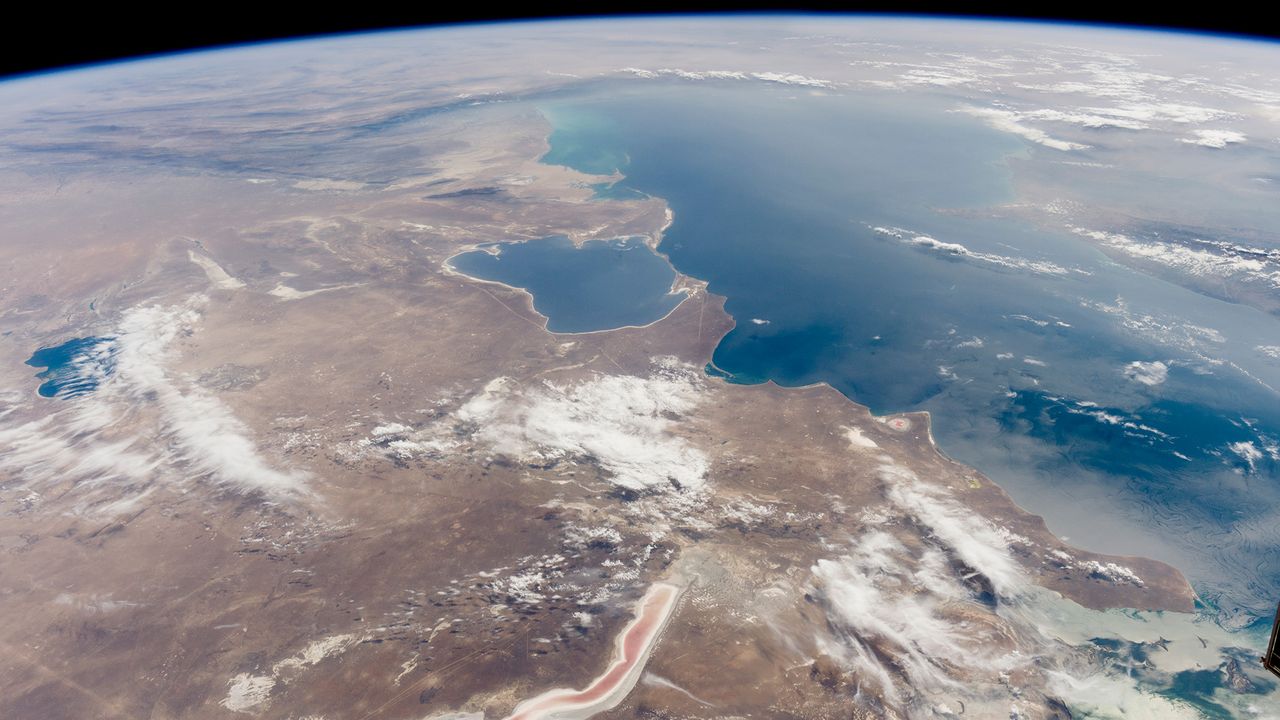
The Caspian Sea, the world's largest inland body of water, is at risk of collapse due to a combination of natural and human-induced factors, according to a study published in Earth's Future. Over the past 30 years, the sea's water levels have dropped by around 2 meters, resulting in a 5% loss of its area, equivalent to 24,000 square kilometers (9,300 square miles).
While climate change and increased evaporation due to rising temperatures have contributed to the decline, researchers emphasize that human activities have played a significant role. The study highlights that the Volga River, which supplies roughly 80% of the Caspian's inflow, has experienced a substantial decrease in water discharge.
Amir AghaKouchak, a co-author of the study and professor at the University of California, Irvine, explains that this decline is likely due to a collective impact of numerous small withdrawals from various rivers in the region, rather than any single project. The Volga-Don Canal, which connects the Volga and Don rivers, is one such contributor, but the exact amount of water lost along the way remains uncertain due to the lack of detailed human-related data from the countries bordering the Caspian Sea.
Written by urgent.news from Live Science's reporting — not their text. Machine-written — may contain errors; check the original before relying on it.