India's water crisis is about management, not rainfall, says Bisleri CEO
Speaking at the Mint Sustainability Summit 2026, Angelo George warned of urban shortages by 2035 and outlined how Bisleri is driving conservation, plastic circularity, and water credit market models.
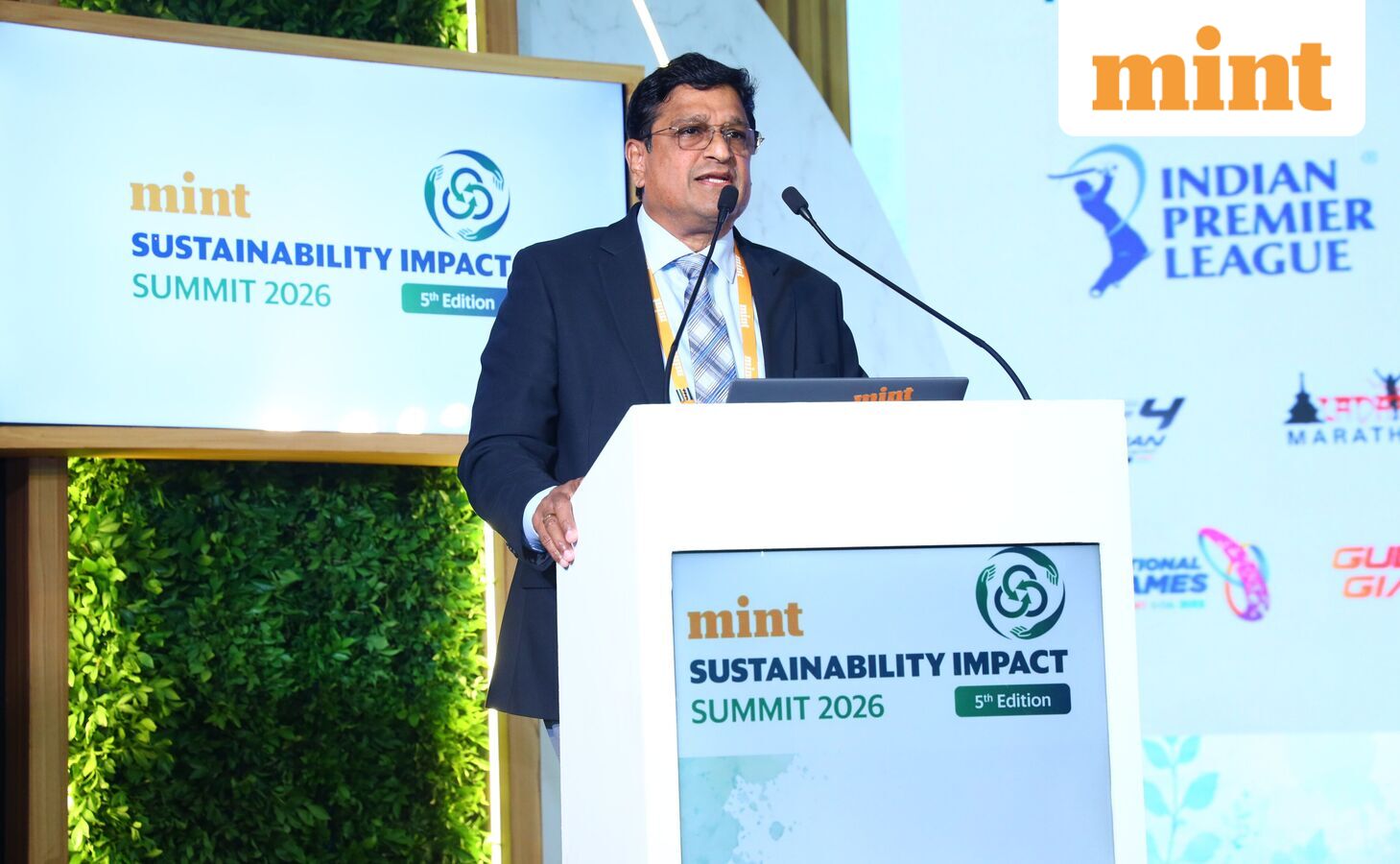
Despite India receiving approximately 4,000 billion cubic meters of annual rainfall, the country is grappling with a severe water management crisis, according to Bisleri International CEO Angelo George. At the Mint Sustainability Summit 2026 held in Mumbai, George revealed that per capita water availability in India has dropped by 75% over the past seven decades. If current trends persist, he warned that major urban areas may confront critical water shortages by 2035.
George emphasized that the water crisis is not primarily driven by rainfall, but rather by inadequate water management and governance. He stressed that the future of the water sector hinges on intelligent resource optimization instead of merely boosting supply. To counter the mounting environmental and operational risks, Bisleri is intensifying its conservation efforts.
The company has installed rainwater harvesting systems at its facilities and is restoring local watersheds. In rural regions, Bisleri is constructing check dams to aid farmers and has pledged to build at least one new reservoir annually.
George highlighted that Bisleri views sustainability as a growth strategy rather than a regulatory requirement, arguing that ecological initiatives can bolster consumer trust and enhance brand value in a highly competitive market. Recognizing packaging, water security, and energy consumption as the primary sustainability challenges, George explained that while plastic has come under scrutiny, the material itself is not the issue; insufficient waste management and recycling systems are the main factors.
Bisleri's 'Greener Promise' sustainability platform focuses on two main areas: enhancing plastic circularity through the 'Bottles for Change' program and promoting water conservation by replenishing groundwater resources. The company claims to have become plastic-neutral by recycling more plastic than it places in the market and replenishes four and a half times the water it extracts from the ground.
Defending its use of polyethylene terephthalate (PET) bottles, George pointed out that lifecycle assessments indicate PET generates less carbon emissions compared to alternatives like glass and aluminum. Glass, for instance, has a carbon footprint approximately five times higher than PET due to its energy-intensive production process, while aluminum manufacturing also carries a significantly higher environmental cost.
He maintained that packaging choices should be based on product safety, affordability, scalability, and lifecycle emissions rather than public perception alone.
For Bisleri, changing consumer behavior is crucial in improving recycling rates. The company's Bottles for Change program has established collection systems for used plastic and partnered with municipal bodies, educational institutions, and government agencies to improve waste segregation at the source. Established in 65 municipal corporations and five national parks, the initiative now features material recovery facilities in protected forest areas and public awareness campaigns, including benches and bookshelves constructed from recycled plastic waste to illustrate the value added through recycling.
Bisleri has also advocated for the establishment of a water credit market, akin to carbon credits, to reward measurable water conservation improvements. The company's research, conducted in collaboration with scientific institutions, revealed that a significant portion of its water footprint originates outside its factory operations, underscoring the necessity for comprehensive, ecosystem-wide resource management.
Additionally, Bisleri has increased its renewable energy usage to 37% and expanded the utilization of electric vehicles and forklifts to reduce emissions across its logistics network.
Written by urgent.news from Live Mint's reporting — not their text. Machine-written — may contain errors; check the original before relying on it.