Hong Kong needs regenerated districts, not piecemeal renewal
Hong Kong’s redevelopment policy is approaching an institutional turning point. Recent government proposals – pilot schemes for additional plot ratios and cross-district plot ratio transfers – are presented as new instruments to stimulate redevelopment in ageing districts. Yet they extend the same paradigm that shaped policy for decades: incentivising redevelopment through floor-area bonuses,…
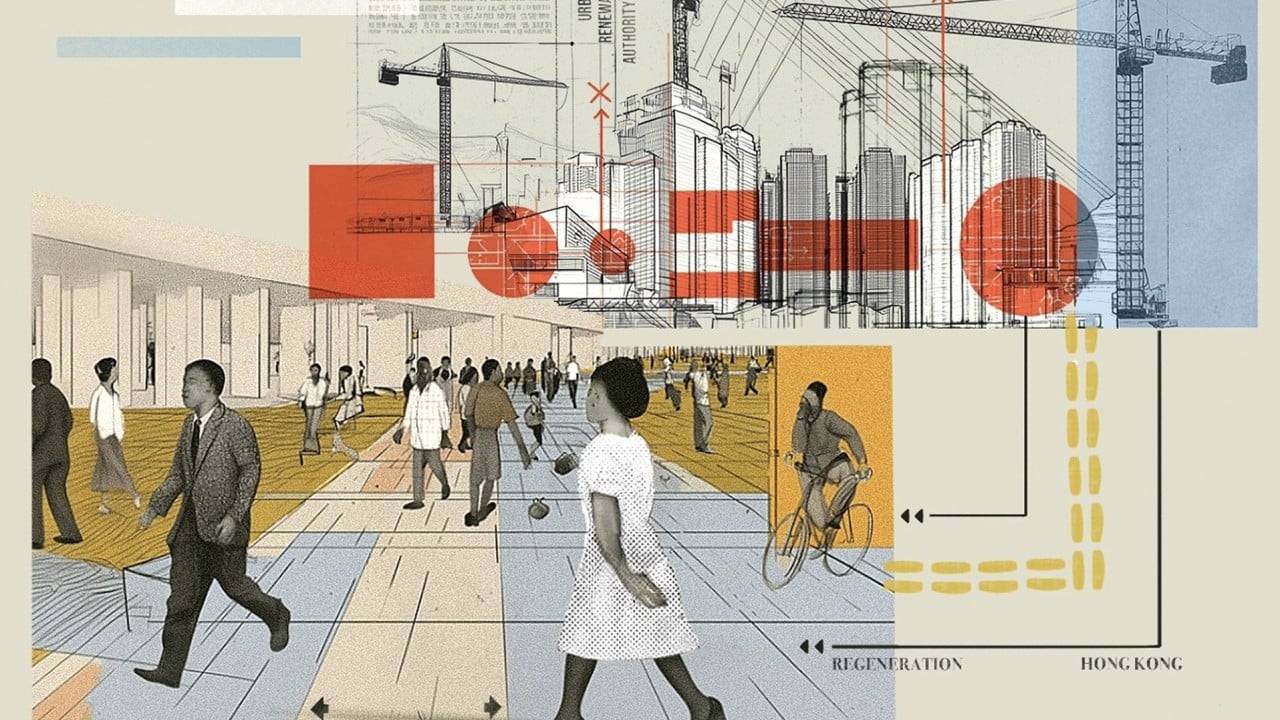
Hong Kong's redevelopment policy is at a critical juncture, with recent proposals for additional plot ratios and cross-district transfers intended to stimulate renewal in aging districts. However, these measures continue the same incentive-based approach that has characterized policy for decades, relying on floor-area bonuses and land premiums without addressing the underlying issues of urban form, street patterns, and community capacity.
The problems in old districts are not due to a lack of floor space, but rather to deteriorated urban structures, narrow streets, fragmented lots, inadequate public areas, and limited community resources. Maximizing floor area alone will lead to taller, narrower towers, increasing congestion and diminishing neighborhood quality. The fundamental issue is the absence of an institution capable of coordinating district-wide regeneration.
Renewal and regeneration are distinct concepts: renewal pertains to individual building and facility improvements, while regeneration is a city-level endeavor involving the redesign and re-governance of urban systems. A dedicated urban regeneration authority is needed to tackle the spatial and institutional challenges that cannot be resolved through lot-based redevelopment.
This would shift Hong Kong's approach from a focus on engineering improvements to one centered on governance restructuring. The fragmentation of building ownership, insufficient public spaces, and outdated street patterns are systemic issues that require a district-based restructuring approach rather than a lot-based one. Establishing such an authority would enable the reconfiguration of street networks, the creation of new public spaces, and the rebuilding of community functions.
By addressing the spatial and institutional gaps, old districts can regain coherence and urban functionality. The core mission of this authority should be to reshape urban form through public-led district restructuring, providing a governance framework that allows the market to contribute meaningfully. Old districts face challenges such as fragmented lots, complex ownership, narrow streets, and insufficient public areas, issues that the market alone cannot resolve, nor can plot-ratio incentives alone overcome.
A district-scale framework would move redevelopment from a financial calculation confined to a single lot to a spatial restructuring exercise, enabling the new authority to undertake land consolidation, street redesign, public space creation, and community facility upgrades, thereby enhancing district-level urban value and unlocking planning benefits.
True regeneration would improve urban quality, public spaces, street scale, and community capacity, factors that cannot be enhanced merely by increasing plot ratios. To make regeneration systemic, Hong Kong must create a mechanism that links old-district regeneration with new-district development. The Northern Metropolis represents new urban space to be created over the next two decades, while old-district regeneration represents the redesign and re-governance of existing urban fabric.
Connecting these two domains is crucial, as an isolated Northern Metropolis would merely increase floor areas without addressing the problems of old districts. A development-rights exchange mechanism could serve as this crucial interface, allowing investors to acquire low-potential properties in old districts at market prices while receiving development rights in the Northern Metropolis.
This would shift redevelopment from a lot-based valuation system to a citywide system of development-rights allocation. Consolidating old districts into a single entity would enable the new authority to structure blocks, open streets, create public spaces, and redesign land uses. Meanwhile, the government could reserve a pool of development rights, permitting investors to retain or transfer these rights, thus integrating development with regeneration.
By doing so, the Northern Metropolis would become an institutional resource for regeneration, with each development right granted there indirectly driving regeneration in older districts. Crucially, this approach would rewrite the spatial logic of redevelopment by reallocating density across the city, allowing old districts to be de-densified, streets to be opened, public spaces to be created, and urban pressure to be relieved, while new floor area is placed in the Northern Metropolis, where it can be better accommodated.
Once regeneration restores urban functionality, the city will have successfully transitioned from a pattern of patchwork renewal to a coherent, revitalized urban system.
Written by urgent.news from South China Morning Post's reporting — not their text. Machine-written — may contain errors; check the original before relying on it.
This story
This is one outlet's version. Read the fullest account.