Educators & Teens Get Hands-On With TEMPO Data to Help Investigate Local Air Quality
The NASA Science Activation Program’s Cosmic Storytelling with NASA Data (CosmicDS) project, led by Harvard University in Cambridge, Massachusetts, works to bring authentic NASA data into the hands of educators and learners. From July 27–29, 2026, the CosmicDS team partnered with the Smithsonian Institution’s BEST AQI (Breathing Easier: Supporting Teen Air Quality Investigations) project to […]
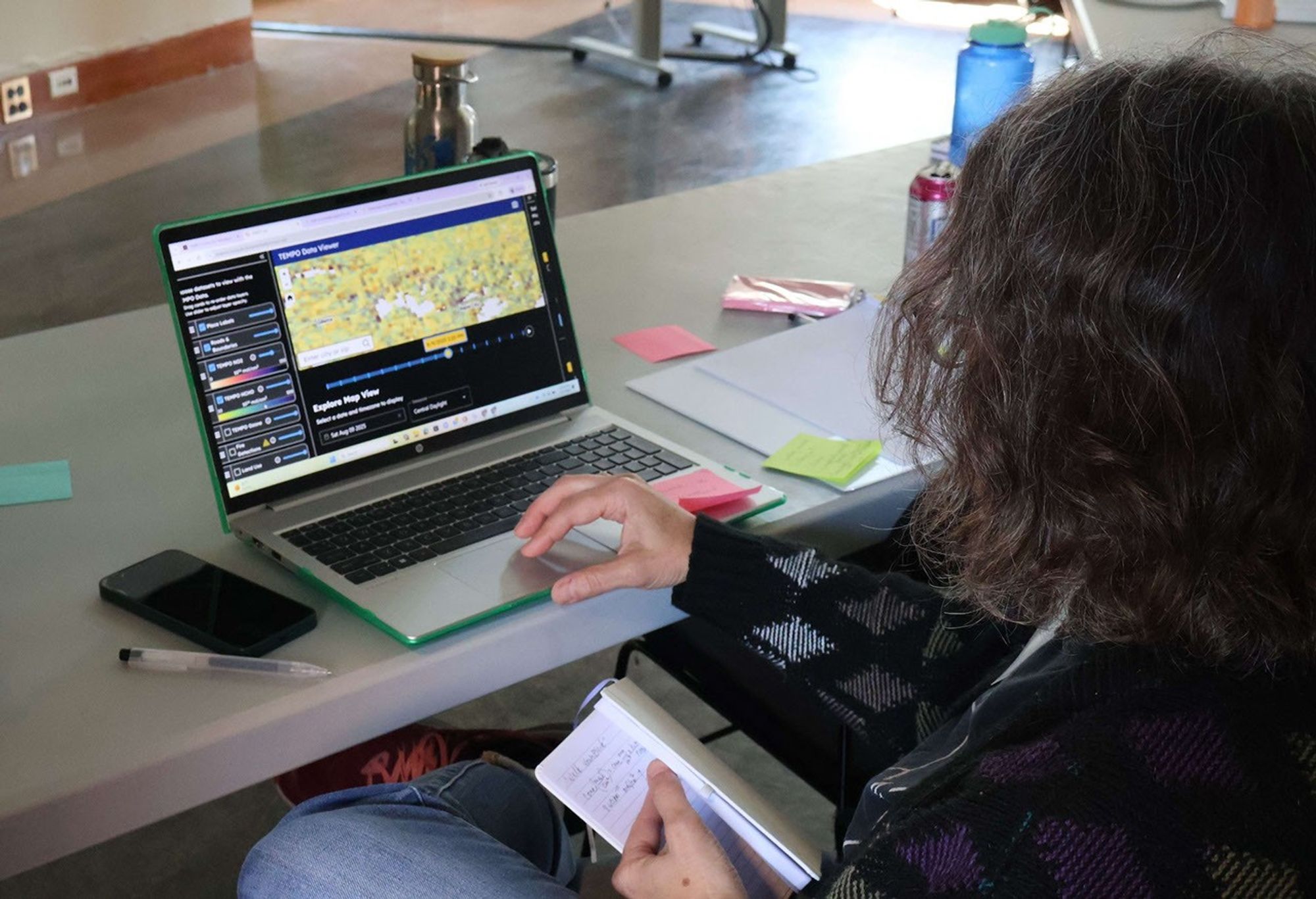
A recent immersive workshop, hosted by the NASA Science Activation Program’s CosmicStorytelling with NASA Data (CosmicDS) project and the Smithsonian Institution’s BEST AQI (Breathing Easier: Supporting Teen Air Quality Investigations) initiative, provided educators with hands-on experience using TEMPO-Lab, a free online tool that leverages NASA’s TEMPO mission data.
The TEMPO mission offers near-real-time air quality measurements across North America, capturing data hourly during daylight hours. During the three-day Leadership Institute at the Center for Astrophysics | Harvard & Smithsonian, 13 educators, serving as advisors to BEST AQI, learned how to utilize TEMPO-Lab to develop curriculum and resources for engaging teens in local air quality research.
This included case studies on issues like wildfire smoke and emissions from various sources such as traffic, power plants, and agriculture. The institute featured a notable moment when TEMPO scientist Heesung Chong announced the availability of a new beta-version ground-level ozone data product. Through TEMPO-Lab’s flexible design, CosmicDS software developer John Lewis quickly integrated this data into the tool, allowing participants to explore the latest ozone data the following morning, illustrating the tool's capability to match NASA’s rapid scientific advancements.
BEST AQI Principal Investigator Erika Wright emphasized the workshop's value in empowering youth to use authentic NASA data for investigating and addressing local air quality issues, fostering data literacy and community action. Educators were enthusiastic about TEMPO-Lab's potential to enhance teen data literacy skills, enabling them to tackle issues affecting their health and communities.
The CosmicDS team plans to support these efforts further, with the 13 educators sharing the BEST AQI toolkit and TEMPO-Lab with approximately 100 more educators across South Dakota, Maryland, and New York, potentially reaching thousands of young air quality researchers. Interested parties can experience TEMPO-Lab at https://projects.cosmicds.cfa.harvard.edu/tempo-lab or learn more about the CosmicDS project at https://cosmicds.cfa.harvard.edu.
Written by urgent.news from NASA's reporting — not their text. Machine-written — may contain errors; check the original before relying on it.