Charles Darwin Theorized That These Plants Were Carnivorous 150 Years Ago. A New Study Proves Him Right
As the naturalist predicted in 1875, some Saxifraga plants consume insects—using sticky hairs to trap them
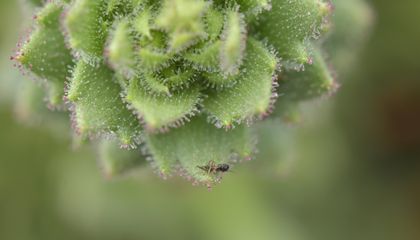
In 1860, botanist Charles Darwin proposed that two species within the genus Saxifraga might be carnivorous. His theory posited that the sticky hairs on these plants could attract and trap insects, but he lacked the means to validate his theory during his lifetime. Decades later, a new study published in the journal Nature Communications reaffirms Darwin's hypothesis.
Researchers from the University of Florida and the Chinese Academy of Sciences conducted experiments that confirmed Saxifraga candelabrum, a Chinese species, can trap and digest insects. The findings, revealed in August 2021, provide strong evidence that Darwin was correct in his prediction. Co-author Doug Soltis expressed his excitement, stating that confirming Darwin's prediction was both humbling and thrilling.
Saxifraga candelabrum typically captures an average of 71 insects per plant, with mature plants possessing more branches adorned with glandular hairs, suggesting a higher likelihood of insect capture. The researchers conducted several tests to ascertain whether the plant truly digests its prey. They found that S. candelabrum utilizes an enzyme called phosphatase, common in other carnivorous plants, to digest its captured insects.
Additionally, the study discovered that the plant selectively targets small insects while keeping larger pollinators safe. The correlation between the number of sticky glandular hairs on the inflorescence branches and insect capture further supports the hypothesis of carnivory in Saxifraga. The researchers believe this discovery may indicate that carnivory in plants is more widespread than previously thought, echoing Darwin's prediction.
Botanist Susan Myers echoed this sentiment, emphasizing the ongoing potential for surprising botanical revelations.
Written by urgent.news from Smithsonian's reporting — not their text. Machine-written — may contain errors; check the original before relying on it.