A 73-Million-Year-Old Misidentified Dinosaur Fossil Reveals New Mexico’s Cretaceous Predators Were More Diverse
Learn more about Dinevenator robustus, a bird-like predator from prehistoric New Mexico that is part of a new genus.
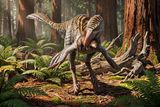
A 73-million-year-old dinosaur fossil found in New Mexico has rewritten our understanding of the region's Late Cretaceous predators. After a reanalysis of a partial skull fragment, researchers have determined that the species is actually a new genus, Dinevenator robustus. This troodontid dinosaur is believed to be small and bird-like, with larger brains and sharp senses.
The thick and robust skull bones of D. robustus distinguish it from other troodontid species, leading to its placement in a separate genus. The study's authors also found that D. robustus is the most basal member of its subgroup, providing valuable insights into troodontid evolution and distribution in the North American West. This discovery adds to our knowledge of dinosaur diversity in New Mexico during the Late Cretaceous period and highlights the region's unique role in the ancient continent of Laramidia.
Written by urgent.news from Discover Magazine's reporting — not their text. Machine-written — may contain errors; check the original before relying on it.