Why AI Agents Are Replacing Traditional Software
A few years ago, building software meant writing a series of rules. If a user clicked a button, the application executed a function. If a condition was true, another function ran. Everything was predictable because every possible outcome had already been programmed. That approach has worked for decades. But AI is changing the way software behaves. Instead of building applications that simply…
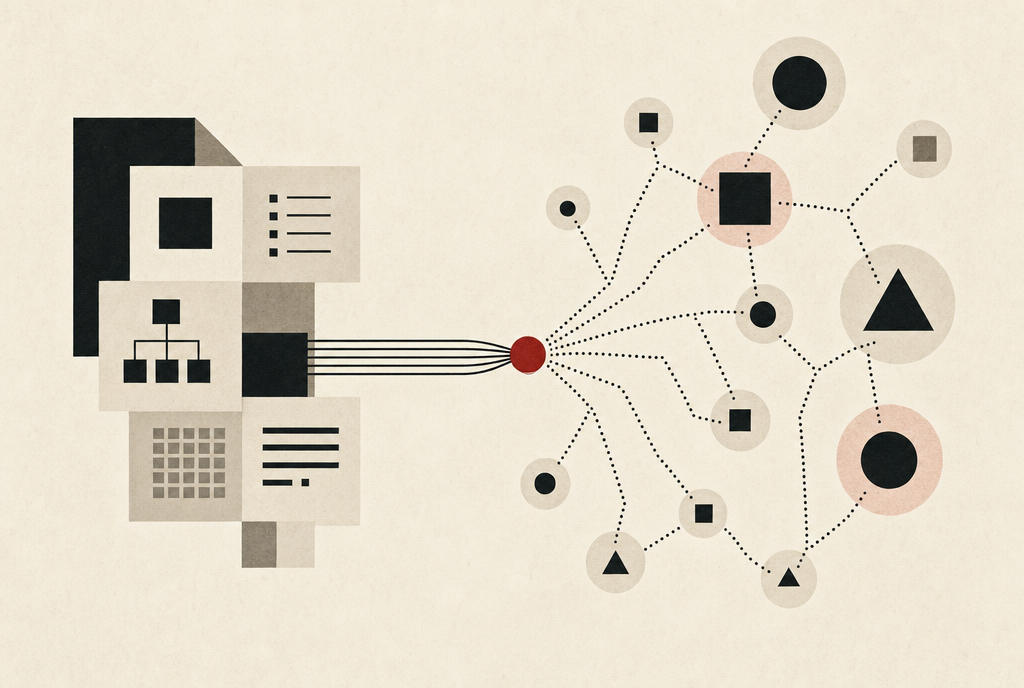
Traditional software development relied on writing explicit rules, with each user action triggering a specific function. This approach was predictable, but AI is revolutionizing the process. Instead of following predetermined instructions, we're now creating systems known as AI agents. These agents understand goals, make decisions, utilize tools, and adapt, fundamentally changing software behavior.
An AI agent is more complex than a chatbot. While a chatbot answers queries, an AI agent completes tasks, such as: "Find the latest news about open-source language models, summarize the important updates, create a presentation, and email it to my team." Traditional applications need multiple tools and manual labor for such tasks, while an AI agent manages the entire process independently.
Traditional software follows a straightforward pattern: Input ↓ Code ↓ Output. In contrast, AI agents operate differently: Goal ↓ Reason ↓ Plan ↓ Use Tools ↓ Complete Task. They don't merely react; they make decisions throughout the process. Four key factors make AI agents valuable: Reasoning, Memory, Tool use, and Planning.
Reasoning enables large language models to comprehend natural language, allowing them to understand context and determine appropriate actions. Memory ensures each conversation builds upon previous ones, making interactions more personalized and useful. Tool use empowers AI to perform actions like searching the web, reading PDFs, generating code, and sending emails. Planning allows agents to break down tasks into multiple steps, devising solutions that were previously hard-coded into traditional software.
Despite common misconceptions, AI agents don't replace developers; they alter their focus. Developers will spend less time creating standard applications and more on designing intelligent systems capable of reasoning, retrieving information, and automating complex workflows. This shift marks a significant change in software development, which has been standard for decades.
As we continue to explore AI agents, RAG, LangGraph, and automation workflows, we can anticipate a profound transformation in how software is built and operated.
Written by urgent.news from Dev.to's reporting — not their text. Machine-written — may contain errors; check the original before relying on it.