Where is gravity the strongest and weakest on Earth?
If you gather enough mass together in one place, as long as the individual particles inside aren’t moving too quickly, your mass will become gravitationally bound. If that mass is made out of atoms — particles that can collide, exchange energy and momentum, and stick together — then it can form a solid object as well. If the overall mass is great enough, you won’t just make a solid object that’s…
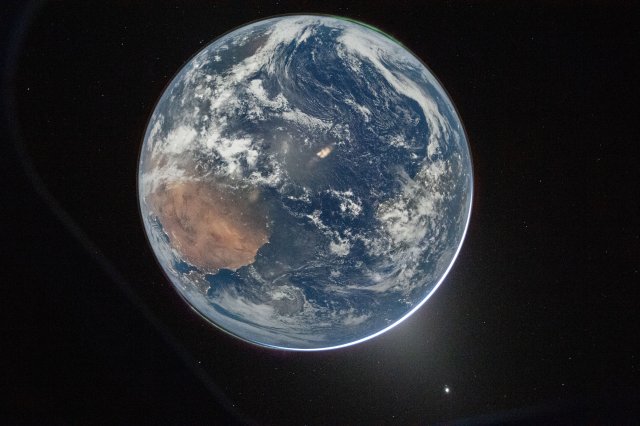
Gravity on Earth varies depending on the location and is influenced by several factors. Earth, an oblate spheroid, rotates once every 24 hours and moves in an elliptical orbit around the Sun. The simple model of Earth as a sphere assumes uniform mass distribution, resulting in a perfect sphere. However, Earth's mass distribution is not uniform, leading to variations in gravity.
The Earth's rotation causes it to bulge at the equator and compress at the poles, making the equatorial diameter around 22 km (13 miles) larger than the polar diameter. This results in higher gravity at the poles and lower gravity at the equator. Additionally, variations in Earth's crust thickness, such as mountains, valleys, and ocean floors, also affect the distribution of gravity.
Written by urgent.news from Big Think's reporting — not their text. Machine-written — may contain errors; check the original before relying on it.