Voyager 2 cheats the power budget for another year
Carefully choreographed shutdown gives probe's three remaining instruments more time
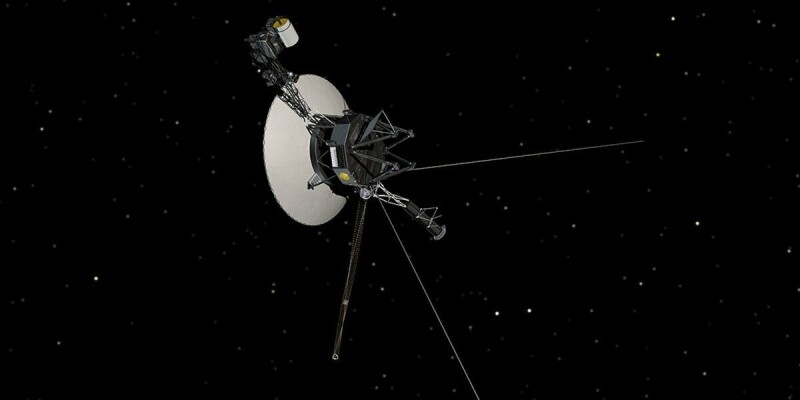
NASA's Jet Propulsion Laboratory engineers have extended the lifespan of Voyager 2's instruments by employing a power-saving technique called the "Big Bang." The maneuver involved turning off several powered devices simultaneously, replacing them with lower-power alternatives, while maintaining the spacecraft's warmth to ensure its continued operation.
The success of this procedure is expected to provide power for at least another year, enabling the instruments to function beyond their initial five-year mission scope. The switch included two heaters and a device providing residual heat, which generates less power than the original heater it replaced. Engineers anticipate performing a similar operation on Voyager 1 in the coming months, as both spacecraft are nearing the end of their power supply.
Launched in 1977, the probes were initially designed for five-year missions studying Jupiter and Saturn, but Voyager 2 continued its journey to Uranus and Neptune before venturing into interstellar space. The longevity of these spacecraft can be attributed to the conservation of power, with non-essential systems being deactivated to ensure their continued operation.
Voyager 2 currently has three functioning instruments, and the Big Bang procedure has pushed back the necessity for additional instrument shutdowns, delaying the need for another switch-off until at least the end of 2026. Voyager 1, on the other hand, is down to two operational instruments. In February 2025, an unexpected power drop during a roll maneuver prompted engineers to act swiftly, shutting down the Low Energy Charged Particles experiment (LECP).
However, NASA is hopeful that an eventual Big Bang on Voyager 1 might restore the LECP after the spacecraft has also undergone the power-saving procedure.
Written by urgent.news from The Register's reporting — not their text. Machine-written — may contain errors; check the original before relying on it.