Voyager 2 cheats the power budget for another year
Carefully choreographed shutdown gives probe's three remaining instruments more time
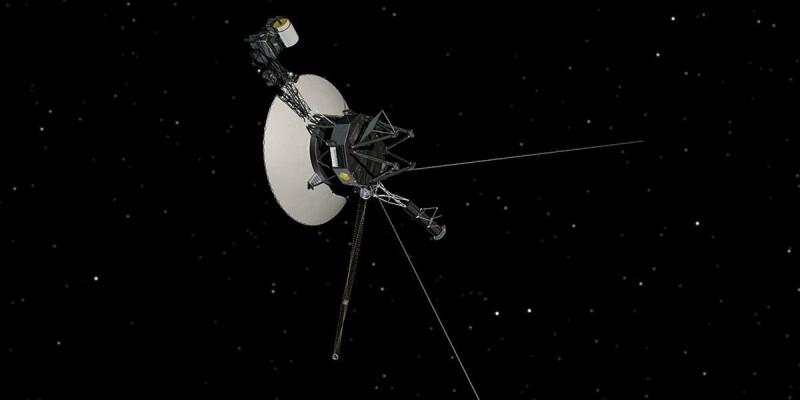
NASA's Jet Propulsion Laboratory engineers have extended the operational life of instruments on the Voyager 2 probe, thanks to an innovative "Big Bang" power-saving procedure. This involved simultaneously switching several powered devices off, replacing some with lower-power alternatives, and ensuring the spacecraft remained sufficiently warm to function.
The success of this maneuver is expected to provide power for the spacecraft's instruments for at least another year. The team now plans to execute the same procedure on Voyager 1 in the coming months. Both Voyager probes are in their interstellar missions, having been launched in 1977. Voyager 2 is closer to Earth than Voyager 1, and power is dwindling due to the decay of plutonium-based Radioisotope Thermoelectric Generators (RTGs).
The probes initially designed for five-year missions to study Jupiter and Saturn, Voyager 2 ventured beyond to Uranus and Neptune. In 2018, a former mission scientist, Garry Hunt, revealed that engineers had primed the spacecraft's power reserves, anticipating an extension if required. Over the years, non-essential systems have been shut down to conserve power, and as Voyager 2 has only three instruments still running, the Big Bang procedure has delayed the need for another instrument shutdown until at least 2026.
Without this update, a compulsory shutdown would have had to occur before year-end 2026. Voyager 1, with only two operating instruments, experienced an unexpected power drop during a roll maneuver on February 27, prompting immediate intervention. Engineers successfully switched off the Low Energy Charged Particles experiment (LECP) on April 17, but anticipate its restoration following Voyager 1's own Big Bang.
Written by urgent.news from The Register Science's reporting — not their text. Machine-written — may contain errors; check the original before relying on it.