These 3D-printed objects can tell you if they’re being used properly
The “ShiftLens” design and fabrication system creates objects that change their surface appearance based on user interactions, without any electronics.
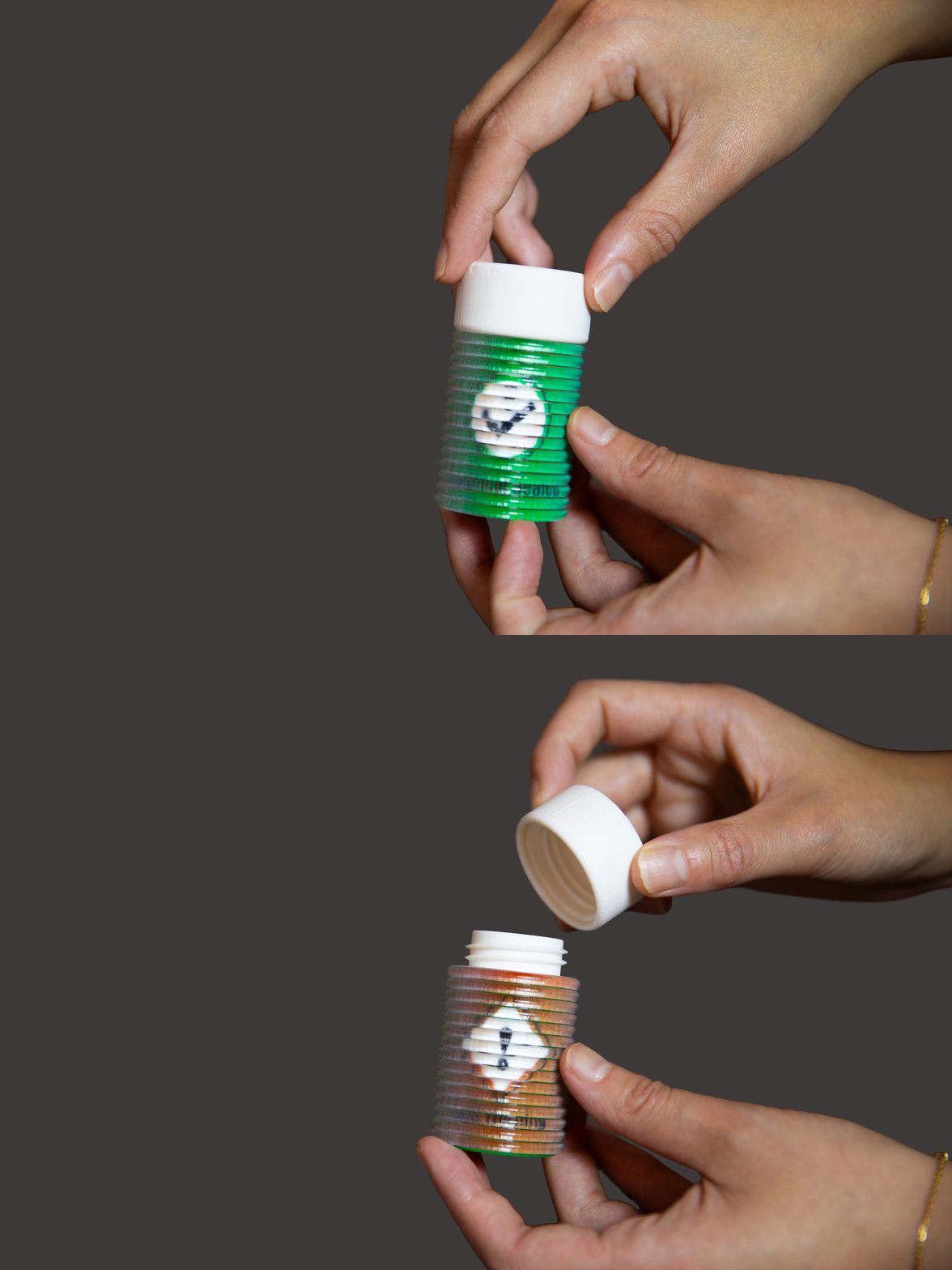
MIT researchers have developed a groundbreaking 3D-printing system that allows users to create interactive objects capable of changing their appearance based on user interactions, without the need for internal electronics. This innovative platform, called ShiftLens, simplifies the process of designing and fabricating dynamic objects that can display different images or patterns in response to mechanical actions such as pressing, sliding, or turning.
The system combines specially arranged optical layers with built-in mechanical parts, enabling a single object to exhibit multiple visual states. The researchers achieved this by integrating a layer of special lenses over an underlying patterned backplane. When the lens layer is shifted, different parts of the backplane become visible, resulting in a change in the object's appearance.
By utilizing this approach, the ShiftLens system enables the creation of a wide range of interactive objects that do not rely on fragile electronic circuits, making them more durable and resistant to harsh environments.
The researchers designed a user-friendly tool that automatically generates a ShiftLens structure based on user inputs, such as desired visual states, object shape, and curves. This streamlined process eliminates the need for technical expertise, making it accessible for individuals without a background in optics or mechanical structures.
The platform can be utilized to fabricate a diverse array of adaptable objects, including warning signs that remain visible in foul weather or packaging that alerts users to potential shipping issues.
Furthermore, the end-to-end system has the potential to streamline rapid prototyping of adaptable objects for various applications, including artistic, architectural, and engineering projects. Yunyi Zhu, a graduate student at MIT's Department of Electrical Engineering and Computer Science and the lead author of the paper, explained that the ShiftLens design enables objects to communicate with users, informing them whether they are using the object correctly without the need for sensors or complex electronics.
Although the ShiftLens tool is primarily aimed at simplifying the fabrication process for makers, the researchers envision its potential for scaling up commercial and industrial applications. For instance, the technology could be employed to create piping systems that change their appearance to indicate damaged connections, thus preventing leaks and reducing maintenance costs.
Written by urgent.news from MIT News Research's reporting — not their text. Machine-written — may contain errors; check the original before relying on it.