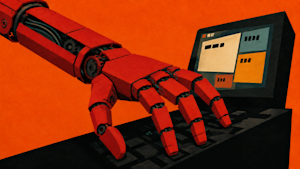
The employee relied on AI and made a mistake: Who will pay the price?
Most employees in Israel already use artificial intelligence on a routine basis, but most organizations ignore the need for clear guidelines.
A recent petition filed with the Supreme Court highlighted the issue of AI-generated errors in professional settings, with one case featuring a female lawyer who utilized fabricated legal citations and court rulings. In response, Justice Gila Canfy-Steinitz emphasized that the onus to verify the authenticity of sources lies with the individual employing the technology, irrespective of whether such sources were produced by AI or not.
This ruling underscores a broader reality: despite AI's growing prevalence in professional environments, the question of who bears responsibility when errors arise remains unresolved.
The impact of AI on various professions - including lawyers, programmers, academics, accountants, and human resources professionals - has been profound. According to a survey conducted by the Bank of Israel and the Israel Democracy Institute in May 2026, 57% of Israeli workers utilize AI tools at least once weekly. This widespread integration of AI into work routines has transformed it from a novel technology to an indispensable tool, streamlining tasks like coding, document drafting, information analysis, and output generation.
However, the rapid adoption of AI has also introduced a complex legal quandary: when an employee relies on AI and an error occurs, who should be held accountable? Is it the employee's negligence for failing to verify the AI's output, or does the employer share responsibility if they have encouraged AI usage without establishing clear guidelines for its application? Presently, Israeli labor law does not offer a definitive answer to this conundrum.
The ambiguity surrounding AI accountability is further compounded by potential privacy infringements and the exposure of sensitive client information. As AI systems generate fast and persuasive results, they also carry the risk of inaccuracies, potentially leading to professional blunders with serious consequences such as damaged trust, disciplinary action, or even termination of employment.
The distinction between individual error and organizational failure in AI deployment is not merely academic; it holds real implications for who will bear the financial and reputational costs.
While some large organizations, like Microsoft, have proactively addressed this issue by providing comprehensive AI training and clear guidelines for its usage, the situation in Israel remains less structured. Most workplaces in the country still lack a uniform policy, and employees often adopt AI tools without formal instruction.
Microsoft's approach, characterized by mandatory security training and designated portals for AI guidelines, demonstrates a proactive stance by employers to mitigate risks associated with AI usage. However, even these measures fall short of definitively outlining responsibility in the event of errors.
As AI becomes increasingly intertwined with professional workflows, the line between human error and technological error blurs, necessitating a reevaluation of existing legal frameworks. The question of shared responsibility between employees and employers is likely to gain traction, especially as the benefits of AI adoption become more apparent.
If future legal developments follow a similar trajectory to corporate guidelines, it may become imperative for employers to not only train employees on AI usage but also establish clear protocols for its application and error rectification.
In the evolving landscape of AI-driven professional environments, the distinction between human and technological error necessitates a comprehensive approach to accountability. As the legal system grapples with this emerging challenge, the role of employers in shaping AI usage policies and ensuring responsible implementation may become increasingly crucial, potentially shifting the balance of responsibility from the employee to the workplace.
Written by urgent.news from Jerusalem Post Tech & Start-Ups's reporting — not their text. Machine-written — may contain errors; check the original before relying on it.