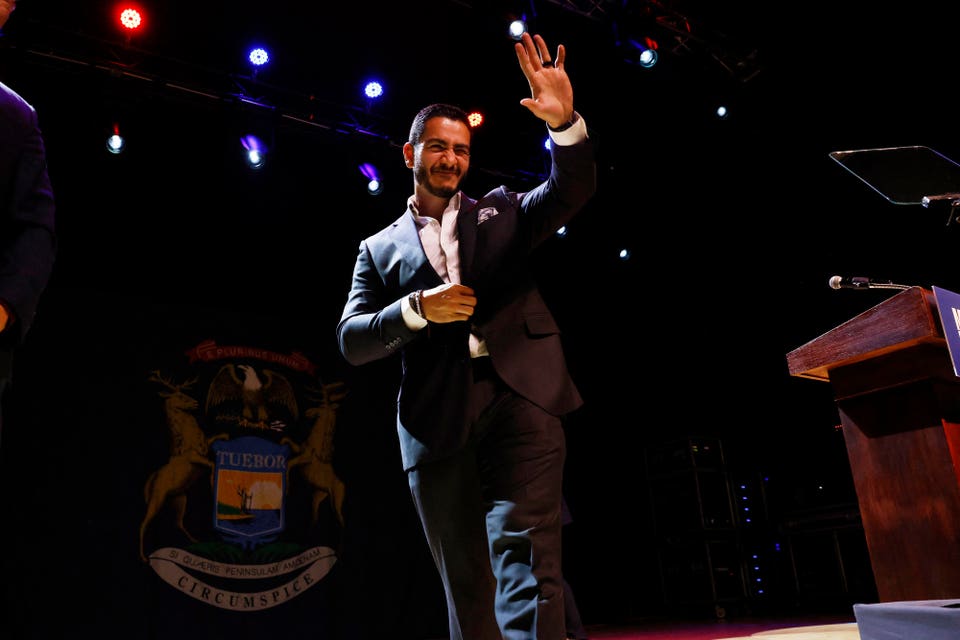
The Electability of Abdul El-Sayed
The former public-health official won Michigan’s Democratic primary with an unapologetically progressive platform—and a total defiance of the Party establishment.
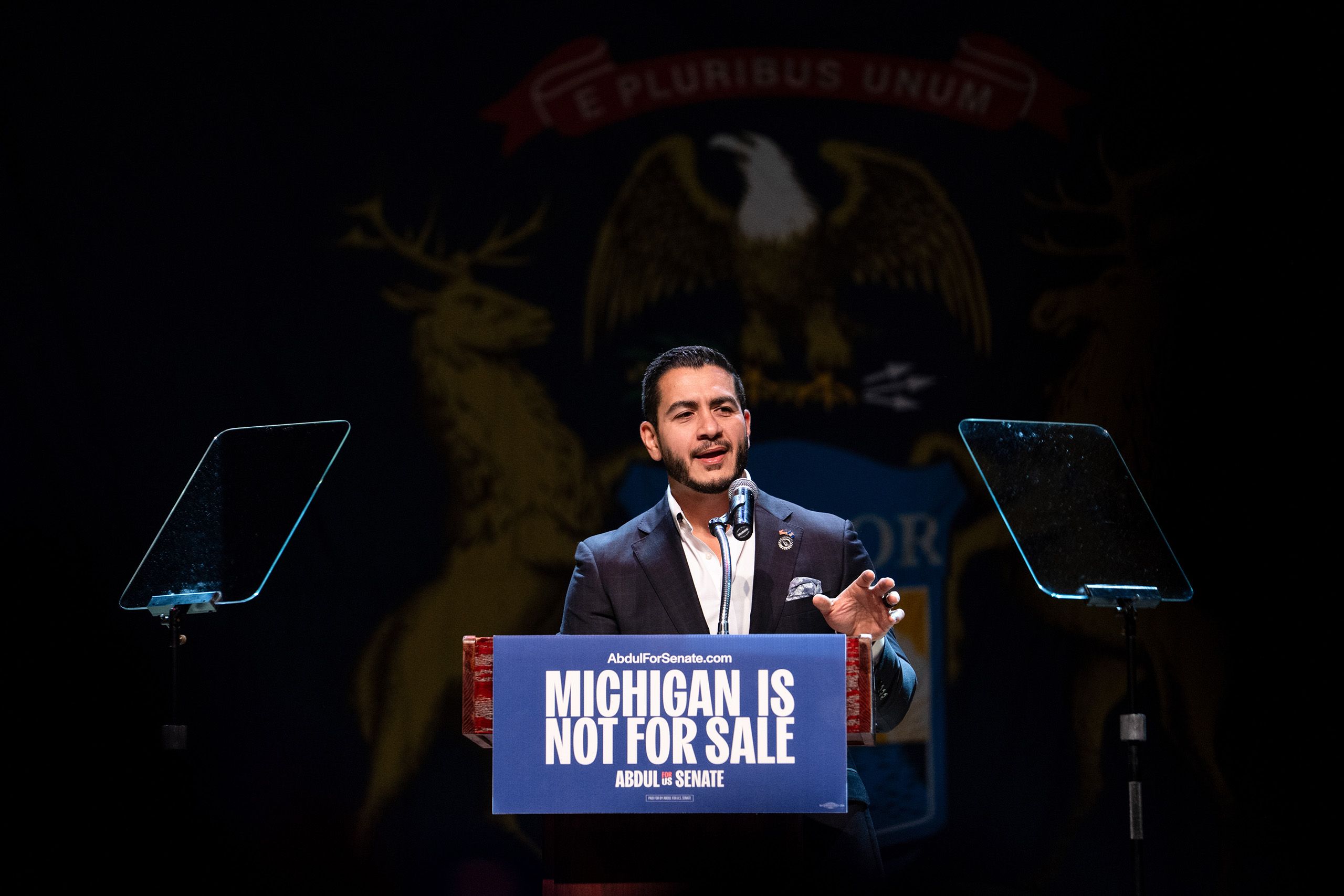
El-Sayed’s victory in Michigan’s Democratic Senate primary, while not as decisive as initially expected, marks the left’s most significant triumph of 2026—a year marked by numerous challenges to the party's established figures. Consequently, it is fitting that El-Sayed is regarded as the most politically adept among his peers. Possessing the charisma of Graham Platner, the populist oysterman who won Maine's Democratic Senate primary before withdrawing due to sexual assault allegations, El-Sayed lacks Platner's baggage.
As a devout Muslim, he refrains from alcohol, and his college marriage adds to his personal appeal. Unlike Darializa Avila Chevalier, a Columbia graduate and doctoral student who unseated a five-term congressman in New York, El-Sayed is not only academically distinguished with an M.D. and a Ph.D. but also a natural speaker who can think on his feet and remains composed under intense questioning.
Despite some detractors labeling his campaign as an online phenomenon, El-Sayed executed a robust grassroots operation, hosting nearly five hundred events across more than a hundred locations, which enabled him to surpass Stevens's nine-to-one TV-spending advantage. El-Sayed's triumph serves as both a tribute to his abilities and a rebuke to the Democratic establishment.
Stevens, elected to Congress in 2018, centered her Senate campaign on her work as a young aide to the Obama Administration during the auto industry rescue in 2009. Advertisements supporting Stevens heavily featured Obama, even though the former president did not endorse her bid. In May, during a visit to the Greater Emmanuel Institutional Church of God in Christ, a predominantly Black Pentecostal congregation in Detroit's west side, Stevens was introduced as "the former chief of staff, I think, for President Barack Obama."
She accepted the introduction without correction. While Stevens, like most Democrats today, considers herself a "fighter" against former President Donald Trump, it remains uncertain what specific victories she achieved during her four congressional terms. El-Sayed, in contrast, openly discussed his battle against the Democratic establishment and his aspirations for a progressive candidate to secure the Party's Presidential nomination in 2028.
The next challenge for El-Sayed is to translate his success to the Republican Party. Michigan, a swing state that Trump won in both 2016 and 2024, presents a more complex general election scenario for El-Sayed. Mike Rogers, the GOP nominee, a former seven-term congressman, narrowly missed winning the U.S. Senate race in Michigan two years ago.
Many establishment Democrats, both in Michigan and Washington, are apprehensive about El-Sayed's prospects in the general election due to his liberal stance on issues such as Medicare for All, abolishing ICE, and labeling Israel's war in Gaza as a genocide. The intense primary contest, with El-Sayed accusing Stevens of being "a suit with a large AIPAC bank account" and lacking the ability to formulate coherent sentences, and Stevens alleging that El-Sayed aims to "blame all of your problems on Jewish Americans," has further fueled concerns about his general election viability.
AIPAC, which played a crucial role in Stevens's primary victory, is expected to significantly support Rogers's campaign, potentially even more than they did for Stevens. However, El-Sayed operates under a distinct theory of electability. He contends that every older Michigan voter he may lose due to his leftist campaign strategy will be compensated by attracting the support of younger voters who otherwise wouldn't have participated.
El-Sayed's informal campaign style, which some found sexist when applied against Stevens, is anticipated to resonate more with the general electorate, particularly against Rogers, whom he recently referred to as a "beta character." El-Sayed recently expressed his belief that identifying with Washington and playing it safe is no longer a winning political strategy.
Reflecting on his 2018 gubernatorial campaign loss, he noted that after Trump's first election, the political landscape had shifted.
Written by urgent.news from The New Yorker's reporting — not their text. Machine-written — may contain errors; check the original before relying on it.